By Erica Wright, Vera Deacon Intern 2025
(All photographs were taken by Erica Wright unless otherwise attributed.)
This post continues the story of “The Treasures of Cintra House Project”, first shared earlier this year. Here I will walk you through the physical and digital journey I’ve undertaken this year with Cintra House and its archive as the Vera Deacon Intern, and other futre projects to come. Let’s begin at the gates…
At the Gates

Walking up to the gates of Cintra House for the first time in May 2025 felt surreal. The ornamental gates are stunning, and I recognised it immediately from the Pender archive held by the University’s Special Collections.
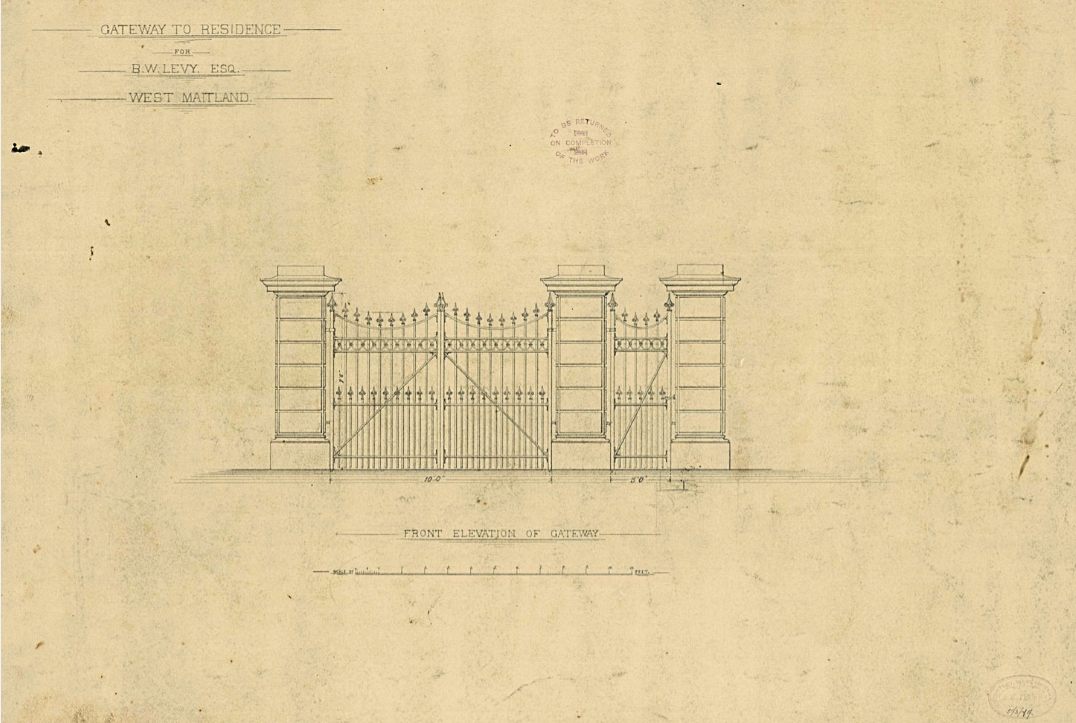
The gate creaked when it was pushed open, and the air changed to something mystical when I stepped through. It felt like I had walked through a portal to another world – the place definitely felt like it had some magic about it.
Cintra’s new owner, Catherine Blanch, introduced us to the house and its origin story. It was built in the late nineteenth century as an act of love by Benjamin (Benn) Wolfe Levy to his wife Zara Levy (formerly Zara Cohen). There are multiple love heart references on the property – most especially the love heart shaped driveway. It was clear by the time I stepped over the threshold of the front door that this house was special, with a rich and captivating history.
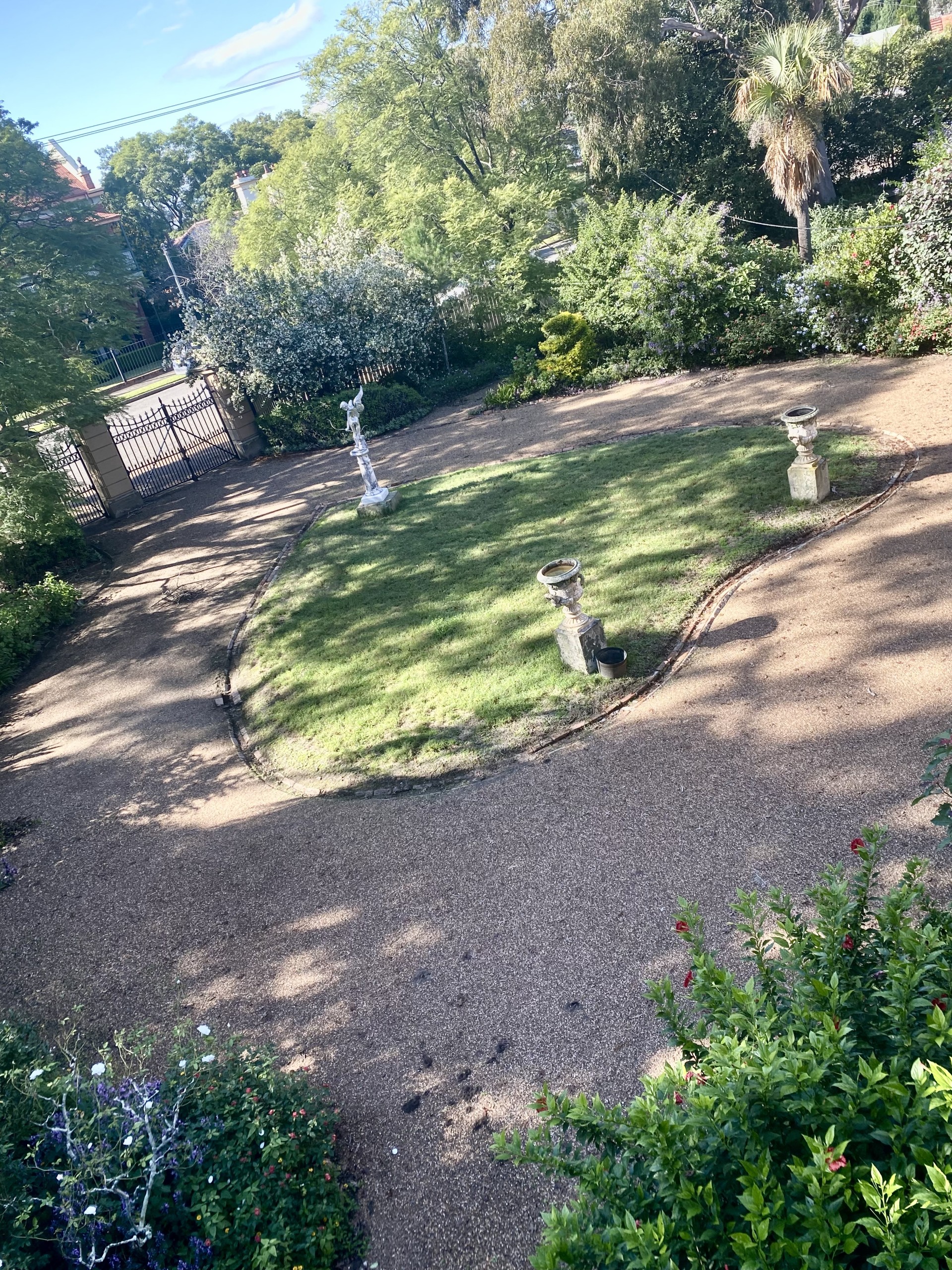
Over the Threshold
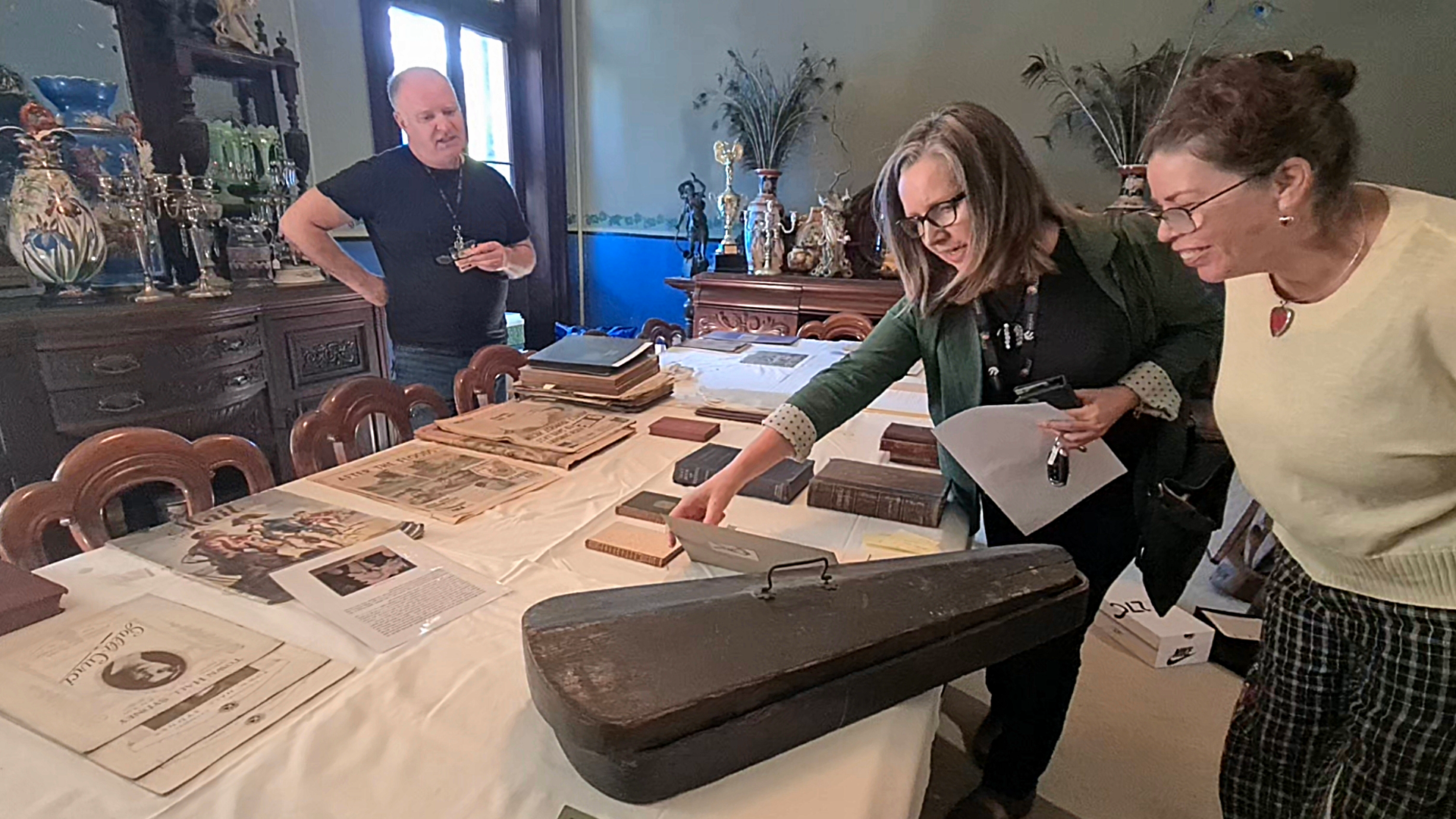
The interior of the house was just as grand as the exterior, but also dark and mysterious due to the limited lighting. My excitement and wonder continued to grow while Catherine guided us through a winding maze of rooms and corridors, weaving between piles of rare books, statues, and other rare objects and curiosities. It was a treasure trove – both literally and figuratively.
Catherine sat us down for tea and handed us envelopes filled with historic war letters from the Long brothers who wrote back to their sisters during World War I, detailing their experiences as Aussie soldiers. We packed these letters and other historic material (including other personal family letters) in a box to take back to the university to rehouse and digitise.
One Step at a Time
Step 1: Sorting and rehousing
Once I got back to the university, I felt overwhelmed as to where to start with the many items we’d bought back to be digitised and rehoused. Gionni di Gravio, the university archivist, showed me how he would approach it: first, sort everything into chronological order and into themed folders.
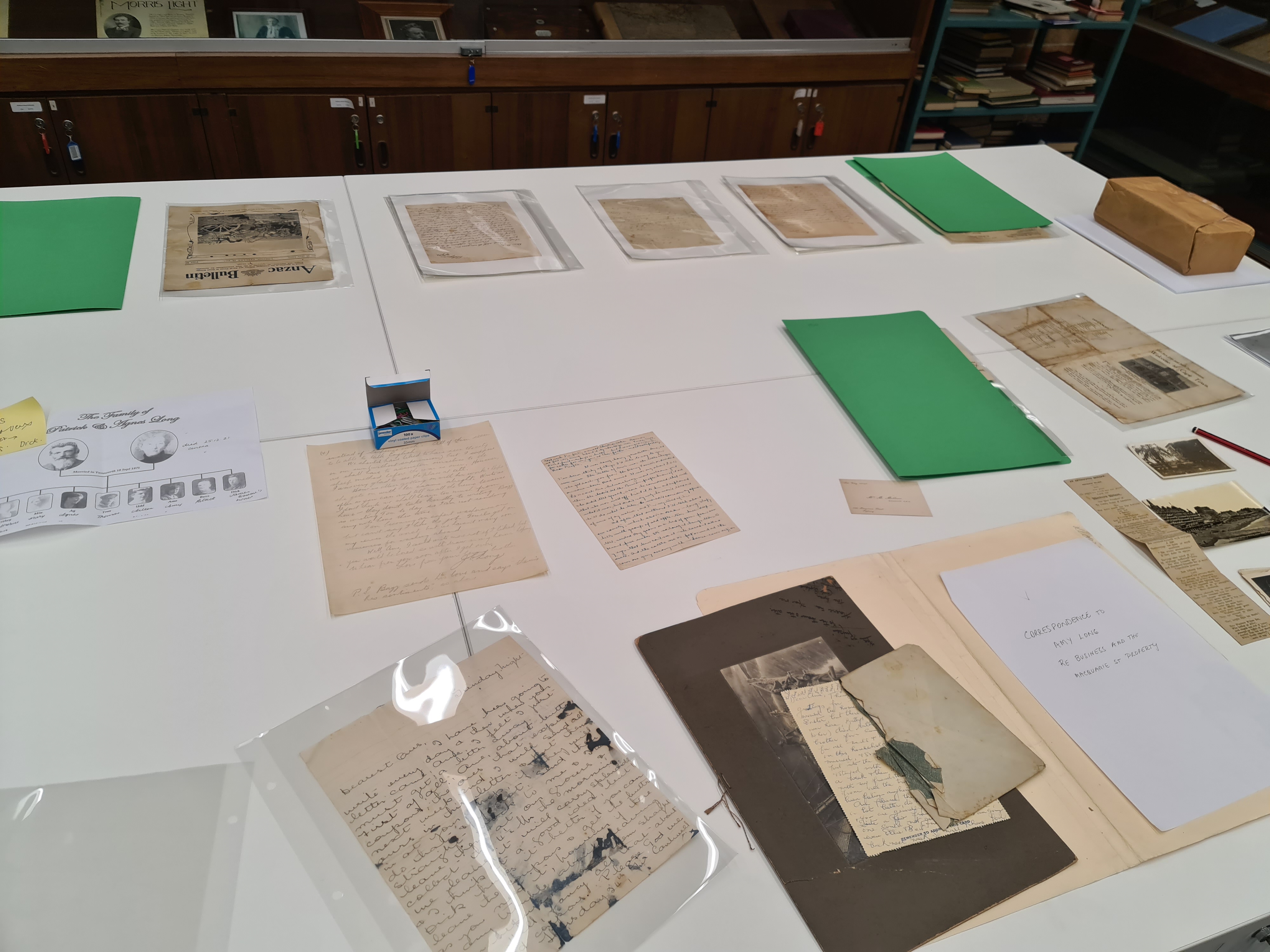
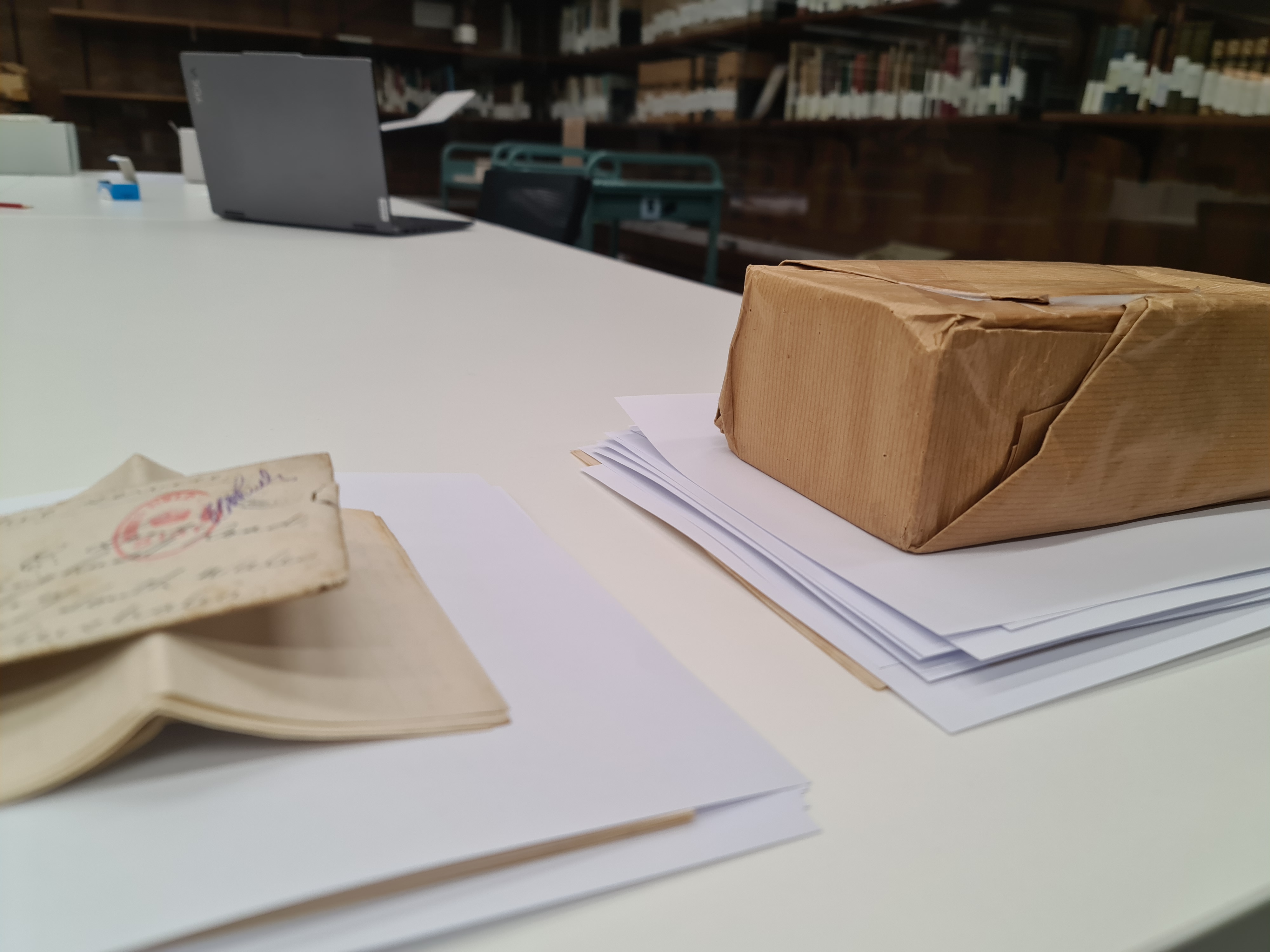
After I did this, I began to rehouse the items into Mylar, a special kind of plastic sleeve made specifically for long term preservation. During this process, I noticed that most letters that had been folded into envelopes, once opened, were difficult to slip into the sleeves without damaging them. The solution to this was to flatten them for a few days under bricks wrapped in paper. I thought this brick method was hilarious – but if it works, it works!
Step 2: Digitising
Once everything was sorted and safely rehoused into Mylar, I learned how to use the Epson scanner and the relevant software to start digitising.
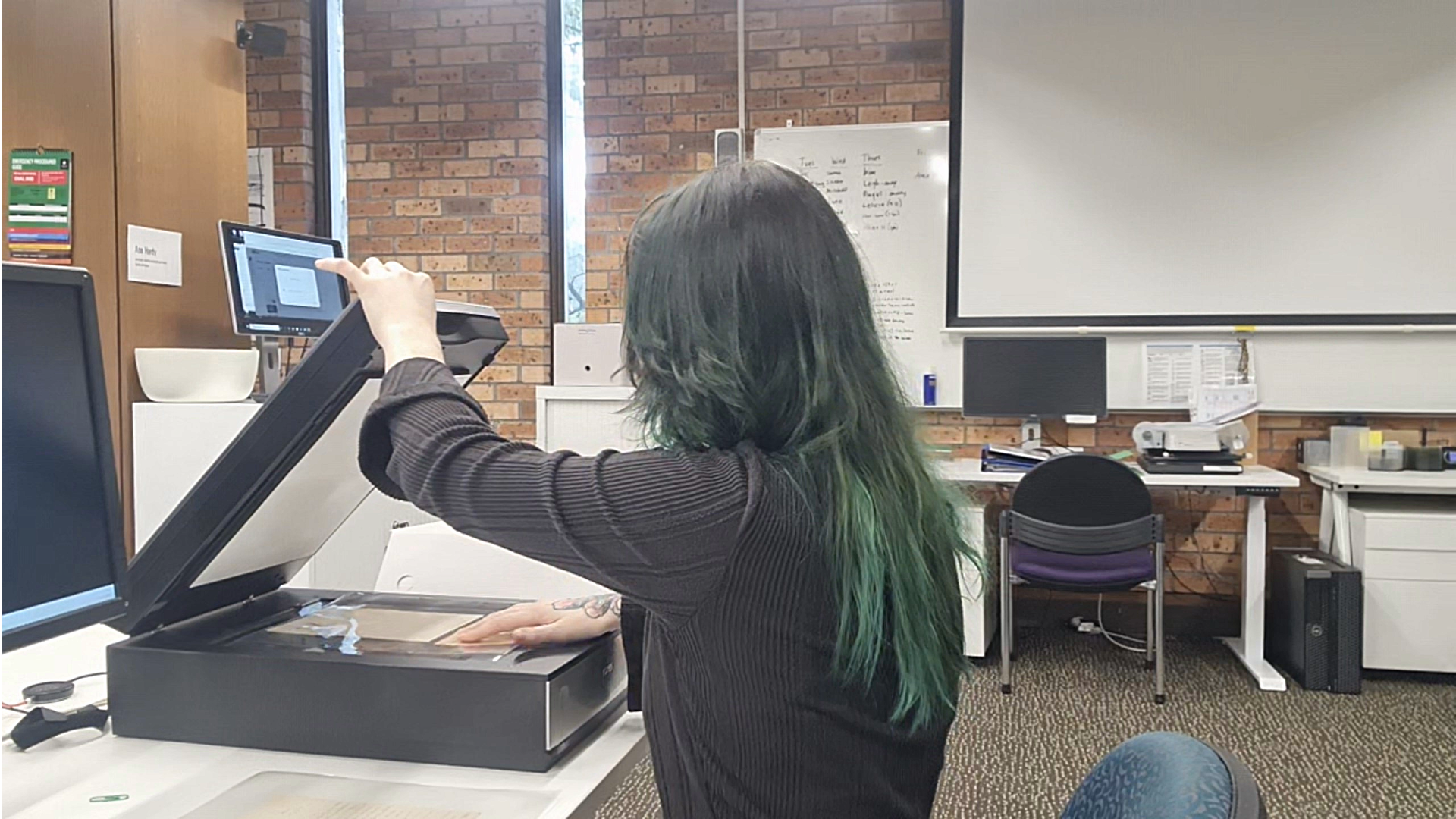
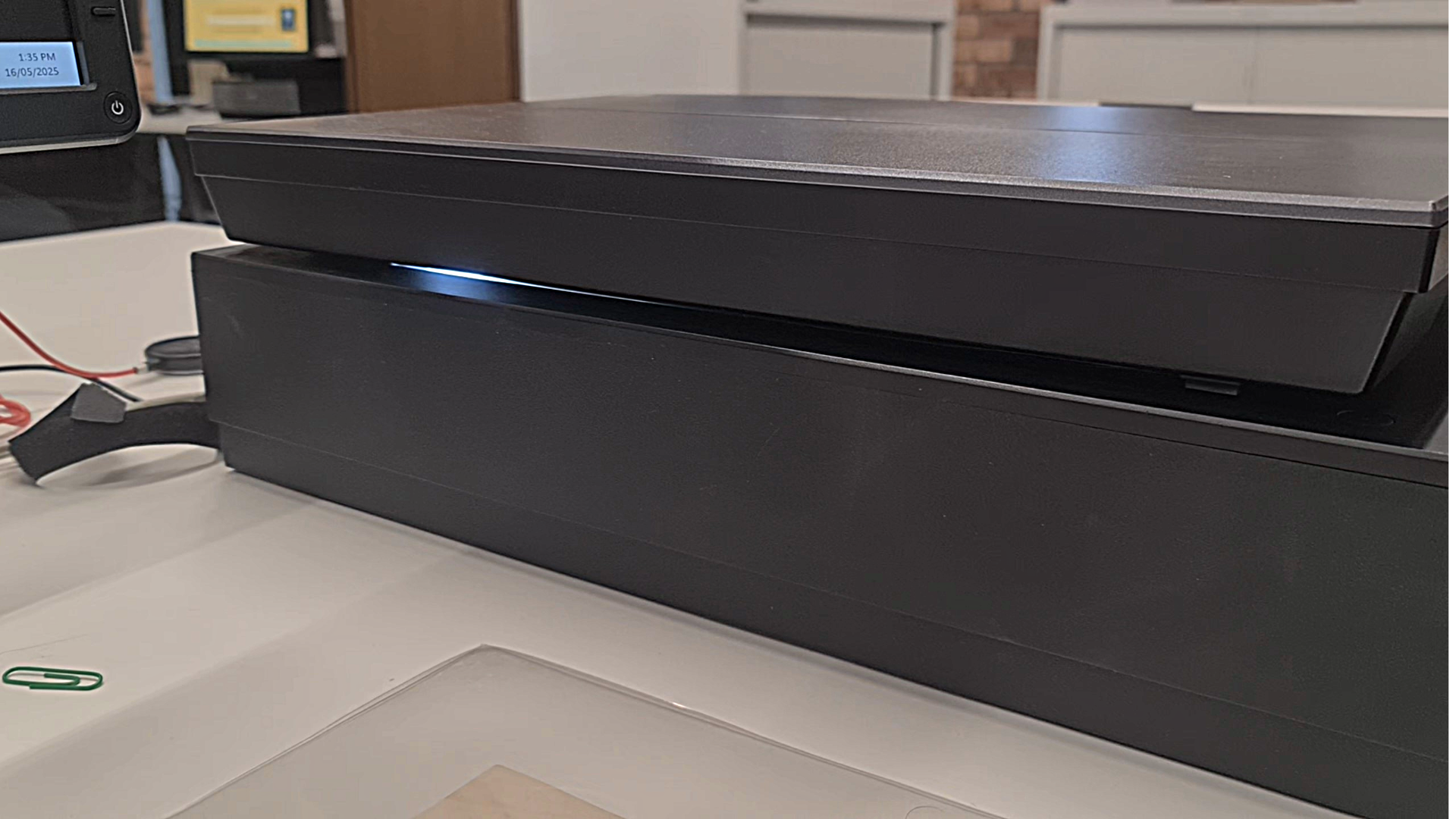
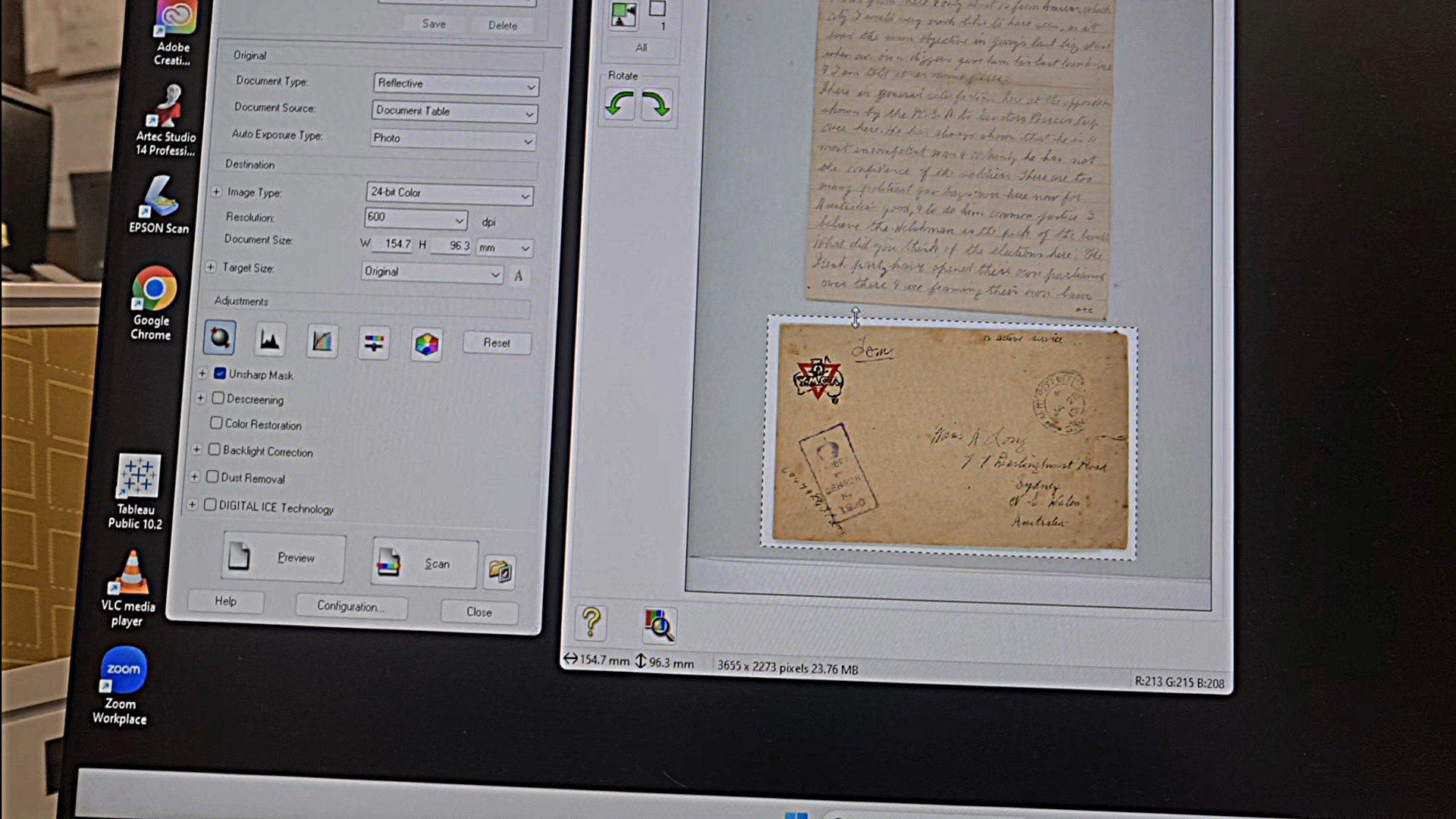
I learned how to use the Epson scanner software to create TIFF (high quality) images, which I would then convert to PDF/A (a kind of PDF specifically used for digital archiving).
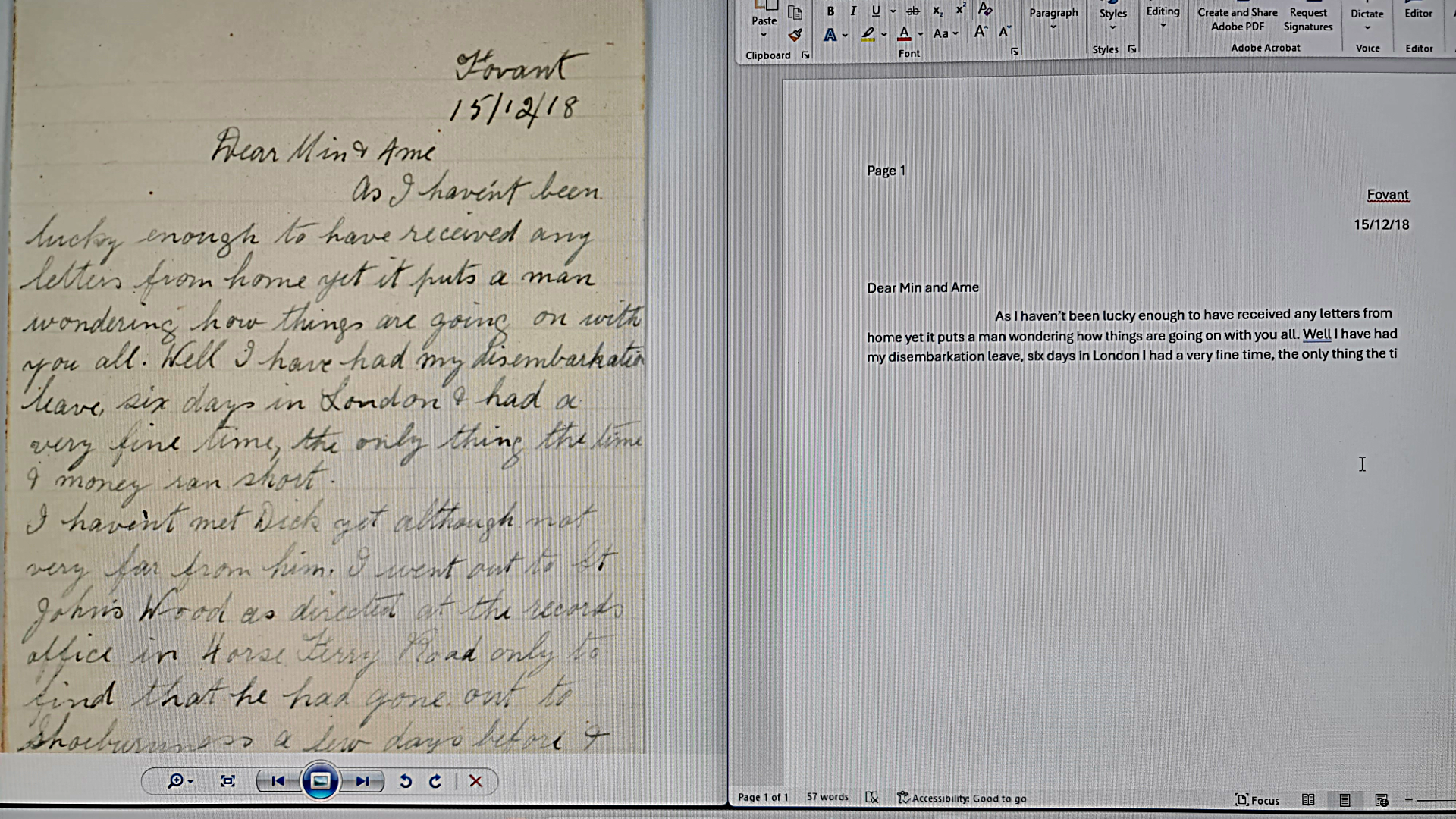
Step 2: Metadata, transcription, and detective work
In order for me to put metadata into the PDF/A files, I spent lots of time trying to read through each letter to find names, topics and places – with some difficulty. I’m embarrased to admit that I wasn’t great at interpreting handwritten script after growing up in an increasingly digital world! As I made my way through, I found myself getting better little by little. I even tried my hand at some transcribing, as I wanted to use this opportunity to develop this particular skill.
What gave me the most trouble, though, was the names of places I was unfamiliar with. For example, I mistook the name “Codford” for “Godford” at first, but I figured it out after some detective googling. Another example was a place called “Shoeburyness” – when I first read this, I thought it was nonsense until I discovered it was an actual place in England!
Once I had entered the metadata into the files, I assumed I had reached the end of the road. The wonderful Dr Katy Sentas, however, suggested it might be good for me to learn how to do simple condition reporting and measuring for best practice. I thought this was a fantastic idea and an excellent opportunity to develop industry skills.
Step 4: Condition reporting and measuring
I was lucky enough to get a lesson from the expert on conservation: Dr Amir Moghadam, the university conservator.
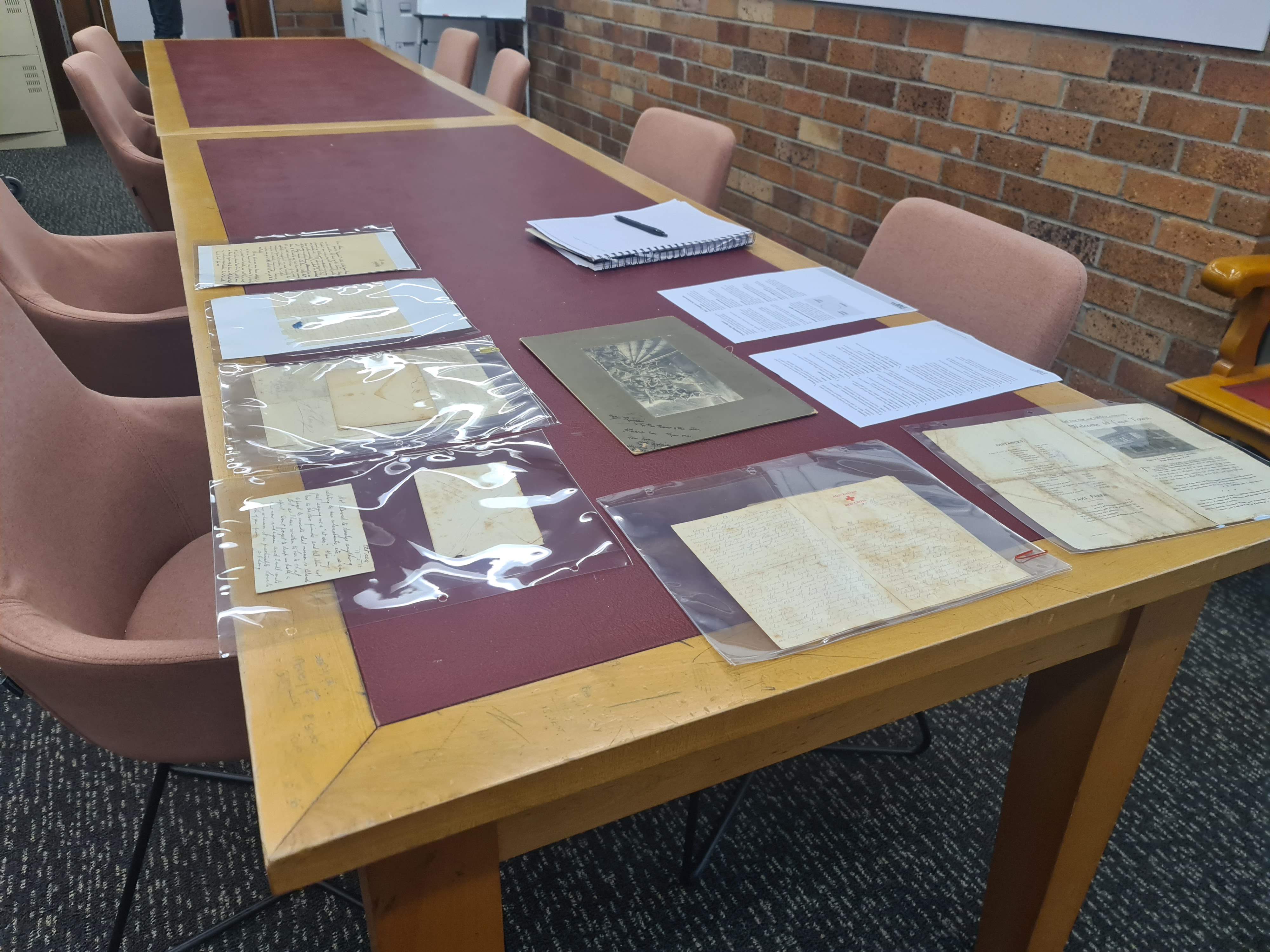
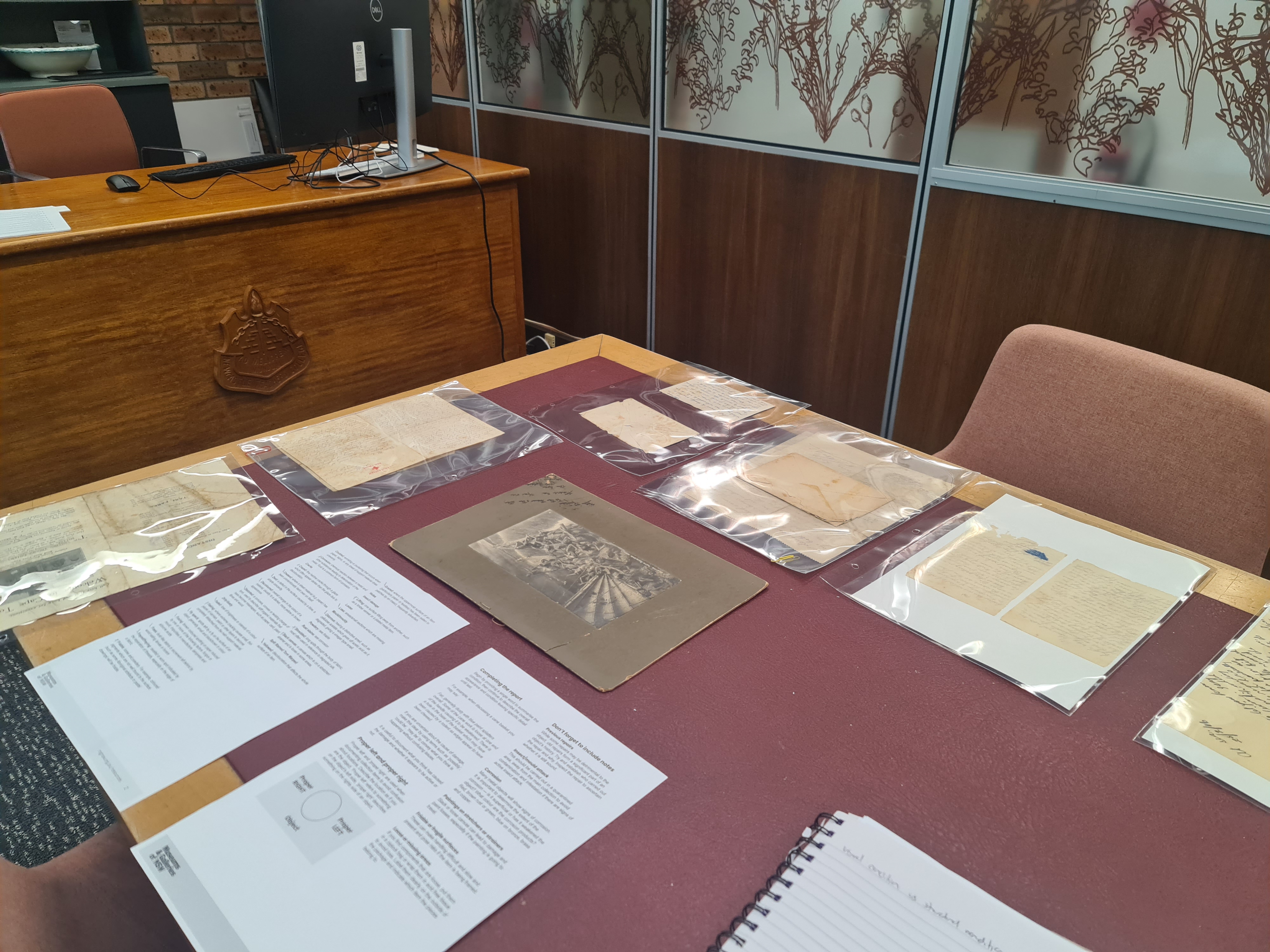
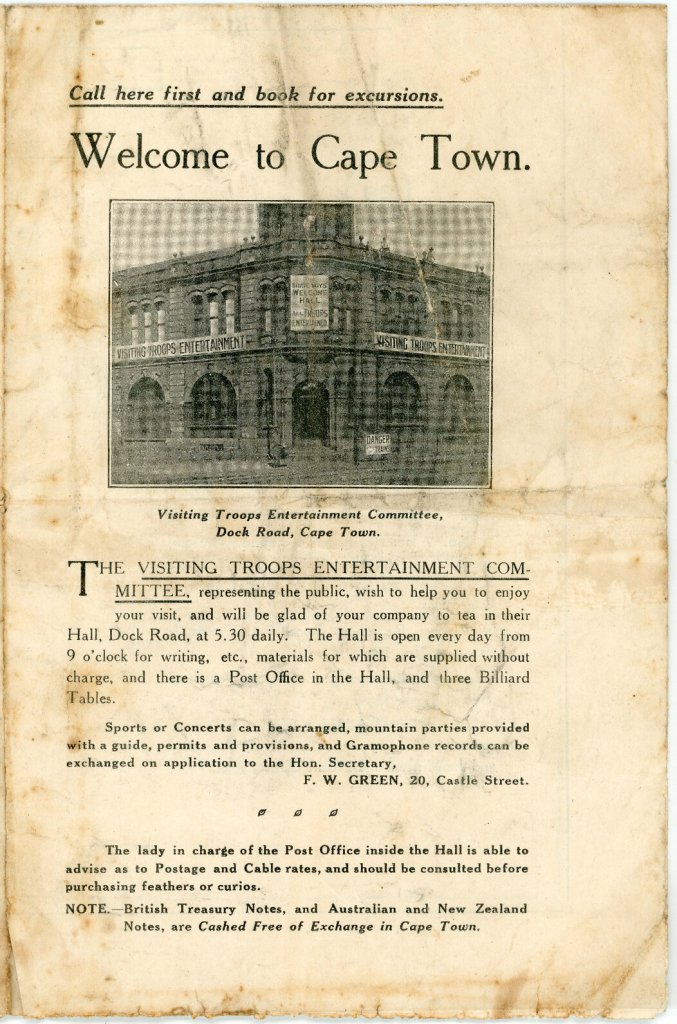
Amir’s expert advice was incredibly valuable – especially for things I would have considered “bad condition”, like the “Welcome to Cape Town” pamphlet which was damp and disintegrating. Amir taught me that it would actually be considered “average condition” because it is still readable and intact, despite beginning to tear. Drawing on his experience with genuinely bad condition items helped me put things into perspective. The worst item in a collection isn’t automatically in “bad condition” overall.
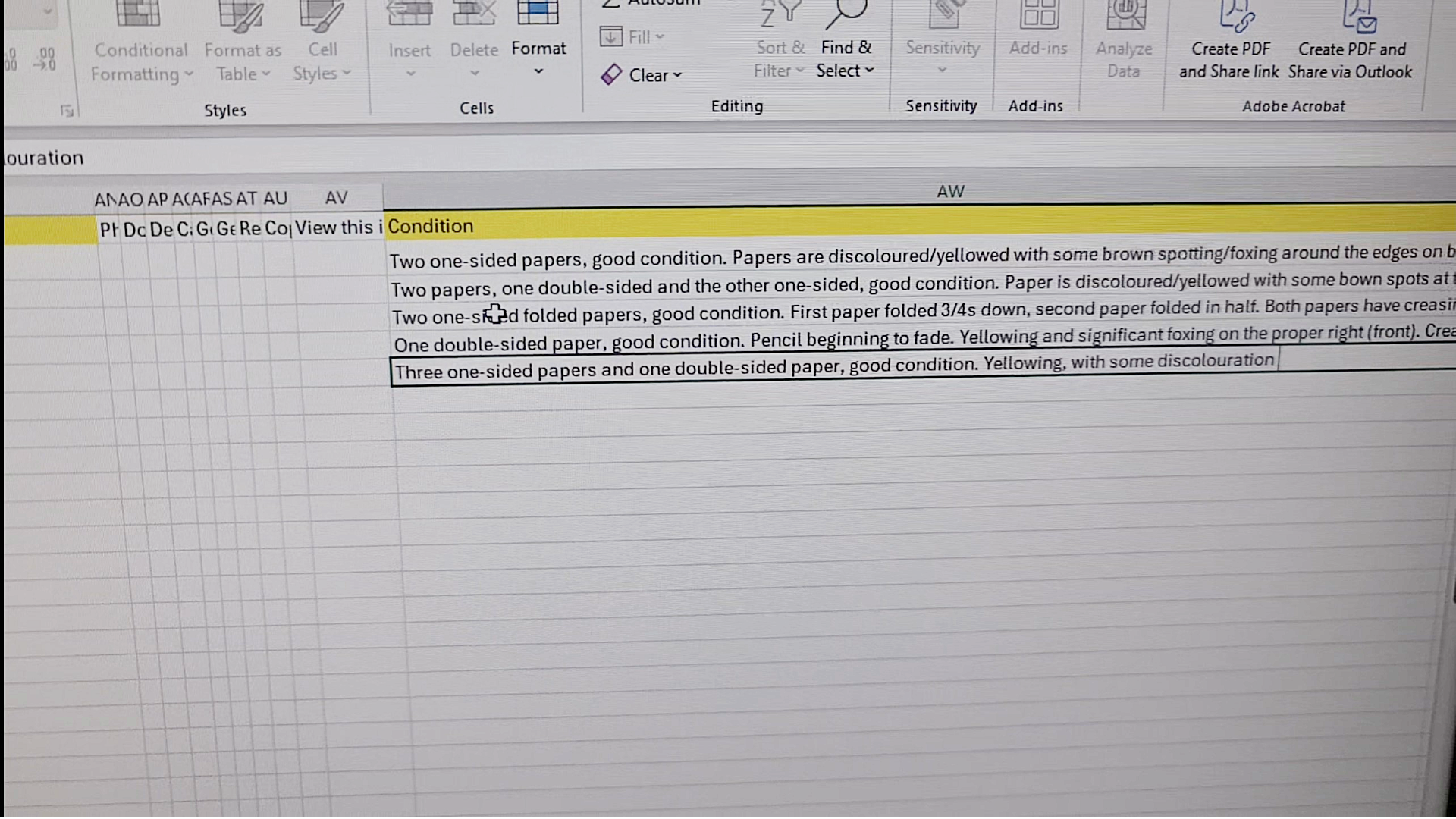
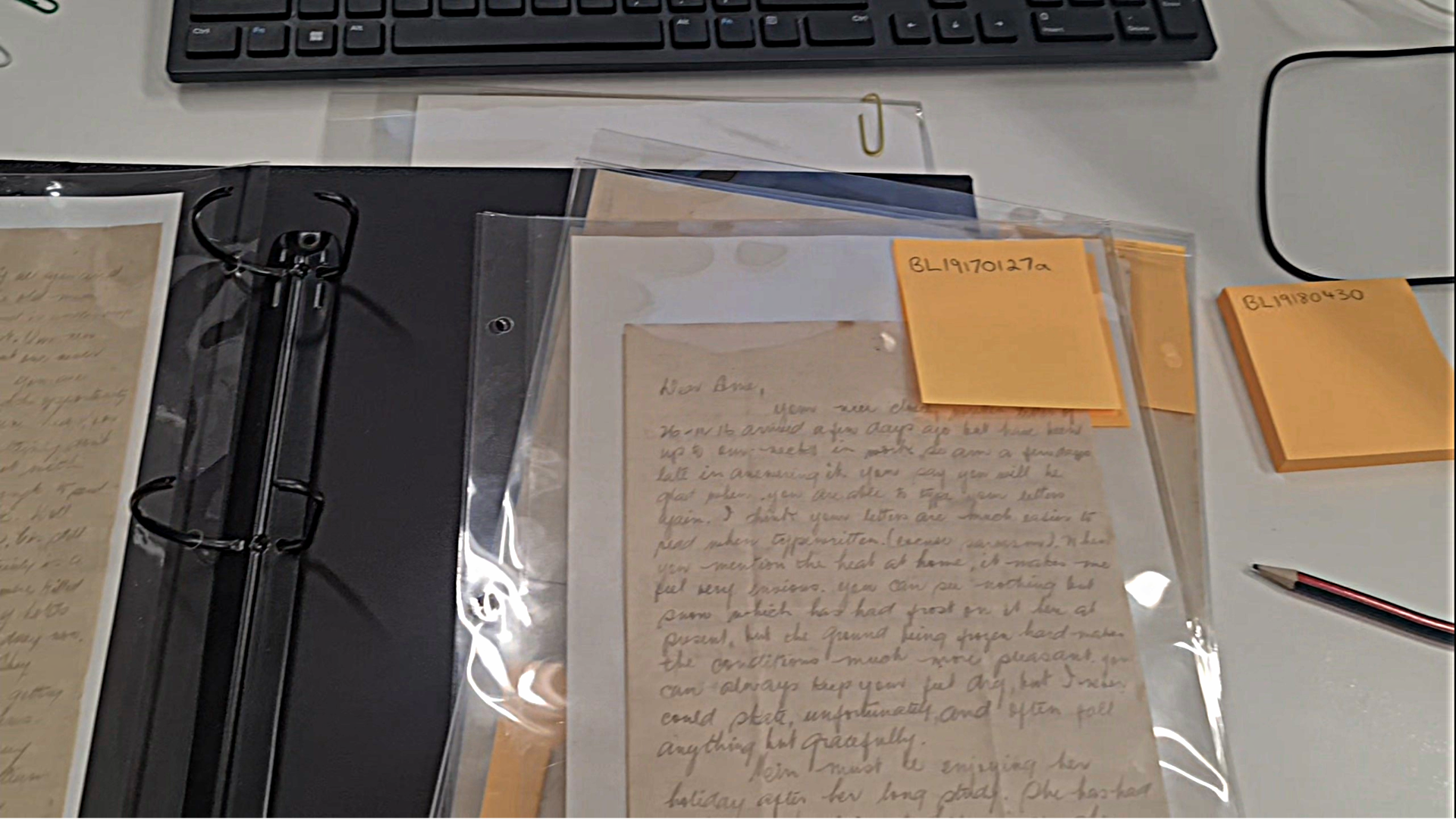
Equipped with Amir’s advice, I entered condition report metadata into a spreadsheet that would be used to upload the letters to the Cintra House collection page on Living Histories.
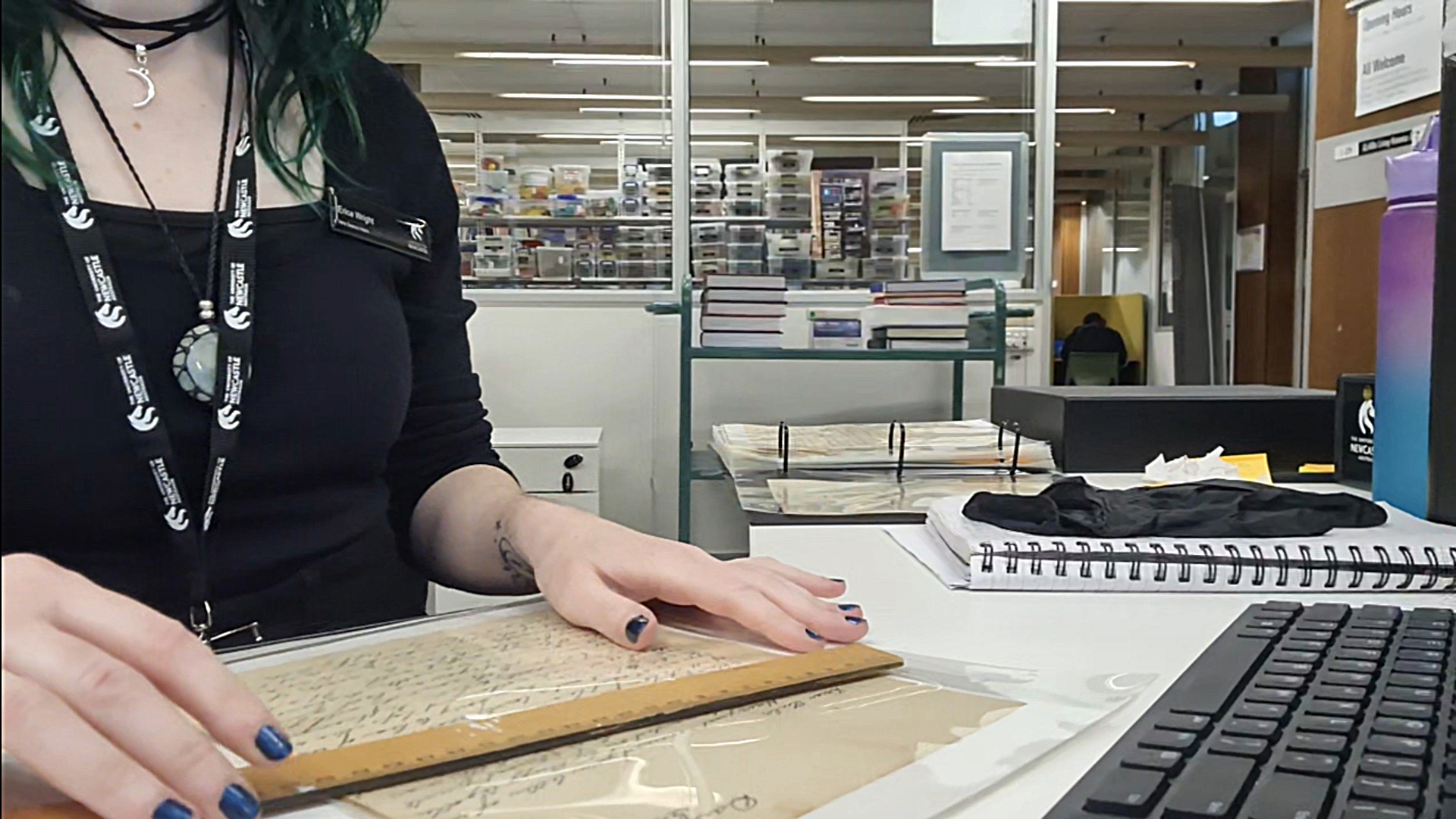
I then took the measurements of each item and assigned them identifiers, then added to the spreadsheet ready for the bulk upload. As I went, I secured each item within a folder ready to send back to Cintra House.
Step 6: Digital upload and folder presentation
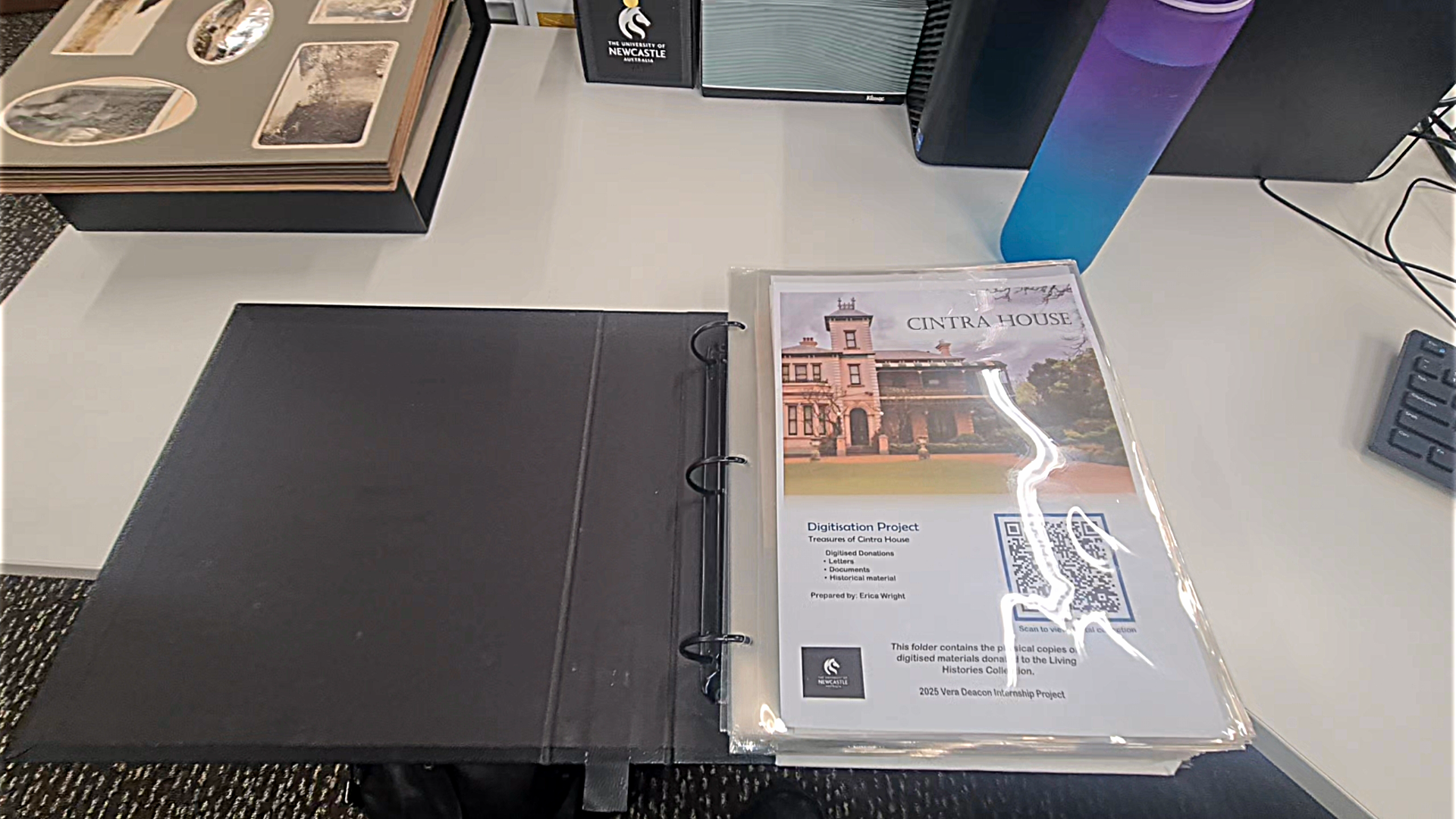
I can’t begin to explain my nervous excitement when I sat with Katy in Special Collections to upload the items to the digital repository! After two technical errors, the upload finally went through – much to our relief! I raced back upstairs to the GLAMx Lab to print out the cover page I had made for the folder, and called over pretty much everyone in my vicinity to come and have a look. It was such an amazing feeling to put in the cover page and be able to say I had officially completed my project!
See a video of the whole process below!
But the Journey Isn’t Over
Although this part of the project is over, the letters were only ‘a drop in the ocean’ that is Cintra House. Every time we visited Cintra, there was always something new to learn and other potential projects for students to explore – from rare books, to never before seen artworks, to a violin belonging to famous 20th Century violinist Nora Williamson.
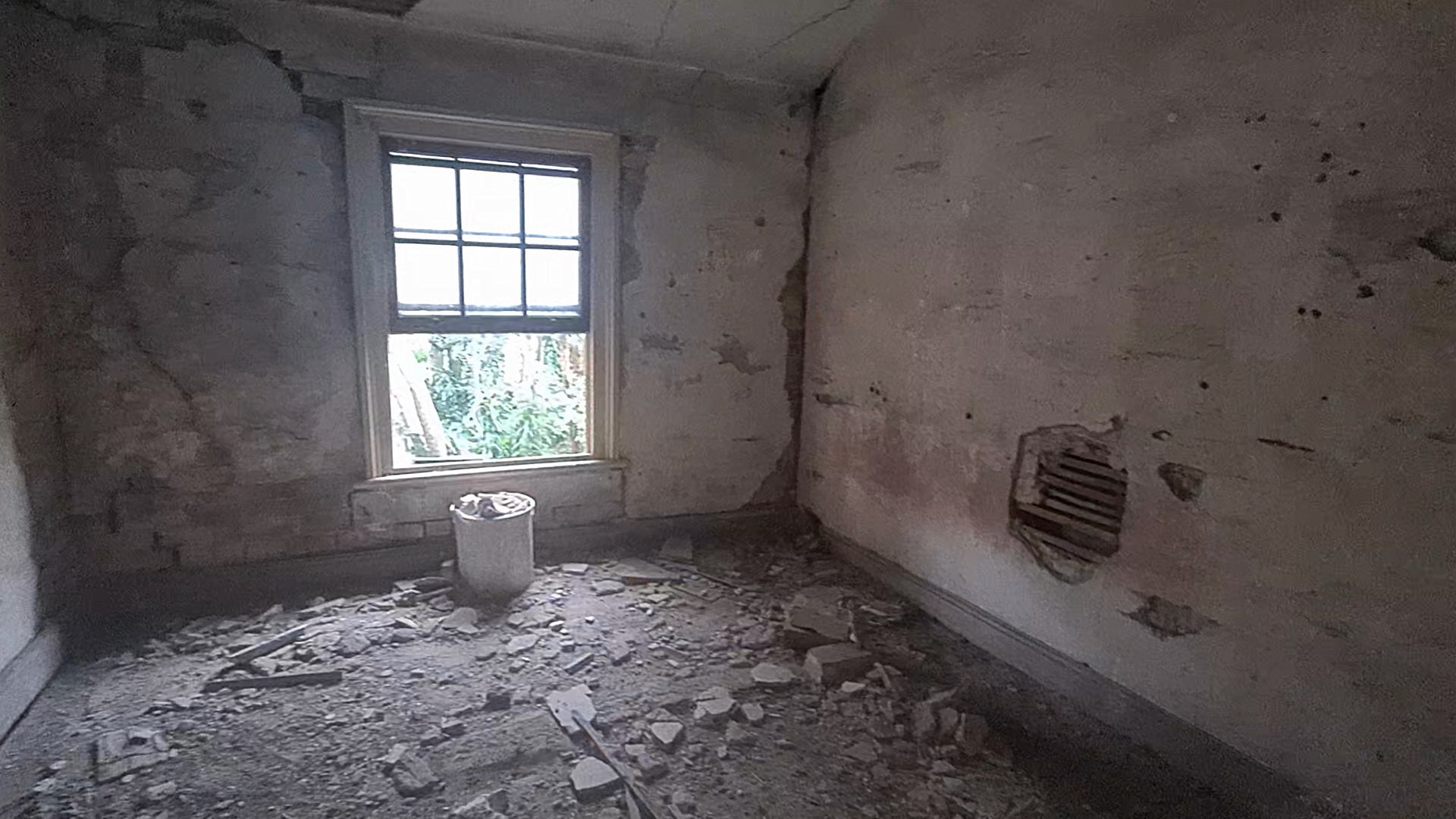
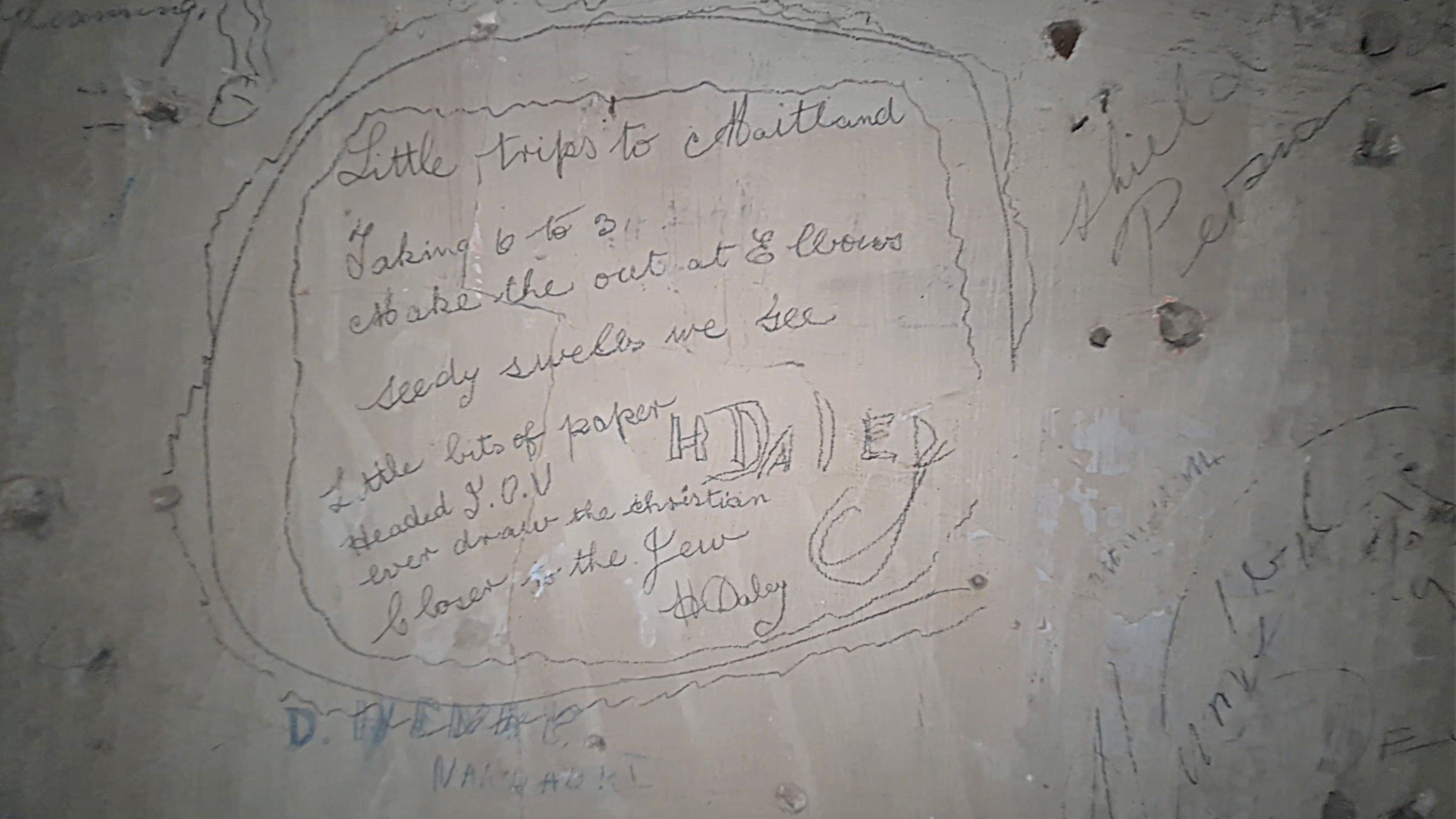
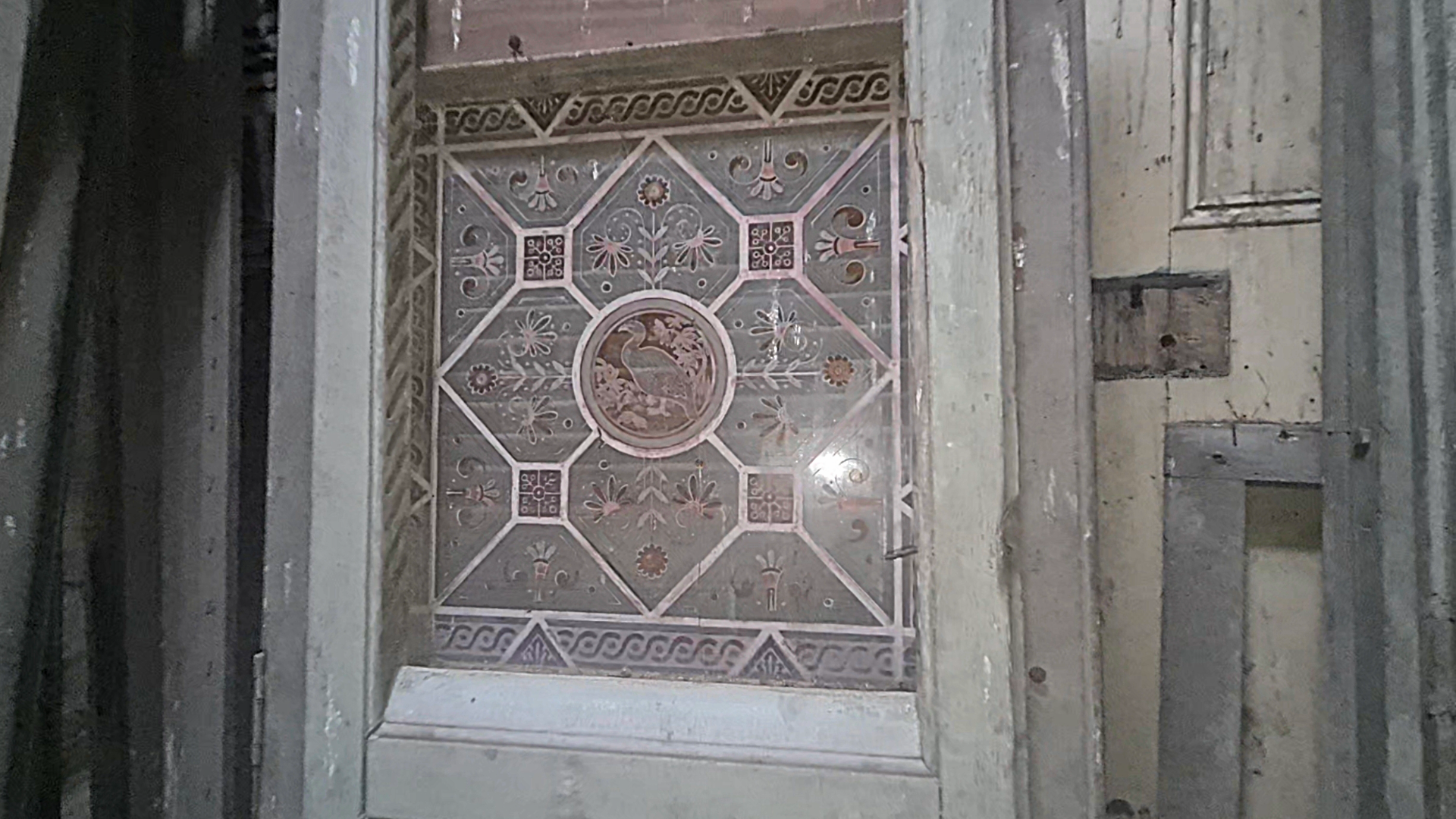
Another treasure of Cintra is not inside the house, but outside. At our most recent visit, Dr Ann Hardy and I explored the coach house and stables. Inside was graffiti from the early 1900s, as well as some of the original building materials from the early days of Cintra’s construction and renovations in the 19th and 20th centuries. Ann took this opportunity to do an initial 3D scan of the room with the graffiti, and we plan to go back and do another on a brighter day to capture the graffiti in greater detail.
You can view and interact with the 3D scan here:
The Garden Path
Earlier this year, I was invited to write an article on Cintra’s heritage listed gardens for the Australian Garden History Journal, a very exciting opportunity! After a Zoom meeting with the journal editor Francesca Beddie and others, we decided that I will write the article with a focus on wisteria at Cintra House, a gem I discovered within a letter written by Amy Long I had digitised.
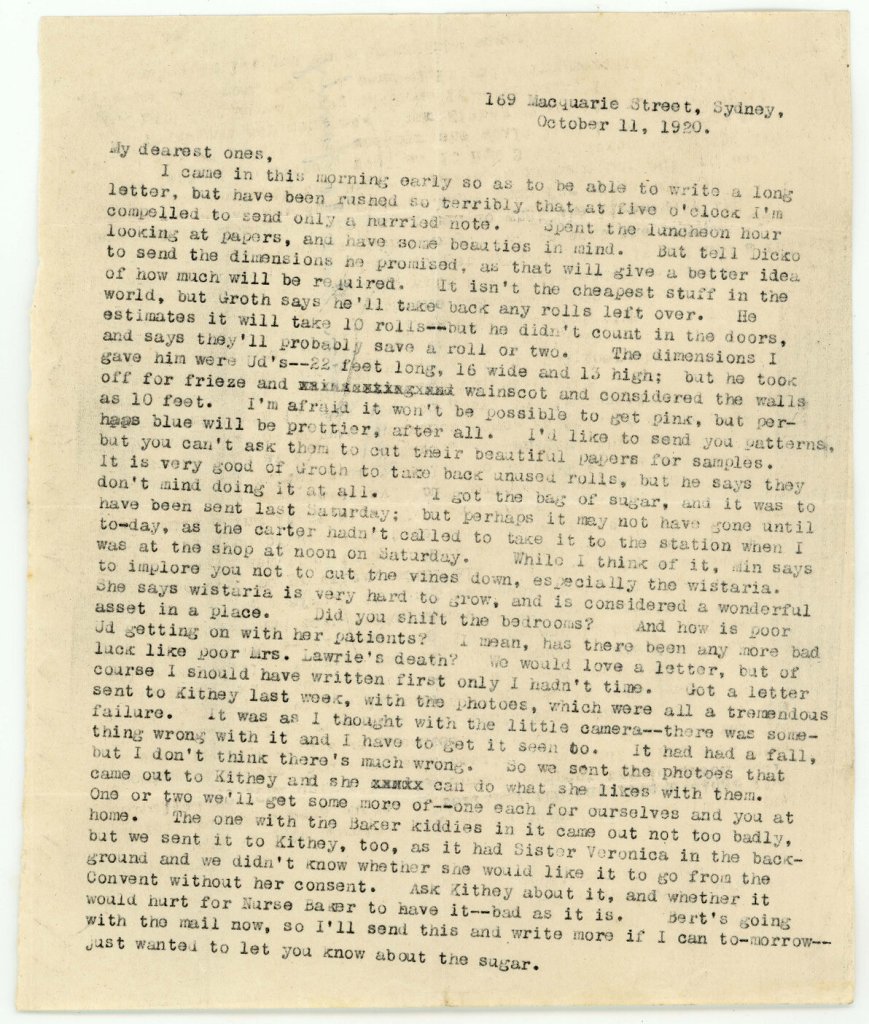
From our initial research, there is definitely a story to be told about the wisteria vine in Cintra’s gardens. It has connections to the Wisteria Gardens in Sydney, violinist Nora Williamson, and her father William Cotter Williamson who was the medical superintendent at Parramatta Hospital for the Insane in the early 1900s. I will be working on this article to be published in the journal’s April issue in 2026.
Keeping the Gates Open
While my time as the Vera Deacon intern for 2025 is ending soon, I plan on sticking around and supporting future projects and collaborations at Cintra House. I have grown quite attached to the house and its stories. There are almost endless opportunities for Work Integrated Learning student projects for years to come!
Catherine Blanch, Cintra’s owner, has quite a lot on her plate to conserve the physical structure and integrity of Cintra House and its coach house and stables, as well as the historic artefacts. She is always looking for skilled help. The University will continue to provide support, expertise and resources in her conservation journey where possible. However, we also encourage the community support Catherine in her efforts towards keeping the gates open for the community. Catherine wishes for the community to visit and enjoy Cintra House and its gardens, and to preserve this special heritage for future generations.
I have learned many skills throughout my internship, which I plan to write a blog post about soon. If you want to support other students like me in gaining valuable experience in the heritage industry, please consider donating to the Vera Deacon Regional History Fund. This fund made my internship possible!
I’m so excited for everyone to finally be able to access this incredible digitised collection of letters. You can access the collection on Living Histories here. Take a look, and let us know what you think!
Great to see Maitland’s historic houses restored