By Erica Wright
As my time as the 2025 Vera Deacon Intern draws to a close, I want to reflect on how this opportunity has not only allowed me to contribute to a meaningful heritage project but has equipped me with a portfolio of highly employable skills. I hope this post inspires future applicants and demonstrates the significant value of supporting the Vera Deacon Fund – an investment in both student careers and our region’s history.
What is the Vera Deacon Internship?
The Vera Deacon Internship is a yearly opportunity for a University of Newcastle (UON) student to gain invaluable experience in the GLAM (Galleries, Libraries, Archives and Museums) industry. This internship is made possible through donations to the Vera Deacon Regional History Fund, first established in 2008 in honour of the late Dr Vera Deacon. Vera was passionate about preserving local history and making it accessible to everyone, and enabling students to contribute to community while developing skills in the industry.

Each year, the Intern has access to different running projects each year, as the community is frequently seeking the expertise of the University’s skilled staff in Archives and Special Collections.
The Treasures of Cintra House Project
The “Treasures of Cintra House Project” was my core project this year, where I digitised a collection of letters dating back to World War I from the heritage-listed Cintra House in Maitland. Working in the University Library’s GLAMX Lab, I processed, rehoused and digitised this historic collection. I grew deeply attached to Cintra and its previous occupants, whose stories came to life as I read their letters.
You can see my journey with this project in: “Digitising the Treasures of Cintra House: Mapping the Journey”

See the video of how I completed the Cintra House Project below!
GLAM (Galleries Libraries Archives Museums) Industry Skills
With our world becoming increasingly digital each day, learning digital skills and how to use them in parallel to traditional archiving skills is essential. Luckily, I had access to GLAM industry experts throughout the duration of my internship to learn both traditional and digital skills. University Archivist Gionni di Gravio was my main source of expertise when it came to archival processing, handling and preservation; and University Conservator Amir Moghadam gave me invaluable advice on condition reporting.
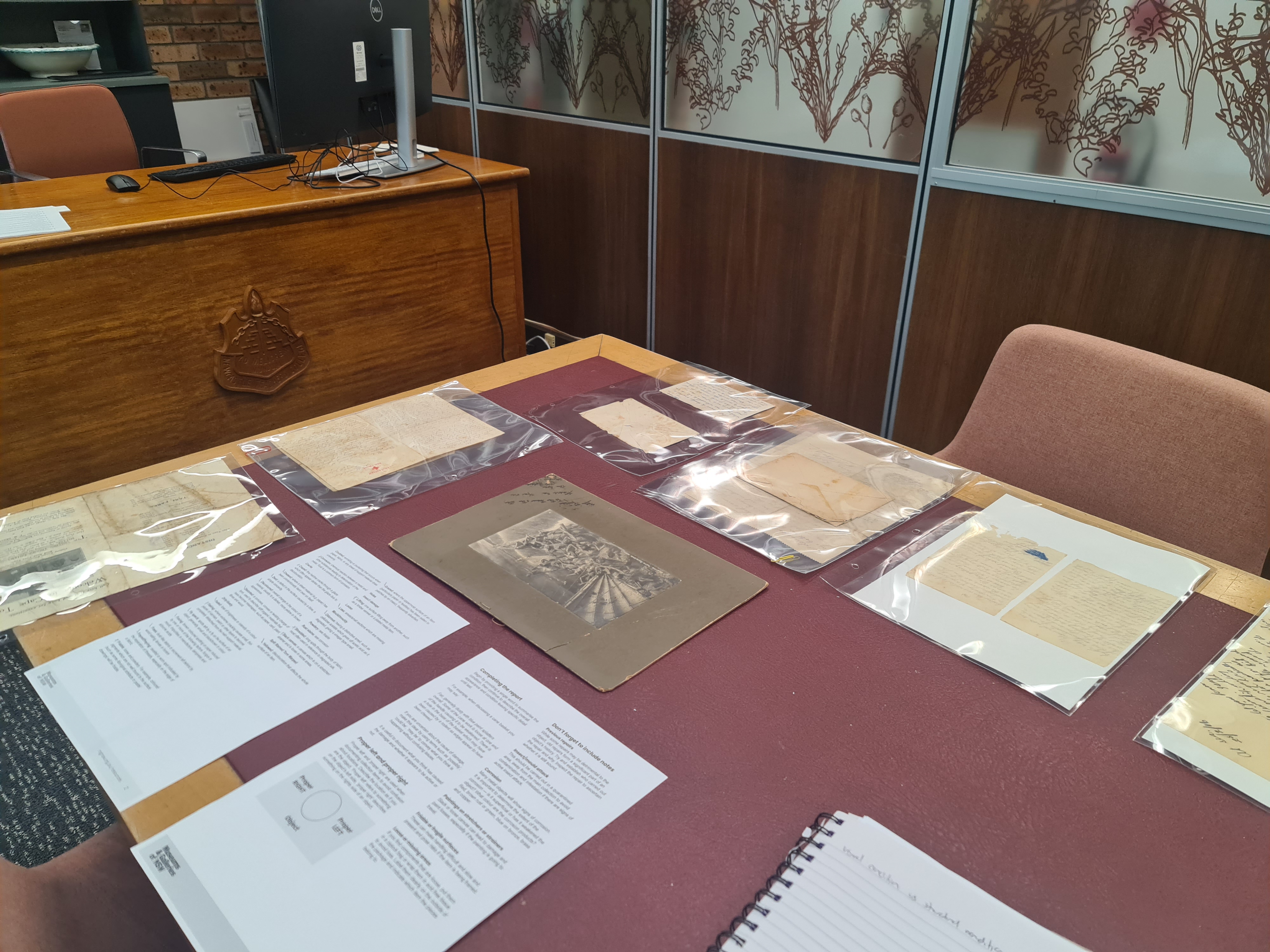
For the digital side, I had Dr Ann Hardy and Dr Katie Sentas help me navigate the digitisation and digital curation processes.
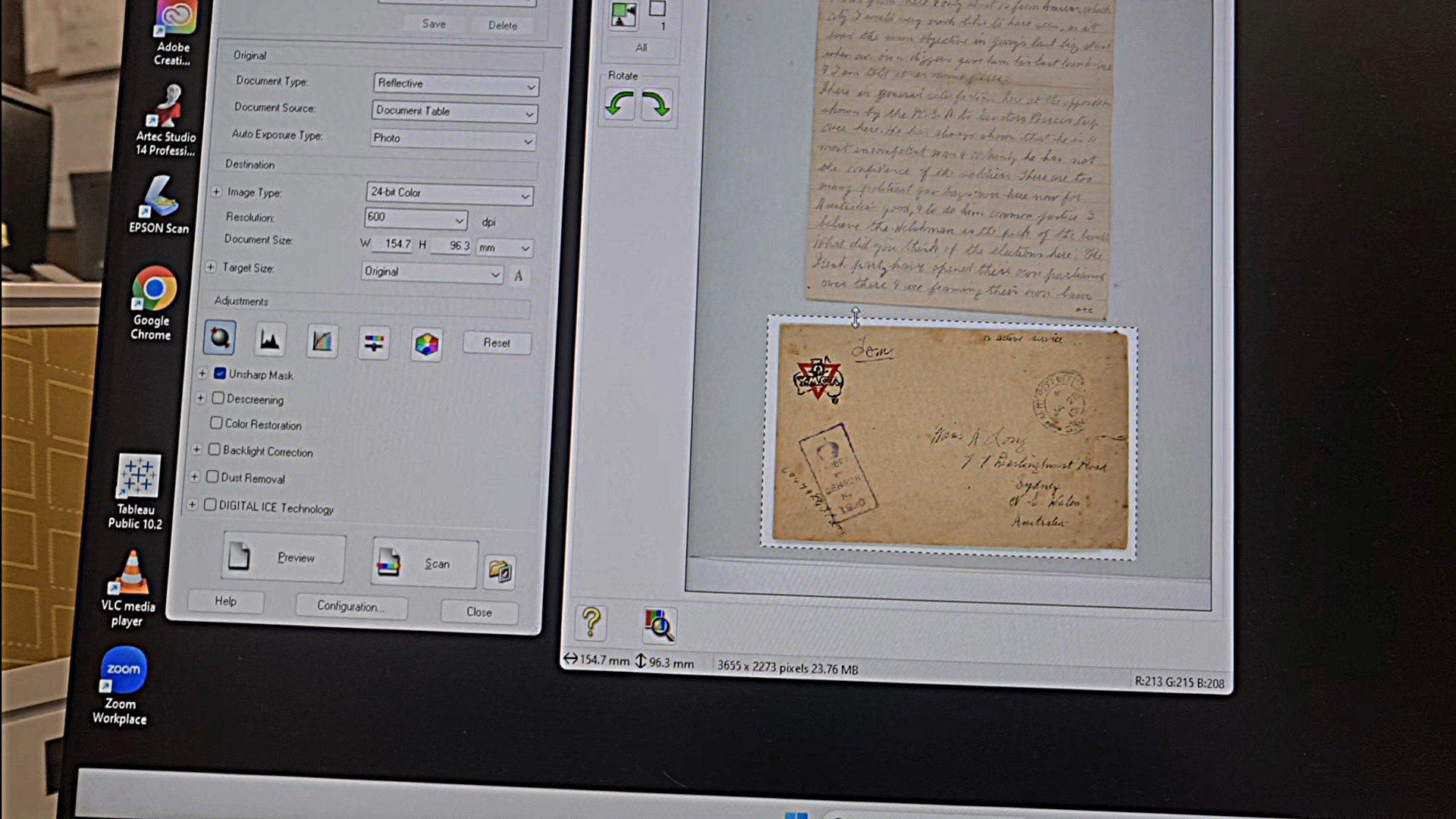
Amongst these traditional and digital skills, there is another that is sometimes underestimated – networking with industry professionals and community stakeholders. I liaised with the owner of Cintra House, the Maitland City Council Heritage Officer, and the editor of the Australian Garden History Journal who invited me to write an article after hearing about the project. This stakeholder engagement is a highly sought after transferable skill.
Beyond GLAM: The Transferable Skills
While many of us see the more visible, industry-specific skills acquired through these kinds of internships, we often forget the core skills that lie beneath the surface. These are the ones that can be used anywhere, no matter where your career takes you.
See the image below for a handful of examples from my experience:
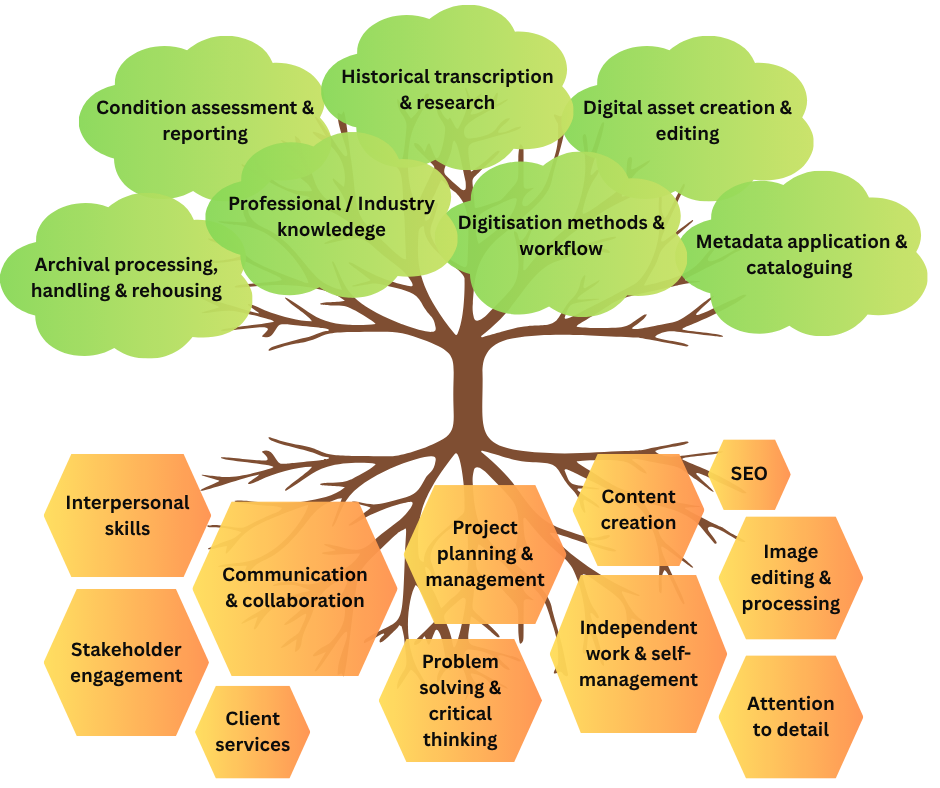
Perhaps the most valuable skill I’ve learned is the importance of balancing the digital and the human. It’s easy to think technology is taking over, but at the centre of history and heritage, you will always find people. The digital allows efficiency and broader access to material, but the nature of this work will always be fundamentally human.
Learning how to achieve a balance between digital efficiency and human integrity and connection is, in my opinion, the most valuable skill that can be learned in today’s world – no matter the career.
Tips for Future Applicants
I highly encourage students to apply for this opportunity, as it is a fantastic bridge from student to professional. It’s offered to one UoN student yearly, with applications opening in February/March each year. Make sure you keep an eye on the Jobs on Campus page during this time! Anyone who is a current student at UoN is eligible to apply. Even just applying provides an opportunity to have a real competitive interview process, and write a resume and cover letter to meet essential criteria in the position description. Students can also get support with their applications through the UON Careers Service. Even if you are unsuccessful in your application, you still have the opportunity to complete your Career-Ready Placements in the GLAMx Lab as part of your degree, or even volunteer!
Another great thing about this internship is that it’s not just for history students, any student from any discipline can apply. The key is to make this opportunity work for you, your interests and career goals. Beyond the core projects, there is a wide spectrum of experiences to get involved in, if you show your initiative.
For example, as an official staff member, I was allowed to attend and participate in staff meetings both inside and outside the Library. This gave me invaluable insight into the functions and workings of the Library and wider university, “institutional/industry knowledge” is a requirement in many university job positions. It also gets you used to sharing your ideas with others in a professional context.
As I am interested in a research career, I also asked to sit in with researchers who booked the Reading Room, which led to an offer for research assistant work! At the conclusion of my internship, I was also offered ongoing work at Cintra House by the home owner. The possibilities are truly endless and only limited by your initiative. I recommend having a think about what kind of skills you need for your career goals and see how they could translate into experience in your internship or placement.
Make sure to keep a record or diary of your experiences and make notes translating them into job skills as you go. This will help you immensely when applying for your next job, as you will have a list of skills and examples ready to plug into your resume!

Why Donate?
The Vera Deacon Regional History Fund not only helps students enhance their employability, but also preserve heritage and make it accessible for all. If you are a community member who’s passionate about preserving local history and heritage in our region, or who wants to support students in their career journey, please consider donating to the Vera Deacon Regional History Fund. This internship has truly been an invaluable experience for me, and your support ensures this opportunity continues for future students.
2 thoughts on “Getting Career-Ready as the 2025 Vera Deacon Intern”