
Update as of 22 April 2026
This conversation may look a little different from what was originally outlined, so we can make sure your feedback has the greatest impact. As we discussed at our last meeting, now that the University’s Strategic Plan has been released, this gives us the foundation we’ve been waiting for to get started on hearing your thoughts and ideas on how we can best support this plan.
Your responses are best included, framed, and supported through the Library Plan, which is where priorities, resourcing, and future directions for Hunter Living Histories are shaped. We’ll therefore be continuing this conversation with the University Librarian in June, focusing on the draft Library Plan as the avenue to plan for our group.
Hunter Living Histories Communities Provide Input
During August and September 2025 Hunter Living Histories Showcases, people were invited to review the University’s strategic documentation and provide input and feedback to the University Library and University’s 2030 Plan.
The September 2025 Showcase was completely dedicated to listening to people’s experiences and wishes for the future. The following ideas for goals are for provided below for discussion at our forthcoming June 2026 Hunter Living Histories Showcase.
Hunter Living Histories September Showcase – What do our Communities need from our University?
University Launches Looking Ahead 2030
The University launched its Looking Ahead 2030″ Strategic Plan on Monday, 30 March 2026. It can be viewed here
Developing Goals for Our Regions for a World in Crisis
We’ve reviewed the University of Newcastle’s “Looking Ahead 2030” strategic plan and the work of the University’s Hunter Living Histories and, with the help of AI, (and real minds), have come up with some goals to help make our local regions, and world, a better place.
We do this in the wider global context, anticipating the “long tail” effects of the War on Iran, Middle East conflicts, global authoritarian political tensions, price of living pressures, societal upheaval, an oil supply crisis, supply chain disruptions and climate change.
How Our University Can Help Make Our Regions & World
A Better Place
(For Hunter Living Histories discussion)
Strategic Roadmap: Cultural Infrastructure for Regional Resilience
Positioning regional memory institutions as infrastructure for resilience
Grounded in the University of Newcastle’s vision to be a “world-leading university for our regions,” these goals translate the Life-ready Graduates, Research with Impact, and Engagement that Connects pillars into crisis-ready cultural infrastructure.
They respond to systemic risks—climate disruption, geopolitical instability, economic shocks, and information breakdown—by mobilising archives, storytelling, and community knowledge as stabilising forces.
Archives are not passive repositories. They are ecosystems of social memory — and when institutions fragment, economies destabilise, or information ecosystems collapse, communities that hold their own history survive more intact than those that do not.
Strategic Pillars: Life-ready Graduates | Research with Impact | Engagement that Connects
The Proposed Goals
1. Archival “Mutual Aid” Network – Career Ready Student Placement Expansion
2. Augmenting Living Histories With Aboriginal Voices
3. The “Energy Transition” & “Climate Adaption” Memory Archive
4. Object Based Learning Activation for Teaching & Research
5. Unlock Open-Access Search-ability of the NBN Television Archives
6. Promoting the University’s Collections as a “Community Treasure Trove”
7. Community Story Telling for Social Cohesion
8. The Regional “Black Box” Memory Vault
9. Archives-as-Infrastructure Flagship (UON Flagships Model)
10. Promote Peace, Kindness & the End To All Wars
1. Archival “Mutual Aid” Network – Career Ready Student Placement Expansion
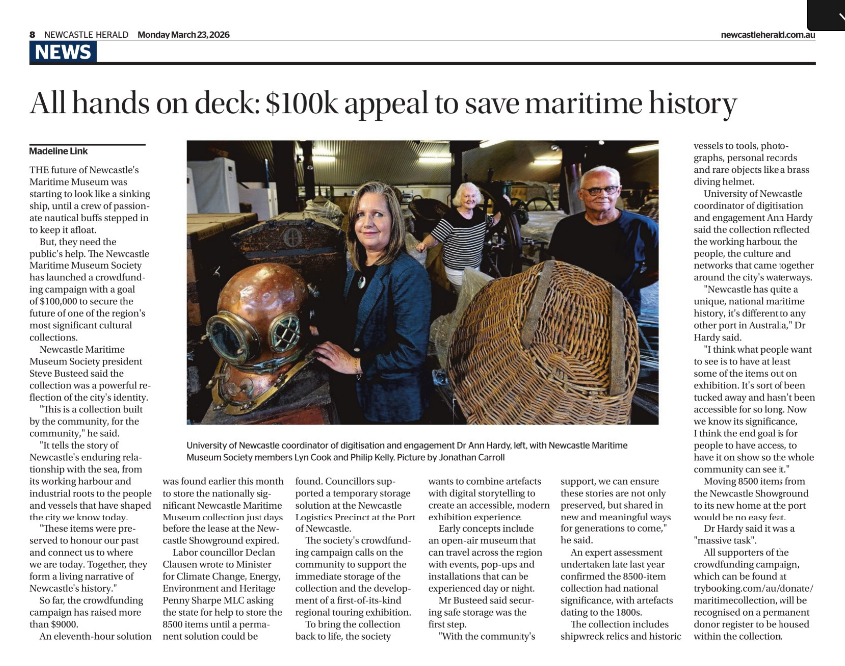
- Goal: Support the regional heritage network by providing a support for smaller, vulnerable regional historical societies and embed new “Career-Ready Placements” (Work Integrated Learning) to act as a stabilising anchor for regional memory, preventing the permanent loss of local history due to social fragmentation or funding collapse.
- 2030 Strategic Direction(s): Life-ready Graduates; Research with Impact, Engagement that Connects. (Immersive Real World Experiences for Students Flagship)
- Connection to Hunter Living Histories: Leverages the existing GLAMx Digitisation Lab to evolve a structured, multi-disciplinary WIL program across the University’s Colleges and Schools. Includes current collaborations underway with the
- Newcastle Maritime Museum Collection,
- Cintra House,
- Miniature Newcastle,
- Richmond Vale Museum Project and
- Delprat’s Cottage
Students help and learn with the volunteers in digital archiving expertise and curation experience.
- Why 2026: To meet commitment of making Career-Ready Placements a core component of all degrees through a proven, low-risk community model and supporting our communities. A “Circle of Collaboration” model for shared storage and digital access infrastructure.
2. Augmenting Living Histories With Aboriginal Voices
Further Colonial Historical Accounts of the Supreme Aboriginal Spirit Being
- Goal: In partnership, and response to Aboriginal Elders, researchers, Wollotuka Institute and HLH networks, to provide a publishing vehicle for documenting and augmenting Aboriginal perspectives in historical narratives identified as culturally significant to Aboriginal peoples in the Hunter/Central Coast regions.
- 2030 Strategic Direction(s): Our Indigenous Commitment; Research with Impact.
- Connection to Hunter Living Histories: Scales the “GLAMx Site Documentation Team” model, using HLH’s existing relationships with Elders to ensure “Ancient Wisdom” and modern “Western Science” form a “new hybrid science” respect and love for the land.
- Why 2026: Advances the University’s 2030 goal of being a leader in Indigenous education by creating tangible, co-designed digital assets for the community. Current work includes Senior Birrpai Goori John Heath’s 1826 Australian Agricultural Company Dawson Report Transcription and Augmentation Project in preparation for the township of Stroud’s 200 Celebrations and the essays of Leigh Budden on various facets of Aboriginal history and culture.
3. The “Energy Transition” & “Climate Adaption” Memory Archive
- Goal: Inspire and document the Hunter’s shift from coal to renewables, preserving the social fabric during economic restructuring. Co-create datasets linking archival records (floods, shoreline change, industry shifts) with scientific research; embed into planning and university research programs.
- 2030 Strategic Direction(s): Connected Communities; Research with Impact (Energy Transition flagship).
- Connection to Hunter Living Histories: Utilises the Hunter Living Histories’ expertise to bridge historical industrial identity with the University’s role as a leader in the region’s energy shift. Promotes the digital archive documenting the Hunter’s industrial evolution—from Coal River origins to the current Green Energy transition—showcasing the Coal & Community Voices of the Hunter oral histories from industry workers such as Jack Delaney, the Engineers Australia Archive and fostering new oral histories with researchers involved with current energy innovations such as Professor Darstoor, as well as the current Stories of Our Town on Coal currently in production. Builds on collaborations with Architecture & Built Environment scholars and students in design.
- Why 2026: Supports a “just transition” by honoring industrial heritage while fostering social cohesion during rapid economic change. Positions archives as critical inputs into climate planning across the Hunter (floods, coastal erosion, energy transition). Helping communities navigate change through the lens of their own history.
4. Object Based Learning Activation for Teaching & Research
Collections Update: Bishop Tyrrell Anglican School Visit to special collections
- Goal: Lecturer driven collaboration to create a suite of resources to employ object based learning using Special Collections & Archives items. To audit collections to identify potential items, create activities, assessment suggestions, rubrics, etc. that academic staff can choose to incorporate into their curricula, as well as identify weak spots for potential acquisitions and collaborations with community collector loan arrangements.
- 2030 Strategic Direction(s): Education Excellence, Life Ready Graduates; Engagement That Connects, Research with Impact
- Connection to Hunter Living Histories: Provides real-world sense based experiences for students to engage with and builds upon the six (6) object based learning sessions with lecturers and students so far this year, see: https://hunterlivinghistories.com/category/object-based-learning-student-engagement/
- Why 2026: Unlocks under utilised archival material for research and curriculum. Collaboration with academics to embed materials into courses to enhance quality of courses, student experience and teaching immersion.
5. Unlock Open-Access Search-ability of the NBN Television Archives
Media Mutations ‘Unlocking a Television Archive in the digital Era’ International conference
- Goal: Migrate the metadata excel documentation of the NBN Film Archive reels content to their digital assets held in YouTube and AI-searchable “Living Histories” platform to increase searchability and community research citations.
- 2030 Strategic Direction(s): Digital Enablement; Engagement that Connects.
- Connection to Hunter Living Histories: Upgrades the core audio visual assets on the UONCC YouTube and Living Histories into a world-class portal that demonstrates UON’s commitment to open-access knowledge.
- Why 2026: With the demise of the Linius Whizzard, we need to engage another tool to search the NBN Archive. Capitalizes on the “Digital Enablement” strategic priority to make UON research more discoverable and useful to regional industry and citizen scientists. Anticipates AI rollout through Gemini and YouTube.
6. Promoting the University’s Collections as a “Community Treasure Trove”
Bringing Out The Stories Of Your Town – ASA 2025 Presentation
- Goal: Showcase every month an important acquisition or item from the Collections, to foster awareness of the University’s holdings, and public access.
- 2030 Strategic Direction(s): From the Regions to the World, Engagement that Connects
- Connection to Hunter Living Histories: Uses storytelling and public dissemination expertise to bridge academic research and community audiences. We have submitted a Newcastle Port Community Contribution Round 9 Grant Application to create more Stories of Our Town films and featurettes for the “Stories of Our Town Film Project: The History of Newcastle Told By Those That Lived It”.
- Why 2026: Addresses a persistent gap between research production and public accessibility. In difficult financial times, to foster a sense of gratitude that, thanks to our University, our regional communities can spare the expense of acquisition, travel and accommodation costs to see and experience the intellectual treasures of the world.
Stories of Our Town UON Creatives Shout-out In Australian Parliamentary Hansard
7. Community Story Telling for Social Cohesion
The Ethnic Communities of Newcastle and the Hunter Region in 1988
- Goal: Utilise the Hunter Living Histories platform to facilitate regional story-telling, truth-telling, addressing historical inequalities, identifying under represented ethnic cultures to acquire physical archives to strengthen modern social resilience.
- 2030 Strategic Direction(s): Education Excellence, Life Ready Graduates; Engagement That Connects, Research with Impact
- Connection with Hunter Living Histories: Regional Networks of Communities, Wollotuka Institute, Migrant Community Organisations. Stories of Our Town Films.
- Why 2026: Proactively combats information collapse and social fragmentation by anchoring community identity in verified, inclusive history. Builds regional identity as a stabilising force, reducing division and strengthening belonging.
8. The Regional “Black Box” Memory Vault
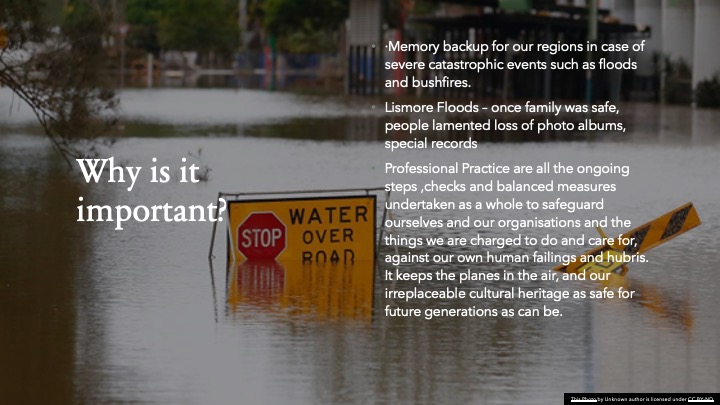
Why Is It Important? Memory backup for our regional communities in times of climatic and societal upheaval. (Slide 10) See: The Immortal Archive Presentation to ASA 2023 - Goal: Promote the digital and physical “Black Box” for the Hunter’s critical community knowledge, ensuring survival through climate catastrophes, incompetent managerialism, or cyber-warfare.
- 2030 Strategic Direction(s): Digital Enablement; Engagement that Connects; Research with Impact and regional resilience priorities.
- Connection to Hunter Living Histories: Archives and Special Collections, Digital Humanities.
- Why 2026: In an era of climate disasters and infrastructure fragility, distributed digital and community-held archives ensure continuity of cultural memory and trusted information. Secures regional identity and technical “how-to” knowledge (e.g., local water management, agricultural heritage) against digital fragility and geopolitical instability.
9. Archives-as-Infrastructure Flagship (UON Flagships Model)
- Goal: Develop a business case positioning archives as resilience infrastructure; secure government, philanthropic, and industry co-investment; embed across teaching, research, and engagement.
- 2030 Strategic Direction(s): The Flagships Model prioritises scalable, community-aligned initiatives with long-term funding pathways.
- Connection to Hunter Living Histories: Archives and Special Collections, Digital Humanities.
- Why 2026: Elevates GLAMx and Special Collections & Archives into a flagship initiative—core civic infrastructure akin to health or energy systems to address what the community have identified in the chronic lack of professional staffing, succession planning, space planning for physical as well as digital archives that will enable all these goals to reach their full potential.
10. Promote Peace, Kindness & the End To All Wars
From Newcastle, With Love: Many Loves, One Timeless Message.
In Summary
Together, these goals reposition Hunter Living Histories, GLAMx, and Archives and Special Collections as:
- Civic infrastructure for truth, memory, and continuity
- Engines of regional identity and social cohesion
- Platforms for globally relevant resilience innovation
They operationalise the University of Newcastle’s commitment to being not just in the region, but of and for it—demonstrating how cultural institutions can anchor communities through uncertainty while projecting influence globally.
For Your Consideration,
Happy Easter 2026
Gionni Di Gravio OAM
University Archivist & Chair, Hunter Living Histories
One thought on “Looking Ahead 2030 Towards A Better World”