
Biraban – A Warrior, Not A Servant
by Leigh Budden
Warning to Aboriginal and Torres Straight Islander Peoples: This paper contains reference to cultural practices surrounding male initiation – but does not provide secret details about these ceremonies. It also contains the names of Aboriginal People who are deceased.
The author pays respect to all Aboriginal Elders past, present and emerging, and fully recognises and honours their intellectual property, knowledge, and traditions.
There has been much written about Biraban and Threlkeld including the excellent 2022 film “Finding the Third Space’’, and a number of outstanding blogs found at these Hunter Living Histories posts (link to the stories) https://hunterlivinghistories.com/2022/02/21/biraban-threlkeld/; https://hunterlivinghistories.com/2022/06/16/biraban-threlkeld-film/
Biraban and Threlkeld: Finding the Third Space Theatrical Release
But who was Biraban?
We know quite a bit about him from his time of meeting and working with the Reverend Lancelot Threlkeld in 1825. Threlkeld recorded quite a lot about Biraban in his journals and letters. There has also been quite a bit written about Biraban’s early life – but is any of what’s been written about his early life true?
Some of it could be, but I have a suspicion that historical authors have speculated about it. And with the greatest respect to those authors, I think there is another, more likely, narrative to share with you.
Biraban’s Early Life – A Summary
So, what has been written about Biraban’s early life? – in summary?
- Biraban, who was also known by the name MacGill, McGill or M’Gill was born in or around 1796, or 1800 or 1805?
- He was taken (perhaps kidnapped) as a small child from his home around what is now known as Belmont Bay, Lake Macquarie N.S.W. by person(s) unknown at a date unknown.
- He was then taken to the military barracks in Sydney Cove and given to a Military Officer to be his servant.
- This Military Officer was either Captain John M. Gill or Captain John McGill.
- He ‘took’ the name M’Gill as a boy servant to signify he was the ‘boy of Gill’.
- As a servant he learnt an excellent command of the English language
- When his Captain left Sydney Cove, he handed his servant boy M’Gill over to his colleague Captain Francis Allman who then took him as a servant or bush constable to establish the penal colony in Port Macquarie in 1821.
- M’Gill was then ‘handed over’ to Threlkeld in 1825 when Captain Allman transferred from Commandant of Port Macquarie penal settlement to Commandant of Newcastle penal settlement.
- Captain Allman gave his trusted servant M’Gill to Threlkeld to help him as a translator because of M’Gill’s excellent command of the English language.
References: Dr Ben Champion 1939, Dr Neil Gunson 1974, Dr Anne Leary 2009, Dr Geoff Ford 2010, Professor Grace Karskens 2020.
Questions About Biraban’s Upbringing
The support and apparent friendship Biraban provided to Threlkeld is revealed in Threlkeld’s journals and letters from 1825 through to 1859. In Threlkeld’s 1850 Key to the structure to of the Aboriginal language he reminisces about his time with Biraban and writes that Biraban,
‘had been bought up from his childhood in the Military Barracks Sydney’.
This statement seems to have been included by Threlkeld to inform the reader, and perhaps to explain how Biraban’s’ command of the English language was obtained.
But how does the story of Biraban’s childhood go from –
- spending some of his childhood in the Sydney Military Barracks (Threkeld’s account)
- to – being stolen from Lake Macquarie as a child; a servant of a Military Officer named Gill or McGill; and taking this officers’ name as ‘boy of Gill; to be handed over to Allman in 1817 and taken as servant or bush constable to Port Macquarie penal settlement from 1821 to 1825?
Dr Ben Champion (1974)
Well, from what we can establish so far, it was the late Dr Ben Champion who first introduced the speculation that Biraban was a servant in the military barracks, in a paper Champion wrote in 1939.
He wrote, on page 397, in his paper delivered to the Royal Australian History Society (and also read before The Newcastle and Hunter District Historical Society on 8.3.1939) that:
“Biraban was mostly called McGill. He had previously been a servant of a military officer, and thus obtained his excellent command of English”.
No reference or primary source was quoted for this statement, just included in the story by author perhaps
Click to access champion1939b.pdf
Dr Neil Gunson (1974)
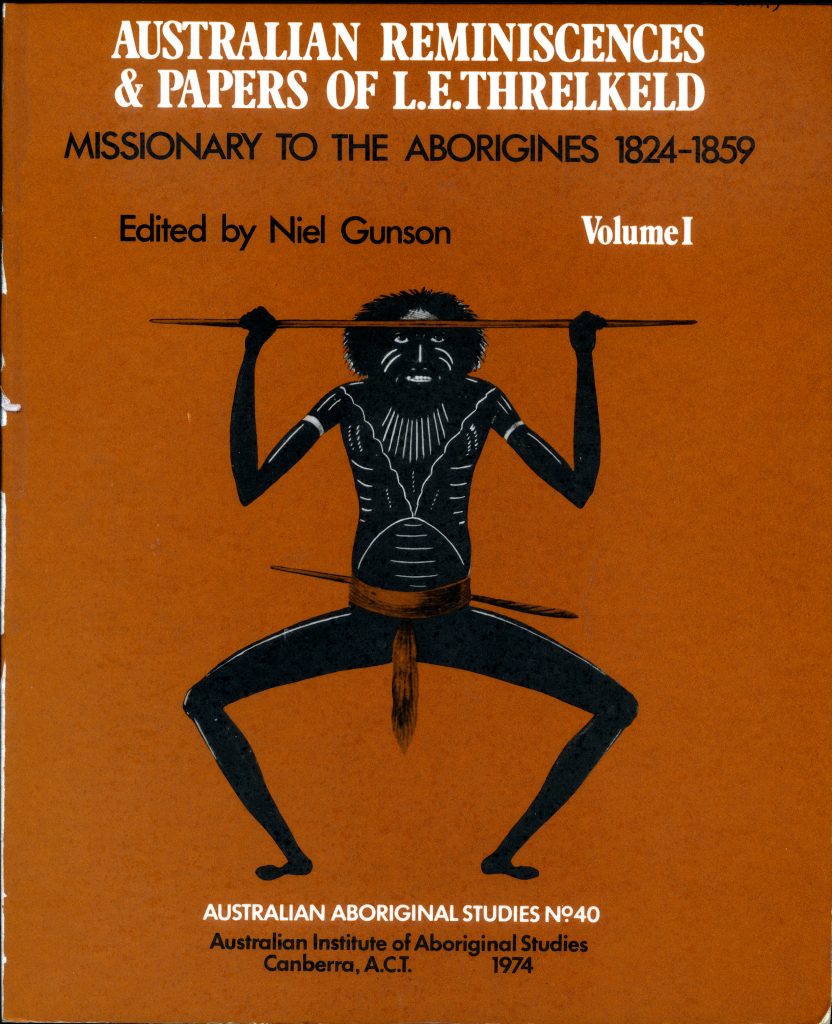
Then, later in 1974, Dr Neil Gunson published a two-volume work on the life of Threlkeld as a missionary in Lake Macquarie NSW. In Volume 1 he includes two statements of his own on Biraban’s early life.
The first on is page 6 which is:
“A boy from the Awabakal tribe was taken quite early to Sydney……Biraban, who was bought up at the military barracks and acted as a personal servant to one of the officers”.
Another statement occurs in Volume 2 on page 317:
“Born c1800…. spent his early years in Sydney as an officers’ servant. In 1821 accompanied Captain Allman to Port Macquarie as a bush constable. He had returned to Lake Macquarie when Threlkeld arrived there…”.
Dr Gunson omitted any reference(s) for this information in his 1974 publication, but is it plausible that Dr Gunson may have been influenced by Dr Champion’s statement regarding Biraban being a “servant to a military officer” in the 1939 address and publication? Perhaps Dr Gunson just added a bit more colour to the story, with the ‘taken quite early’ addition to the narrative?
Click to access threlkeld-gunson-2vols-newscan.pdf
Dr Anne Keary (2009)
The next historian I could trace who added to Dr Gunson’s story of Biraban’s early life was Dr Anne Keary who wrote in her paper published in Aboriginal History Vol. 33 (2009), page 123:
“Born around 1800, Biraban had been taken by the British sometime during his boyhood and assigned as a servant to a Captain John M Gill at the military barracks in Sydney. As a mark of his claim to the boy, Gill renamed him M’Gill. When Gill returned to England, he attached Biraban to a Captain Francis Allman who took him fist to Port Macquarie in 1821, and then to Newcastle in 1824. During these years Biraban developed his cross-cultural skills, working as an interpreter, guide and ‘bush constable’ tracking runaway convicts. He learned to speak English fluently and acquired a working knowledge of the ways of the colonists. It was these skills, no doubt, that led to him being assigned, probably by Allman, to help Threlkeld learn the language of the Awabakal and build his mission station”.
Dr Keary’s only reference for this narrative on the life of Biraban is Dr Gunson’s 1974 work. But, as you can see from the above, Dr Keary included new information.
For instance, Dr Gunson said nothing of Biraban’s attachment to Captain John M Gill or the naming of M’Gill – so where did this all come from?
Reference:
Keary, Anne. “Christianity, Colonialism, and Cross-Cultural Translation: Lancelot Threlkeld, Biraban, and the Awabakal.” Aboriginal History, vol. 33, 2009, pp. 117–55. JSTOR, http://www.jstor.org/stable/24046826. Accessed 2 Dec. 2023.
It gets more interesting…
Dr Geoff Ford (2010)
Dr Ford wrote on page 310 of his 2010 thesis that Biraban was born ca 1805 and,
“The governor (as in Lachlan Macquarie on a visit) was accompanied by his favoured officer, Captain John Mander Gill, who (as was a custom of the day) took into his household a young Aboriginal boy from Bungaree’s Broken Bay mob then at Port Jackson. This lad was reared as John M’Gill (viz. John, boy of Gill) in the officers ‘quarters, where Christian religious instruction was practised. After Captain Gill’s regiment completed their service at Port Jackson and left, adolescent Aborigine John M’Gill became the responsibility of Captain Francis Allman, who took the teenager as one of the ‘Black trackers’ when he went to Port Macquarie to establish a penal settlement there. At this time, John M’Gill became a ‘man’ in Aboriginal terms and took on a new independent persona. When Allman became Commandant at Newcastle, M’Gill – now a young adult almost twenty years old – became superfluous so he was left to fend for himself there, where he was among his own people at the town fringe even although at a distance from his Broken Bay family.”
Dr Ford left no reference for this narrative, but it does make a good story perhaps.
Click to access geford2010-darkinung-recognition.pdf
Professor Grace Karskens (2020)
More recently Professor Karskens wrote, in her fabulous book, People of the River (2020) on page 503 that:
“Born Wehpong around 1800, he was another member of that first generation of stolen children, for he was taken as a boy from his Bahtahbah Country on Lake Macquarie and grew up among men at the soldier’s barracks in Sydney. He became the servant of Captain John McGill of the 46th Regiment, so his English name was M’Gill, or ‘Gill’s boy’. When Captain McGill sailed away in 1817, M’Gill accompanied another military man. Captain Francis Allman, first to Port Macquarie, and then in 1824 to Newcastle.”
Like the authors previously mentioned, Professor Karskens doesn’t provide any reference for the statements in this paragraph. It seems to me that it has become factual because it’s been repeated.
An Alternative Narrative?
But is there an alternative to this narrative of the captured boy servant with the English name of M’Gill? I think there is, and if you have followed this so far, I’d like to explain.
- Magil is the English approximation of his real Aboriginal name.
Robert Browne was an Irish convict artist who spent time in Newcastle penal settlement from 1811 to 1817. He painted and drew many Aboriginal People in the Newcastle district. Two paintings of the same Aboriginal man with the titles of ‘Magil’ in one and ‘Magill’ in the other remain of some of his works. Both of these portraits are shown in corrobboree pose and are listed by the State Library of New South Wales and National Library site respectively as circa 1819.
![Magil, Corroboree dance [ca 1819-20] / [attributed to R.Browne] Courtesy of the State Library of New South Wales.](https://hunterlivinghistories.com/wp-content/uploads/2024/02/1819-Magil-Browne-SLNSW-775x1024.jpg)
![Magill [picture] / [Richard Browne] [ca. 1819] Courtesy of the National Library of Australia.](https://hunterlivinghistories.com/wp-content/uploads/2024/02/1819-Magill-Browne-839x1024.jpg)
I am suggesting that Browne wrote down and recorded the Aboriginal name of his portrait subject as he phonetically heard it said.
Writing it now using what we know of the east coast Language of Lake Macquarie and Central Coast / Sydney it would be ‘Magal’. Phonetically pronounced ‘Mu-gul’. The ‘a’ sound pronounced like the ‘u’ in ‘up or cut”. Try pronouncing Magal in the Language of Lake Macquarie – phonetically it sounds like an Irishman saying ‘Magil’ and perhaps that’s how the Irish artist Browne heard it?
Easily Englishified into ‘Magil’ by Browne and McGill, Mac’gill or M’Gill by others.
Browne has painted a warrior, not a servant boy.
The Capture of Escaped Convicts Kirby and Thomas (1820)
In addition to this information contained in the portrait we know from historical Court records that McGill (Magal) was part of the group of warriors that captured escaped Newcastle convicts Kirby and Thomas on the night of 26th October 1820 in the Newcastle and Lake Macquarie area.
Holding the two convicts at their camp overnight, and then returning Kirby and Thomas to the Newcastle penal settlement the following day, McGill (Magal) and his companion, the famous warrior Nerang Jack witnessed Kirby stab Burragan, who later died of his wounds. Both McGill and Nerang Jack gave verbal depositions in English about this event. The depositions were taken at Newcastle Court by Major James Morisset, Commandant of the penal settlement.
See https://hunterlivinghistories.com/2016/02/09/burigon/ for full details.
What Does “Magal” Mean?
What does the name Magal mean in the local Aboriginal Language? I’m not sure but we do know it would have been only one of several names he would have had.
We know from the 1828 return completed by Threlkeld that one of his names was recorded as ‘Wepohng’. And we also know from Threlkeld’s journal on that in mid-1826 Magal returns from a ceremony that initiated him into the senior men of his Mob with a new name “Be-rah-ban”.
We do know that Aboriginal mothers and fathers named their children with several names and sometimes referred to events of the birth, sights or sounds just after being born, along with animals first seen or caught after the birth. Other names were given at different stages of life. See https://archive.org/details/historicalrecord1pt2sidnuoft/page/310/mode/1up?q=+cove+
For example, Bennelong shared five of his names with Governor Phillip in 1790 but apparently chose Bennelong as the one he allowed the British to use. Bennelong would likely be written in Dharug Language as Banalang – phonetically pronounced ‘Bu-nu – lung”. The suffix ‘lang’ is the ‘with having’ suffix, ‘bana’ is the word for rain. This name possibly meaning ‘with having rain’. Maybe it was raining when he was born?
We don’t have enough records of the Language from Lake Macquarie to deconstruct Magal. However, I’d suggest that Biraban would be written now in Language as Bira-bang – ‘bira’ meaning eagle and ‘bang’ being the bound pronoun for ‘I’. We-pohng would be now written as Gwi-bang – ‘gwi’ meaning fire and ‘bang’ being the bound pronoun for ‘I’.
My thoughts are that Magal was the name the warrior allowed the British to use and it was easily pronounced by them and written as Mac’Gill; McGill or M’Gill. I don’t believe that this warrior’s name had anything to do with a British soldier.
Port Macquarie

And the handing over to Captain Francis Allman and spending time in Port Macquarie penal settlement?
There is a reference to the Aboriginal men McGill, Bob Barrat and Jemmy Jackass working in Port Macquarie as bush constables written by Peter Cunningham in his 1828 work Two years in New South Wales Vol. 2, page 27.
I couldn’t locate any other reference to McGill being in Port Macquarie from 1821 to 1824. There is a reference to Bob Barrat and Yorke, two Aboriginal men from Newcastle helping with negotiations with Port Macquarie Aboriginal people in the Colonial Secretary’s Papers correspondence from Captain Francis Allman on 8 July 1822. This letter also makes mention of Aboriginal women from Newcastle at the settlement. Perhaps the wives of the men from Newcastle?
McGill may have been there, and if he was in the company of Bob Barrat he would have been so as a warrior, not a servant.
How Did Young M’Gill Find Himself In the Military Barracks in Sydney?
So how did he end up ‘being brought up from his childhood in the military barracks Sydney”?
I suggest we don’t have a clear picture of this event and that along with those that have already been speculated, there is another, more realistic possibility.
We do know that Aboriginal children were stolen by settlers and taken in.
We also know form historical records that these children didn’t stay, but left when old enough to escape and return to the bush particularly around the age of 9 or 10 to begin their cultural initiation preparation (see Karskens People of the River 2020)
We also have historical records revealing that military officers in Sydney Cove were encouraged to take Aboriginal children as servants and these children had access to the barracks, but adults we not allowed to enter. See Stephen Gapps, The Sydney Wars, Conflict in the Early Colony 1788-1817, (2018).
And we also know from historical records that there were examples of children effectively using their time amongst the British military, and settlers, to learn English and to become spies (see Gapps 2018 and Karskens 2020 for examples)
Speculations on Aboriginal Strategies In Dealing With The Newcastle Penal Settlement
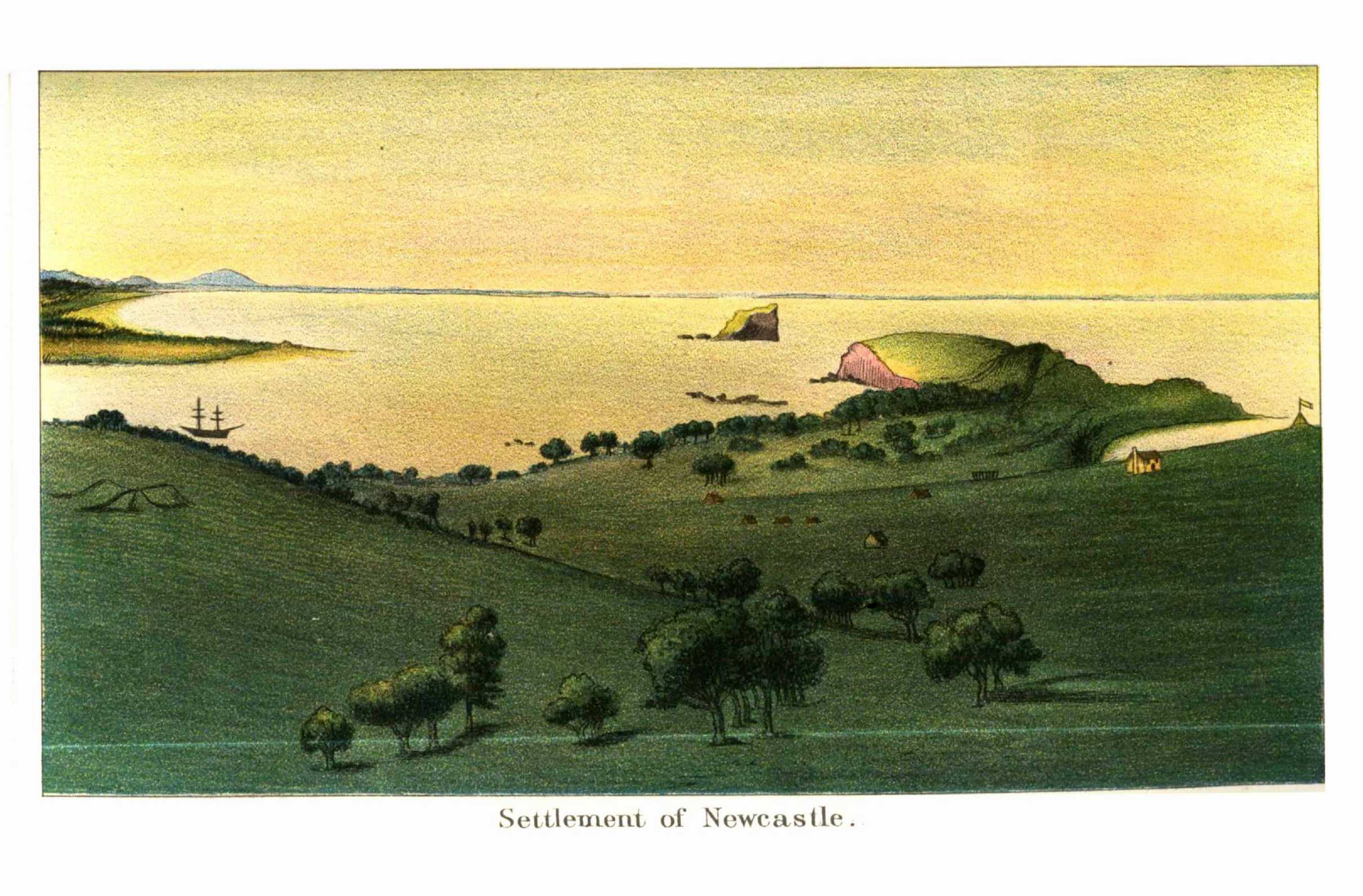
In 1804 the Newcastle penal settlement was permanently established to be a place for desperate characters. Initially a place of punishment for Irish convicts involved in the Castle Hill uprising, it also became a place of secondary punishment of convicts exiled form Sydney. The first Newcastle Commandant, Lt. Charles Menzies, forged a relationship “on the most friendly terms” with the Newcastle Aborigines, assisted by the famous intermediary and Aboriginal leader Bungaree. See David Andrew Roberts https://downloads.newcastle.edu.au/library/cultural collections/awaba/history/convicts.html
But this is the British perspective. Could have Bungaree and the local Aboriginal people be more concerned about managing the British military outpost and its impact on their Country? Perhaps this forged friendly relationship was about keeping an eye on the penal settlement closely and controlling the negative impact of the convicts escaping and harming families?
![Bungaree, chief of the Broken Bay tribe, N.S.Wales [picture] / drawn upon stone by C. Rodius. Circa 1830. Courtesy of the National Library of Australia](https://hunterlivinghistories.com/wp-content/uploads/2024/02/1830-Bungaree-Rodius-806x1024.jpg)
What other strategies might have helped minimise the impact of the penal settlement on the local Aboriginal community in 1804? What advice might Bungaree have offered from his experience of his own interactions as an intermediary?
Perhaps the senior men and women identified a couple of boys young enough not to be considered a threat, but old enough to interact and learn from the British to move into the Sydney military barracks to learn English and start their role of intermediary for the Mob. Born around 1796, Biraban would have been around 8 years old in 1804. Perhaps he and possibly a couple of boys his age were sent to Sydney with a goal in mind. And with the support of extended family in Sydney, spent a couple of years working in the military barracks, listening, and learning.
Conclusion
Biraban may have been a servant to an officer, or he may have worked as an assistant in the kitchen or in the stables. It doesn’t really matter, as he would have only remained long enough to learn and provide information back to his Mob.
As Stephen Gapps has powerfully researched and recorded, the Sydney wars were well and truly underway across the Cumberland Plains and Hawkesbury during this time.
Perhaps Biraban stayed two years amongst the British and returned home to his Mob in Newcastle and Lake Macquarie region around the age ten to begin his path towards his first initiation at age around 12. With this cross-cultural knowledge, his intelligence, and skills he played an ongoing role as ‘go-between’ or intermediary between the British and his own Mob for many years.
This is a better narrative for his early life.
A warrior first and foremost.
Leigh Budden
February 2024
Fascinating and great work.
I just realised I didn’t comment on the claim that Magal (M’Gill, Mac’gill, Magil) had an ‘excellent command of english’ (Champion 1939) and was ‘fluent in english’ (Keary 2009). Threlkled wrote in his diary on the 1st of June 1825 that Magal speaks ‘very fair english’ and the visiting Quakers to Threlkeld’s mission in April 1836 wrote that Magal was ‘tolerably conversant with the english language’. It seems to me that Magal was a man of many talents including having the patience to tutor Threlkeld, but is it possible that historians in the 20th and 21st Centrury stretched ‘very fair and tolerable’ into ‘excellent and fluent’?
Thank you for a provoking and thoughtful perspective.
The theory that Biraban was a Darkinjung man seems to stem from Ford’s reading of Bennett (1969). Bungaree had recently moved to George’s head and a number of his group did provide service to the colonists. However, Bennett describes MacGill’s “recruitment” as being from the Central Coast about the same time, but also points out he was fluent in “Awabagal”. The number of secondary sources placing him from the Lake Macquarie region, and his willingness to return to that area suggests he was not Darkinjung. Also, Capt Gill was from the 46th regiment of foot who came to NSW in Feb 1814 and stayed till 1817. To my knowledge they had no operations on the Darkinjung lands. This regiment was that of Thomson and Wallis- commandants in Newcastle- and thus would have every chance to abduct/convince/negotiate a child or teenager to go to Sydney as they were involved in the Newcastle settlement during that time. Such a possible negotiation can be seen in Wallis and Burigon agreeing for Burigon’s son to attend the Parramatta Native institution a few years later. We know he was in Newcastle again in 1819 and 1820 by the Browne painting and presence at Burigon’s stabbing. Sources suggest he was recruited by Allman from 1821 with the other two men because of their usefulness in tracking convict escapes and negotiations with locals. Allman was on the board of the Threlkeld Mission and there is no suggestion I can find that Biraban was not making his own decisions about how much he cooperated with Threlkeld. So I have found no evidence he was “passed on”. I suspect you have a good point about the language fluency as the above timeline would suggest he was in the barracks for 2-3 years- 5 at max. I cant add anything about his age when he left, but the painting of Browne in 1819 suggests he was more a teenager than a child?
I am fascinated by the possibility that his placement in the barracks could have been part of an indigenous strategy of dealing with the invaders. Invoking Bungaree in this gives it credence given his behaviour around the arrival of Grant’s party and his capacity to think through the colonists actions. It also gives us a new light to look at Burigon’s decision to place his son– not just to get him to learn to build a boat- but to learn other things that may protect him and his people?
thank you for your thoughts and feedback on the article Stephen. I wonder if Bungaree followed a similar path as a boy to learn his english language and cross cultural skills. Is it possible that as a young boy Bungaree was identified by the senior men and women of his Mob, and with his father’s and mother’s support spent time in the Sydney barracks learning, observing and reporting back? He then kept his commitment to this mediator or go-between path that was chosen for him by his People for the remainder of his life? Like Magal seems to have?
Stephen Gapps (2018) reports on a girl by the name of Boorong, the daughter of a senior man of the Parramatta Mob named Maugoran, who was placed with the Chaplain Richard Johnson to learn english. Boorong takes on the mediator and translator role at the meeting between the British and the Sydney People following Govenor Phillips spearing. A role she apparently takes on very successfully at this meeting in September 1790. Maybe this strategy of purposely placing children with the British was implemented very early in the first contact years?
Who was Biraban’s mother and father? Were they around in approx 1814 when their son was sent to Sydney Barracks. Biraban was in his early childhood when he was sent to Sydney so most likely he was born around time of settlement in Newcastle. Was Commandant Thompson ordered to obtain young Aborigines as servants for his regiment in 1814? This is most likely the case but I find it hard to believe Biraban was stolen by the Government. Although at the time Governor Macquarie was having trouble with skirmishes from several tribes south of Sydney Town Some sort of negotiation would have taken place to answer to the parents of the young child. A boat was built for Burigan to have his child sent to Sydney. The practice of taking Aboriginal servants would go back to early settlement when life and survival was a daily struggle. Servant or no servant, Biraban learned christianity and the English language, but was always connected to his Buttabah people. Biraban knew that he and his people had been corrupted by the white man and the extinction of their race was in severe danger. He was certainly a warrior, as was all of the aborigines of the time, they protected their families and land like anyone else would. Great work and I hope you find the real truth about your local culture and people. As historians like to tell the history from their prospective without references and gradually over the years the real story changes. This is exactly what has happened to Lake Macquarie’s history.