
Quirindi High School Students Visit the University of Newcastle
On Thursday 17 September we were honored to host a visit of students and teachers from Quirindi High School. The delegation had traveled three hours to visit the University, and so we wanted to make the experience a very memorable one.
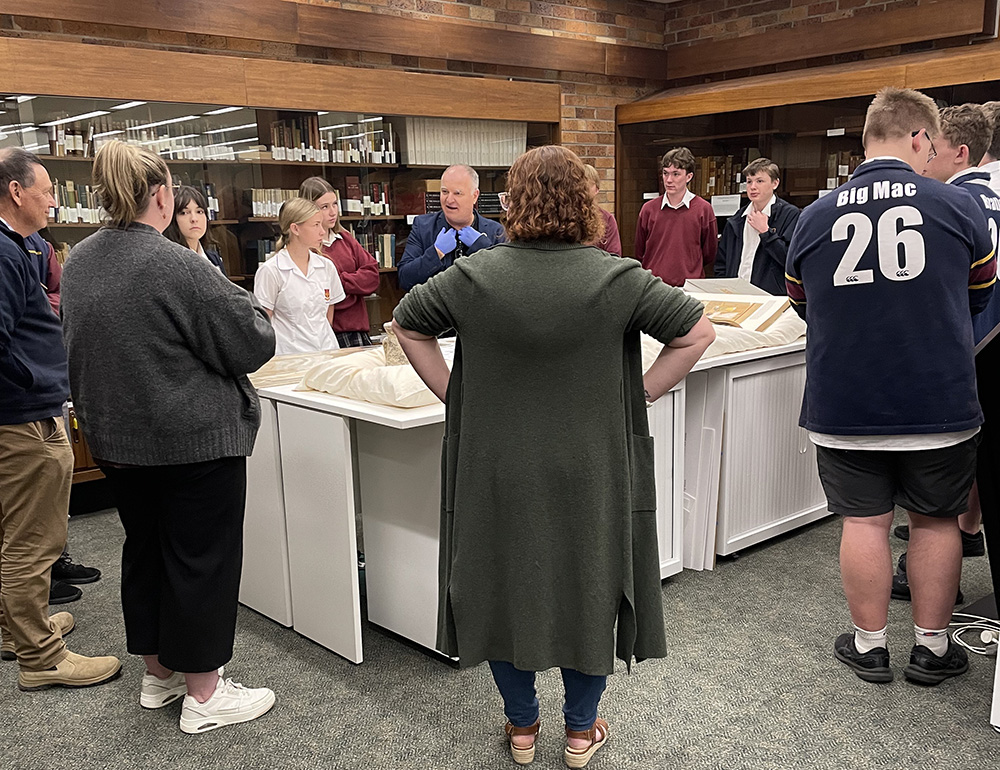
Ancient History Workshop on Ancient Graffiti and Making Your “Mark”
The students attended an Ancient History Workshop run by Dr Nic Kimball in Auchmuty Library on ancient graffiti, and making their “mark” in history.
Students Visit Special Collections & Archives (Auchmuty Library)
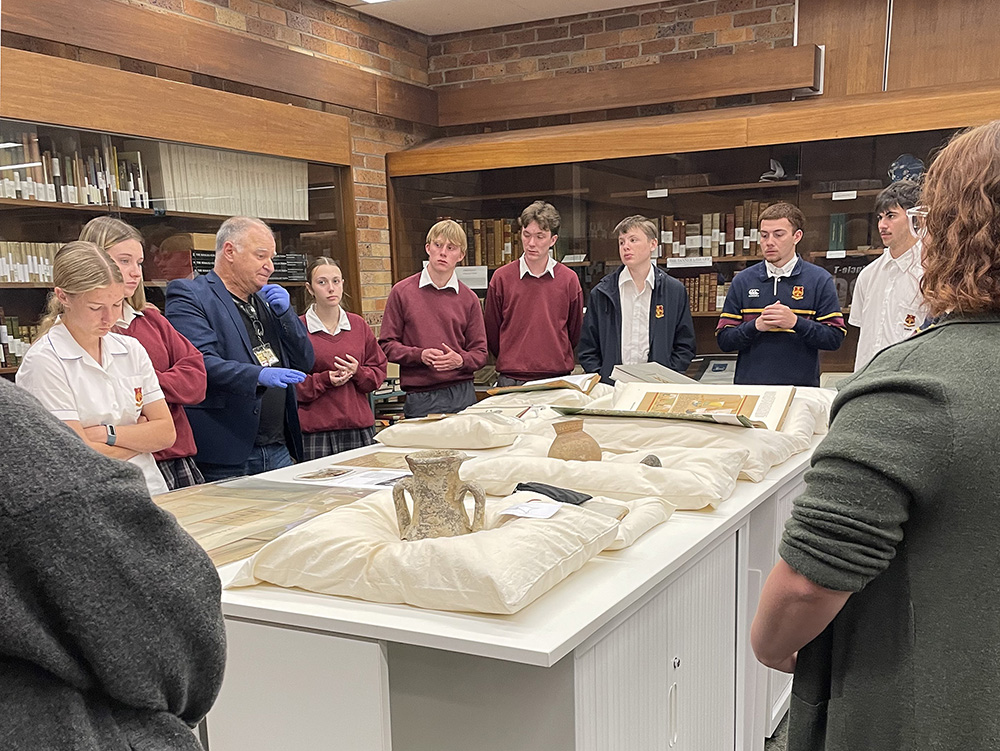
At the conclusion of the workshop, and after lunch, the students and their teachers made their way down the stairs to visit Special Collections & Archives to view and interact with ancient antiquities, archives and rare books in the custody of the University.
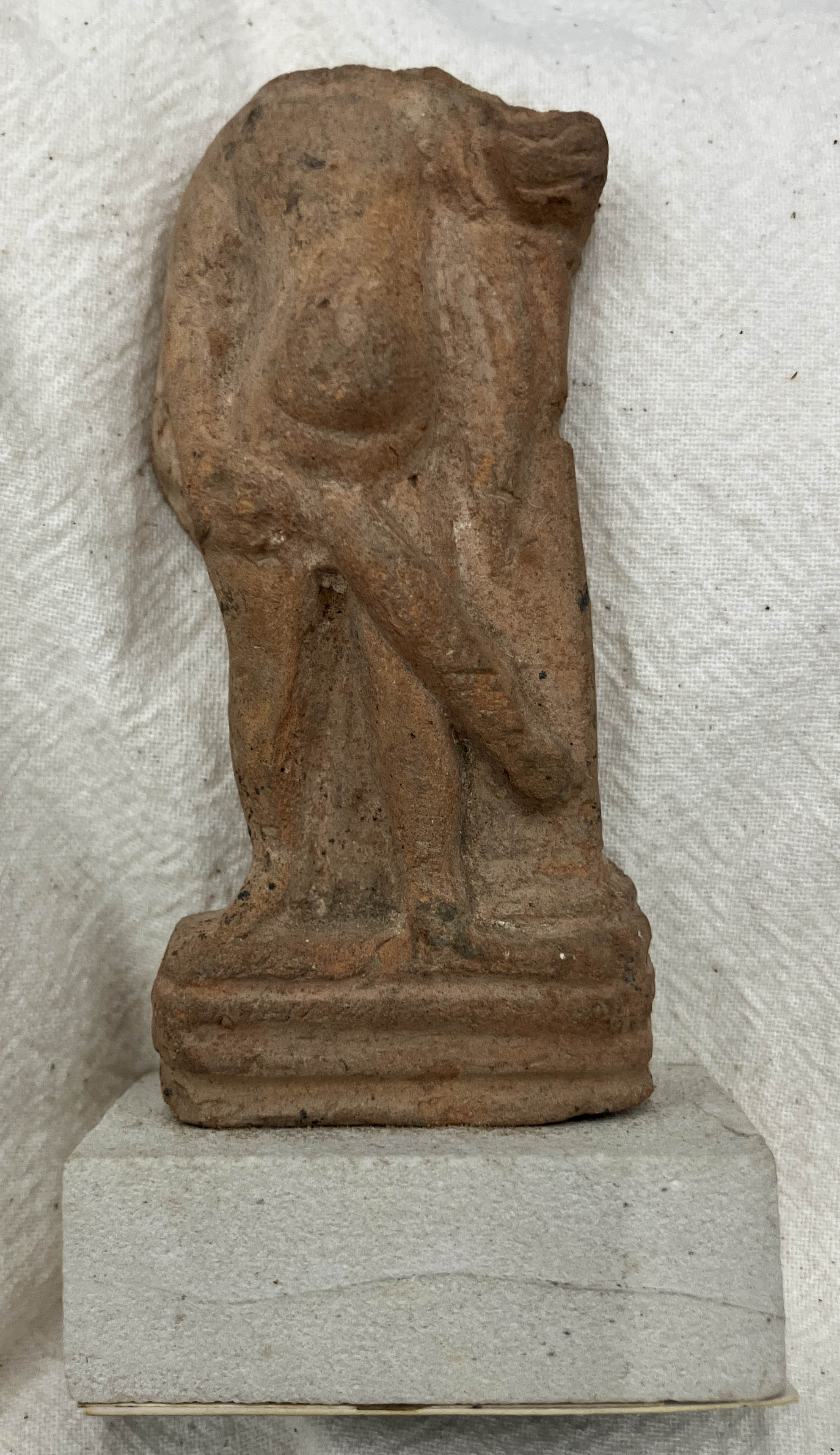
The Priapus Statuette was hidden under a black silk cloth. Provenance, Roman Egypt, circa 1 to 2 centuries C.E.
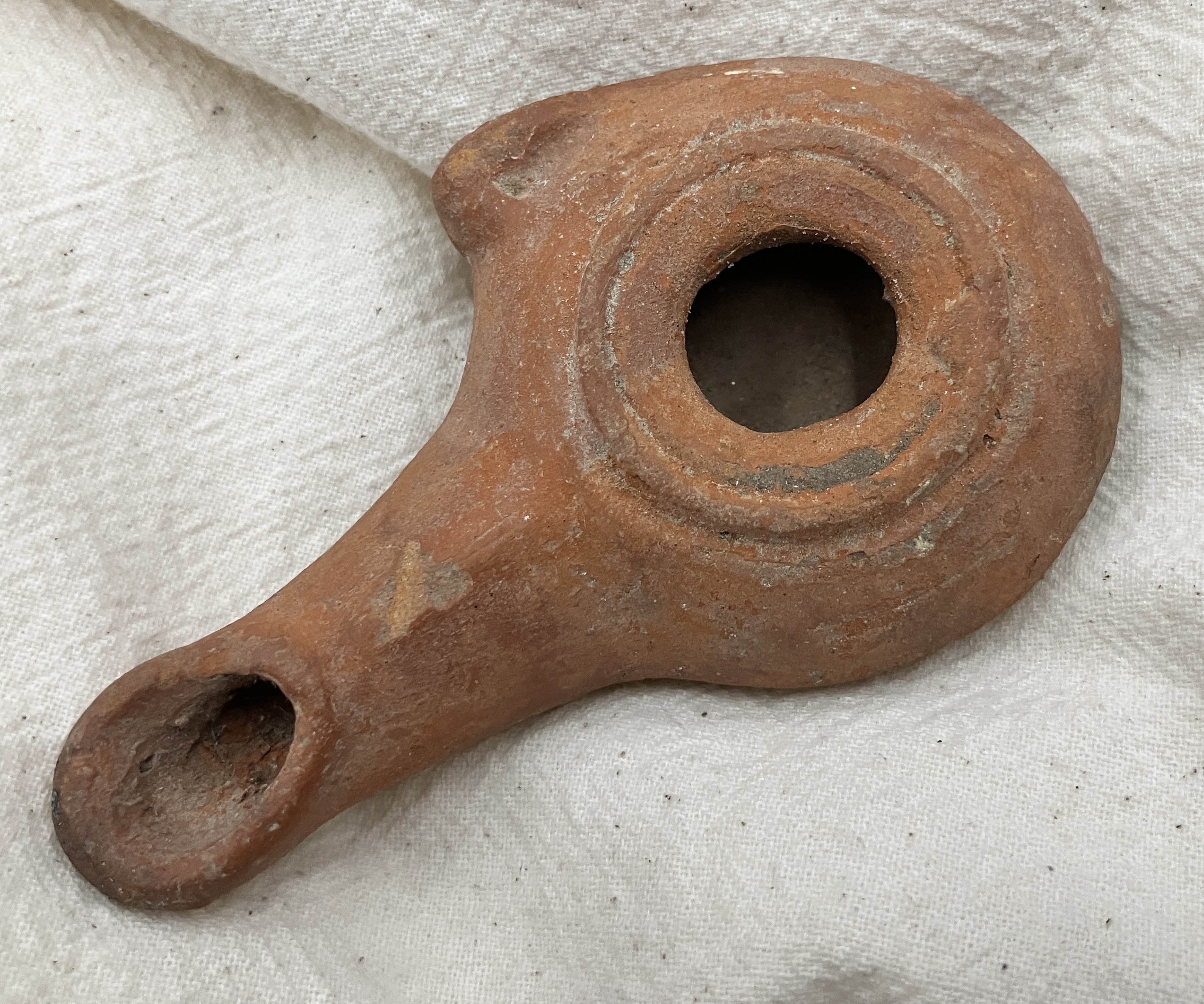
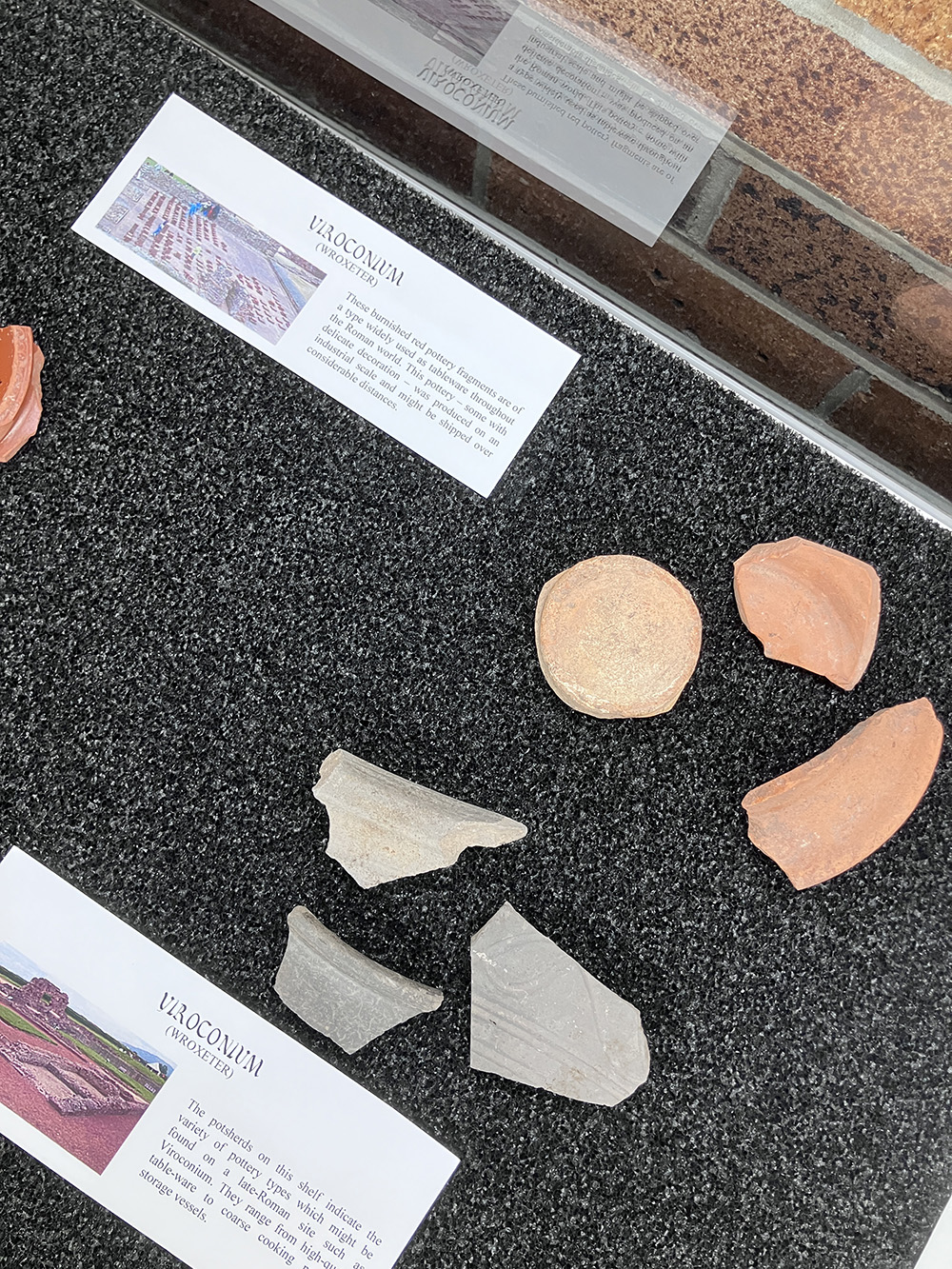
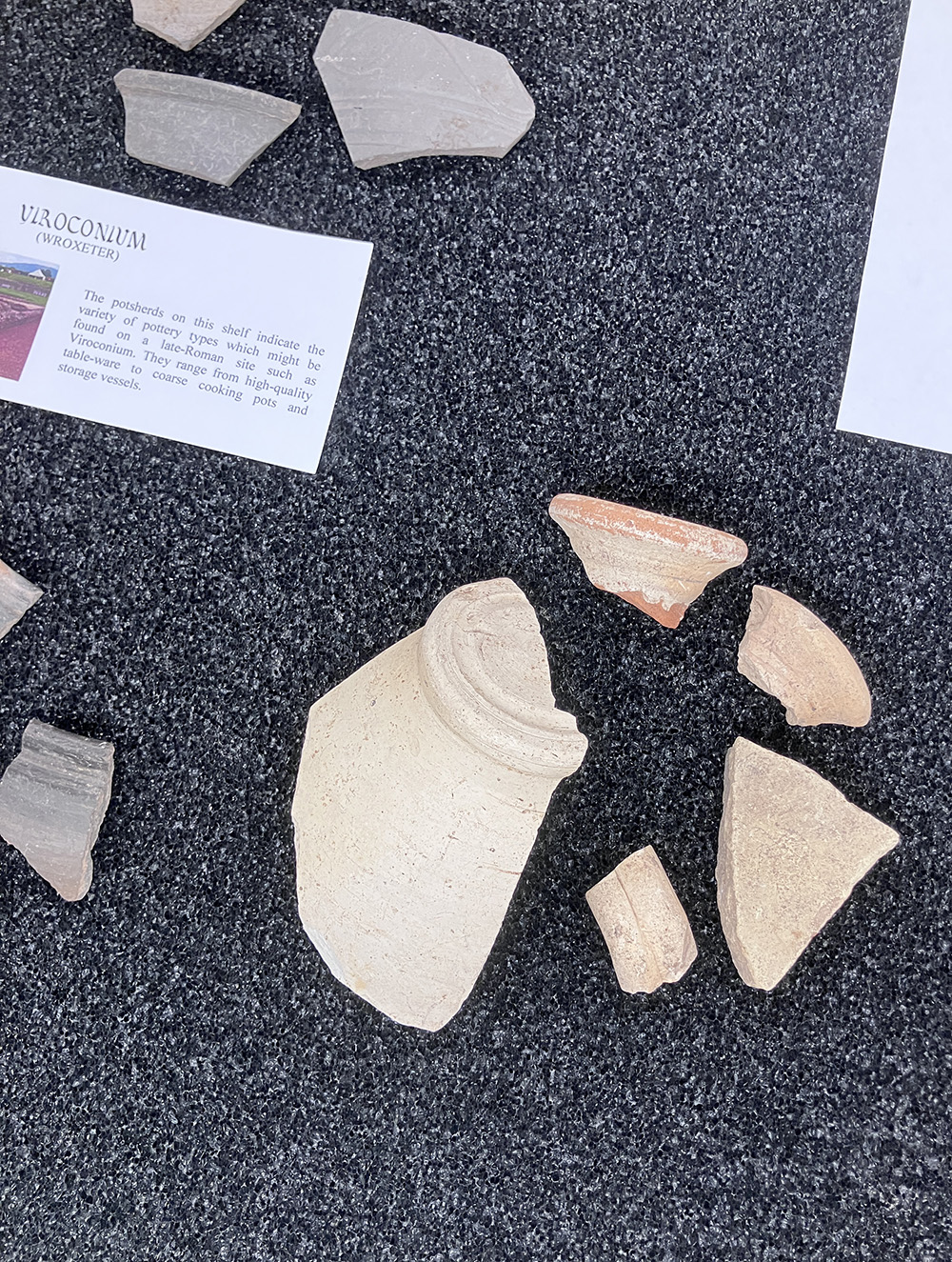
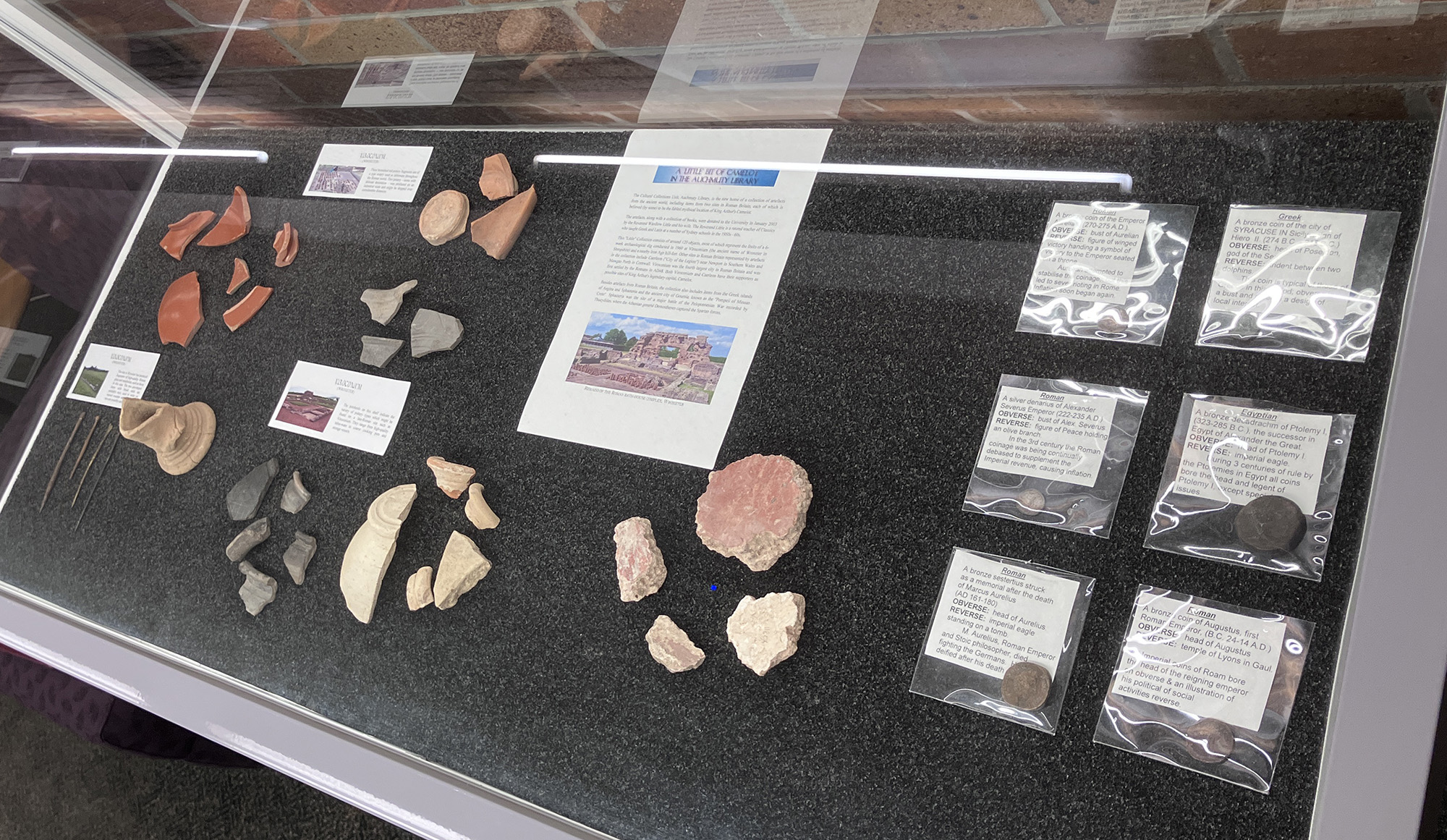
The students viewed and experienced Egyptian, Greek, Roman, and Roman Britain (Viroconium) antiquities and artefacts dating back 2000+ years and archival materials on the history of Quirindi and Kamilaroi people and language from the Rare Book Collections.
Archives and Rare Book Treasures relating to Quirindi and the Kamilaroi Nation
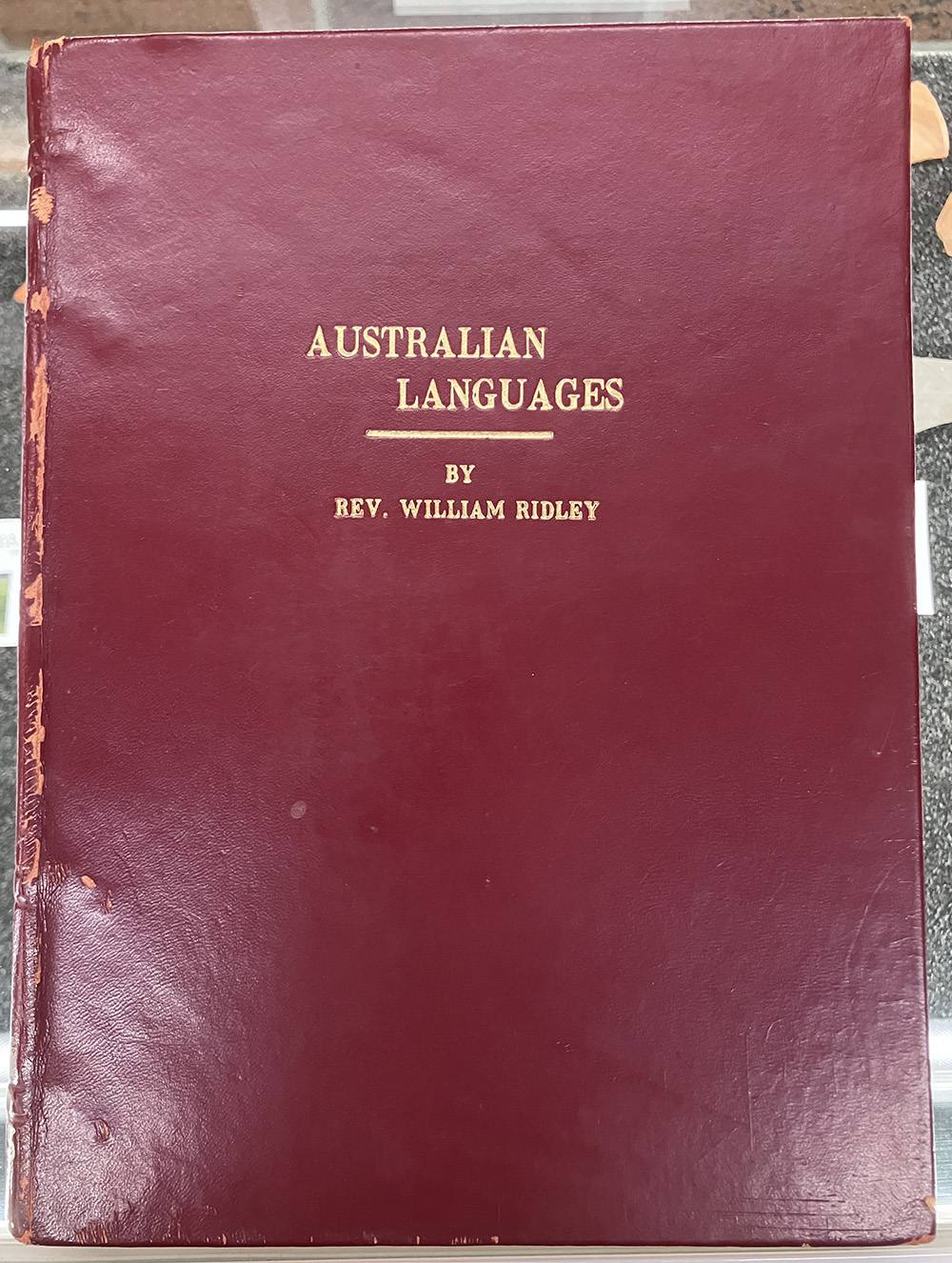
The students were also presented with a number of archival and rare book treasures relating to their home, the township of Quirindi. These included the works of the Reverend William Ridley who recorded a number of languages including Kamilaroi. Even though they were viewing 2000 year old artefacts from Egypt and Rome, the human footprint in their own backyard dated back at least 47,000 years.


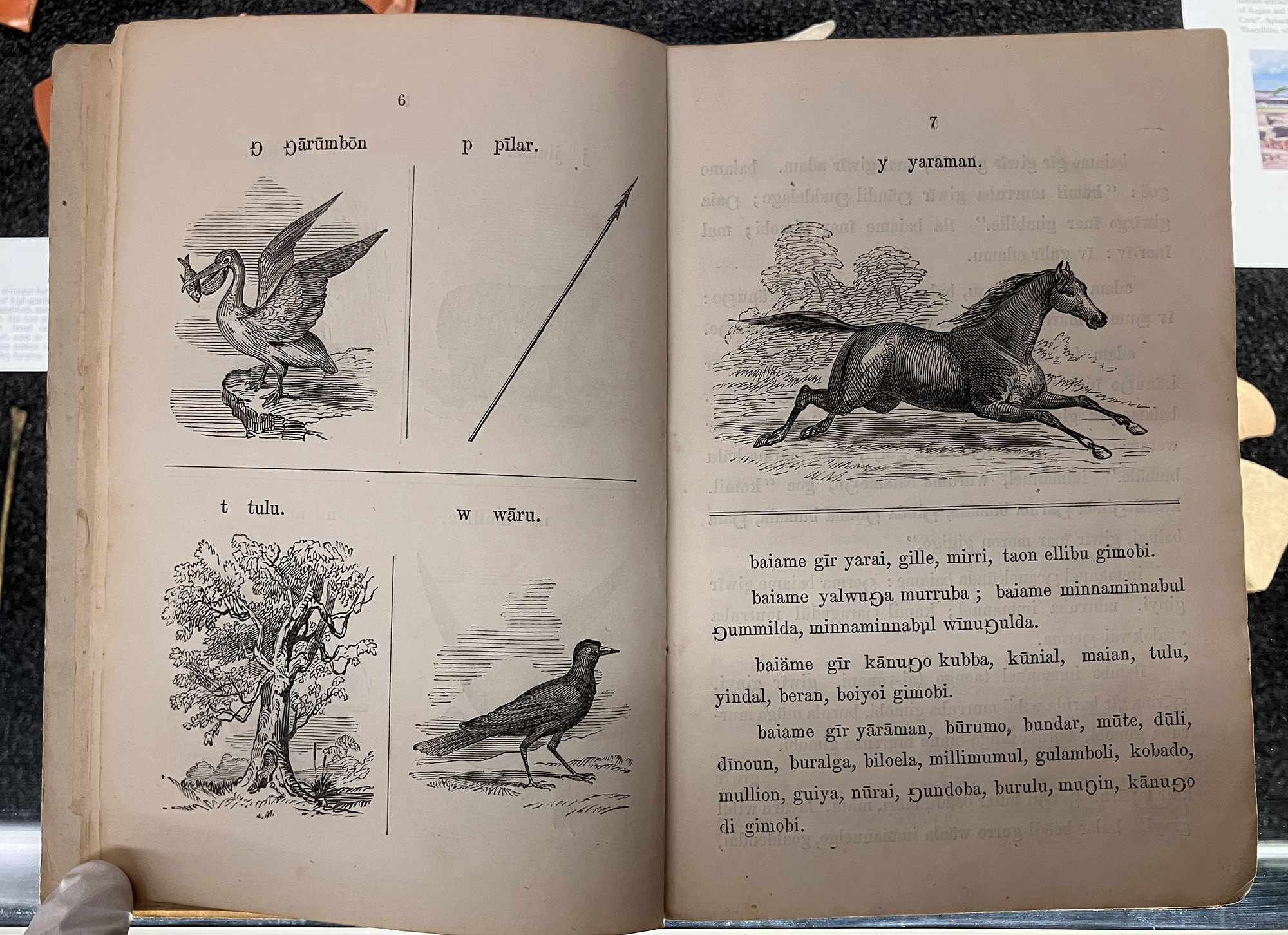
What Was The Original Meaning of the Word Quirindi?
The Reverend Canon Carlos Stretch was obsessed with Aboriginal place names and recorded 5,500 such names in his research papers.
Canon Stretch records the meaning of “Quirindi” as an Aboriginal word meaning:
“A dead tree on top of a mountain” or “A nest in the hills”
Quirindi Linguistic Analysis
The students were then shown some linguistic analysis, or the sound, from the excellent work of M.J. O’Rourke The Kamilaroi Lands: North-central New South Wales in the early 19th century:
-
QUIRINDI.
The town and the creek that runs through it. Modern English pronunciation ‘kw’RIND-eye’.
Quirindi and Cuerindi, the latter near Manilla, may well share a common etymology.
1831-32, Mitchell, White and Parry: variously rendered as ‘Cuerindie’, ‘Kuwerindi’ (the station) and ‘Gooerinda’ (the creek).
1848, squatter lists: ‘Curindi’ station, held by the Loder brothers.
1900, Science of Man: ‘dead tree on a mountain top’ [cited by Atchison 1976: 18].
1922, Cain: ‘where fish breed’.
1958, McCarthy and Thorpe: ‘dead tree on mountain’ (from Science of Man).
1959, Green: ‘dead tree on mountain top’ [in Northern Daily Leader, 2.10. 1959].
1976, Atchison: ‘nest in the hills’ or ‘place of many possums’ or ‘where fish breed’: a name or names that denoted a crossing place, camp-site and fishing-hole on the creek. [Cf Mathews’ kurrawir, ‘ringtail possum’.]
1982, Forsyth: ‘dead tree on a mountain top’ [after Green].
Following Cain, the stem appears to be guya ‘fish’. So perhaps guyà+[rin]-dhàay, ‘fish’+ dhaay, ‘to here’: ‘(where) fish (are found) on this side’? Cf Ridley’s guwiya or guiya (guya) ‘fish, generic’, and Mathews’ dhai (-dhaay) ‘this way, to here’. Or the ending might have been Williams’ -nda (singular) or -ndhaay (plural), the bound form of the 2nd person [‘your, of you’]. So perhaps guyà+[ri]+ndhàay, ‘fish+there+of you’ – ‘your fish (three or more of you)’?[1]
Mahaffey 1982: 105 and Forsyth 1982 say that nearby Quipolly [gùyabàali] meant ‘waterholes with/containing fish’. That is, guya-baa-li, ‘fish+many+source’. Hence, more exactly: ‘where there are many fish’.
[1] Bound form: pronouns (you, your, yours etc) occurred sometimes as separate words (“free” pronouns) and sometimes as suffixes (“bound” pronouns). Note too that where English has only singular and plural, Gamilaraay had singular, dual and plural forms: 1. you (one), 2. you-two, and 3. you-all/three-or-more.
O’Rourke provides sources for both of Stretch’s meanings. The students then returned to the Reverend William Ridley’s work to find this sound for fish or guiya:
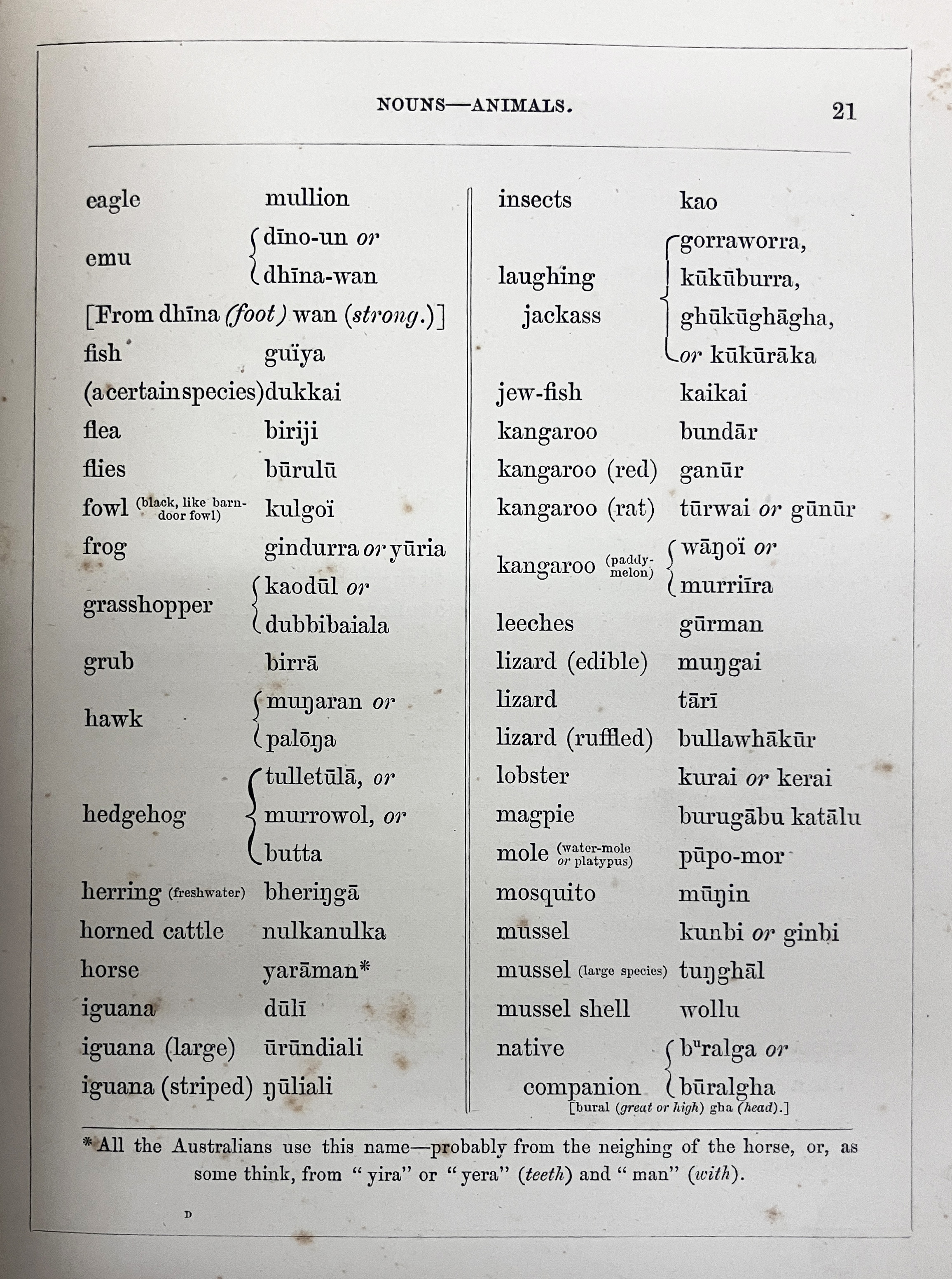
Therefore Quirindi appears to mean “where there are many fish”. The students were asked if this could be true? Were there rivers or lakes with many fish?
Quirindi in the Pender Archive
They were also shown a number of Pender plans relating to buildings in the township. They are all still there.


Nurse Ellen Savage – Only Female Survivor of the Sinking of the Hospital Ship The Centaur, 1943
Sister Eleanor Savage was born in Quirindi, and was the only nurse to survive the bombing of the hospital ship the Centaur in 1943. She luckily knew how to swim. She trained at Newcastle Hospital, and after the war returned to serve there.
A8866(vii) Sydney Daily Mirror, Tuesday, May 18th, 1943, pp 1-2, reporting on the sinking of the hospital ship Centaur off Brisbane by a Japanese submarine. The only female survivor and only nurse to survive was Sister Eleanor Savage, who trained at Royal Newcastle Hospital and returned there after the war. (laminated) [Retrieved from Royal Newcastle Hospital, 26th September, 2007]

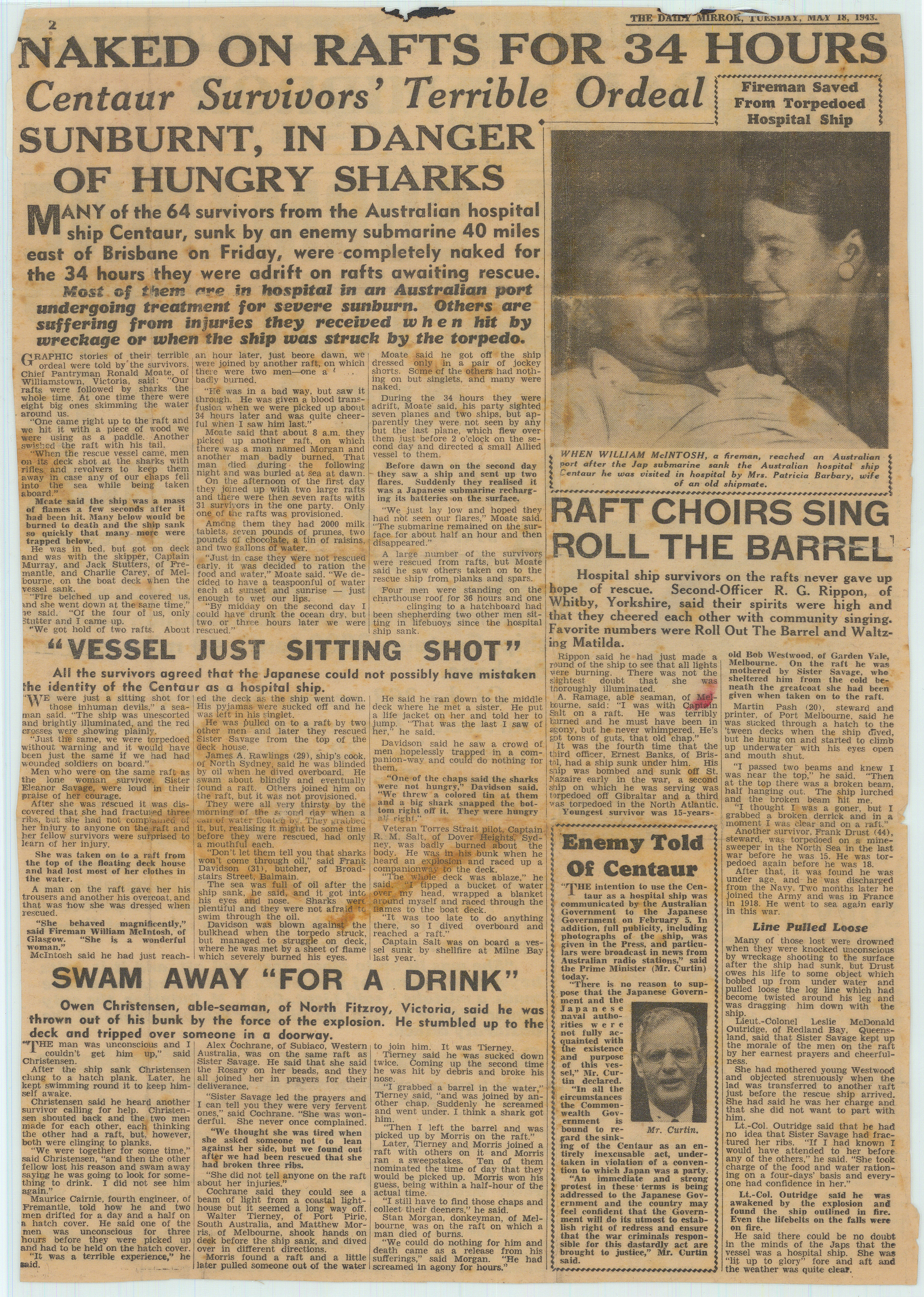
One year later, Nurse Savage received a bravery award.
Number of students: 15 with two supervising teachers (Quirindi School), two lecturers (Dr Nic Kimball and Dr Ryan Strickler) and two staff members of Special Collections & Archives (Davina & Gionni)
Davina Pellatt
Archives Engagement Officer
and
Gionni Di Gravio OAM
University Archivist & Chair, Hunter Living Histories