Conservator at University of Newcastle
Climate Extremes as The New Norm
Climate change intensifies these risks, creating extreme wet and dry cycles that increase the probability of wild floods and fires in major population centres such as New South Wales, Victoria, South Australia, and Western Australia. Since the recent catastrophic wildfires in Los Angeles, one can read several articles suggesting that located in one of the world’s most flammable continents, Australian cities potentially have an elevated risk of devastating bushfires, as we observe in LA.
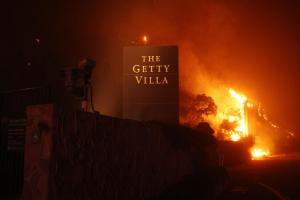
The main cities of New South Wales, Victoria, South Australia, and Western Australia are home to major cultural institutions of the country. It may sound untimely to talk about fires when we are dealing with heavy rain and high humidity but the recency of the LA fires and sudden nature of climate cycles make it apt to learn from Getty’s experience and consider how ready we would be if the same thing happened here. This thought hit me during the 2019 disastrous black summer fires when I was desperately thinking about what could be and should be saved from our collections if the fire advanced more. It was lucky that the 2019 fires did not reach our major cultural institutions as the fires did reach the Getty. But the LA experience can teach us a great deal.
The Getty Villa is home to thousands of priceless cultural relics from 6500 BC to 400 AD. LA Times reports that the emergency operations centre was activated in response to the fast-moving Palisades fire. From Katherine E. Fleming, the Getty Trust’s President and Chief Executive, reflections, we can see that provisions and fire plans implemented in the centre’s disaster planning were the major factors contributing to the centre’s success in fighting fires. These measures included provisions for construction, staff training, and regular maintenance.
Key Elements of the Getty’s Disaster Preparedness
While Getty is often viewed as a wealthy institution with significant staff knowledge, funding, and management vision, its success in fire preparedness is largely due to activities that can be adapted by smaller institutions as well. In general and based on the reports, we can divide the Getty’s measures into three categories:
- Staff Training:
- Highly trained museum staff played a crucial role in emergency response. According to The Wall Street Journal, approximately 45 staff members were instrumental in defending the facility. This highlights the importance of equipping personnel with specialised training in disaster scenarios.
- Preventative and Passive Conservation:
- Extensive bush-clearing and landscape maintenance, including pruning the landscape with the risk of catching fire, Ensuring tree canopies were high off the ground, Trimming and thinning the low-lying bush and Irrigating the grounds were key factors in mitigating fire risk.
- Fire-Resistant Infrastructure:
- The Getty buildings’ double-walled, fire-resistant structures and sealed doors provided essential protection against smoke and heat damage. Perimeter walls also helped slow the spread of fires, offering an additional layer of security.
Areas for improvement:
- Communication Systems:
- The report shows that security cameras tend to fail due to excessive heat, and long-range radios are key in facilitating communication between staff.
- Ash and Water Management:
- The ash accumulation from the fire prevents the water from draining into the affected spaces; therefore, provisions to clear the ash from blocking waterways are necessary.
Implications for Similar Institutions
The Getty is a high-end example with the resources and vision to predict, prepare and implement disaster plans well before the disaster. While I am aware that not all institutions have the same resources, having a functioning disaster plan is crucial in avoiding irreversible costs and damages. More than anything, their example underscores the importance of passive conservation and training in mitigating the challenges of a changing climate. We live in a time when environmental extremes seem to be the new norm; in this situation, disaster preparedness must be an ongoing and dynamic measure, and we need to check our preparedness more often.
By Dr Amir Moghadam,
Conservator, University of Newcastle (Australia)
One thought on “Preparedness Pays Off: The Getty’s Wildfire Response Lessons”