
CAN MONTHLY MEETING
10am on Thursday 3rd October 2024
For Members and Invited Guests
Our special guest this month is:
GIONNI Di GRAVIO OAM
Gionni has been a supporter of CAN from our earliest days and continues to make a significant contribution to our region and beyond.
Since 2008, Gionni has been the University of Newcastle Archivist and Chair with the Hunter Living Histories Initiative and has served as Councillor on the Australian Society of Archivists and Representative on GLAM Peak Australia, representing Galleries, Libraries, Archives, Museums and Historical Societies and related institutions around the country.
As University Archivist Gionni safeguards and makes accessible the archival primary source treasures from the Hunter & Central Coast Communities. These archives are held in the custody of the University of Newcastle for current and future research. He has a specific goal to help foster a new approach combining the best of Aboriginal First Nations Custodial science and Love for the Land and all things, with the best of western science to safeguard the Earth for future generations.
Gionni’s Presentation will be a ten-year review of the University’s work from 2014-2024 with regards to improving access to care leavers to Children’s Home Records including the highs and lows.
Improving Access to Children’s Homes Records for Care Leavers in the Hunter Region
FOUR OBSERVERS
This month the CAN Leadership Team has invited four OBSERVERS to join us
Professor Ute Leimgruber is a professor of theology at the University of Regensburg, Germany. Professor Ute is an expert in pastoral theology and sexual abuse of children and women in Catholic Church. She is an eminent theologian known widely in Europe for her work examining this topic.
Dr Magdalena Huerten is a post-doctoral researcher and theologian also from the University of Regensburg, Germany. Magdalena is an expert in historical analysis of abuse of women and particularly nuns in the Church. She has developed a new methodology to read historical texts and archives for evidence of abuse.
In partnership with Dr. Kathleen McPhillips and Dr. Tracey McEwan, these four internationally acknowledged researchers are the holders of the Australia-Germany grant which is a grant managed by Australian and German governments to fund projects between the two countries. The Team Leaders are Dr. Kathleen McPhillips and Professor Ute Liemgruber and of course, Dr. Kathleen and Dr. Tracey are well known to CAN members.
The Project
The project is examining the sexual and spiritual abuse of Catholic nuns historically and currently. This segment will involve visits by the researchers between the respective countries during 2024 and 2025.
Outcomes of the research: contribute to knowledge about sexual abuse in the Catholic Church through presentations and publications. A future project is to undertake a global survey of Catholic nuns in 2027.
We welcome Professor Ute and Dr. Magdalena to Australia and Newcastle and we feel especially privileged to have them join us to personally experience a CAN meeting.
Looking forward to seeing you on the 3 October 2024
BOB
Website: https://clergyabusednetwork.org.au/
SPEECH NOTES
INTRODUCTION
- 10 year retrospective (2014-2024) on how we have improved access to Children’s Home Records for Care Leavers, Families, Investigators etc.
1. WHAT WAS IT LIKE BEFORE 2014?
- What we hold? Dating from circa 1915 – early 1980s when they came to us in the University Archives.
- Includes:
- Registrars Papers,
- St Albans for Boys (Cessnock),
- St Christophers (Taree),
- St Elizabeth’s for Girls (Mayfield & Singleton),
- St Hilda’s Hostel for Girls (Newcastle)
- Anglican Diocese Social Welfare Arm – The Samaritans – Privacy/Confidentiality, and Process of accessing records, access to counselling
- Length of time to process
2. 2014 – November 2020
- 2010 Begin relationship with Find & Connect – lists of Children’s Homes related records to be made available online.
- November 2012 Julia Gillard recommends to Governor General a Royal Commission into Institutional Abuse,
- Wrote to Samaritans, wondering whether we could digitise as well?
- Early 2014 Digitisation & Indexing begins in earnest.
- Some Funding, mostly volunteer and professional staff – team:
- i. Dr Edward Bridle, Project Archivist, and Indexer (Made Redundant in November 2020)
- ii. The late Mr Chris Bourne (Volunteer)
- iii. Susan Paton, Archives Officer (Made Redundant in November 2020)
- iv. The late Mr Gregg Heathcote, Archives Officer
- v. Mr Joshua Curley (Volunteer and Contract Worker)
- vi. Ms Cherie Lynch (Volunteer)
- 2015 – ASA recommendations to Royal Commission
- 2016 – Missing St Alban’s Boys Home Records?
- 2018 – “University revokes Priest’s Awards” – Father Brock (Inspiration: Phillippe Mora Swastika (1973) – if we keep seeing monsters we will not recognise them when they appear in human form.) Do not sanitise history, we need to understand the modus operandi of perpetrators and the way they woo institutions, friends and family and the wider communities.
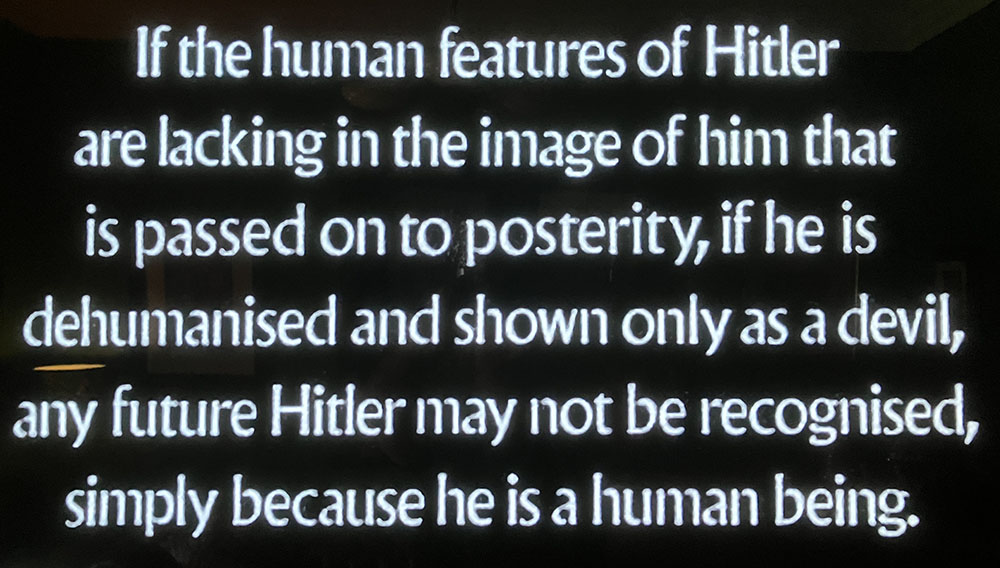
Swasika (1973) Opening Title by Director, Phillippe Mora.
- Statement composed to accompany all online digital information concerning Father Brock:
“On the 31 August 2018, the Council of the University of Newcastle (Australia) resolved to revoke the honorary Master of Arts degree awarded to Father Peter Brock in 1987 and also the 1989 Newton-John Alumni Award that was awarded to Father Brock in 1990, in response to a complaint following the Diocese of Maitland-Newcastle acknowledgment in September 2017 that Father Brock was the subject of substantiated abuse claims. The church report found he “engaged in a range and pattern of behaviours” and that “That range and pattern of behaviour constituted sexual misconduct as defined by the NSW Ombudsman Act 1974,”Father Brock’s name has been removed from a list of Newton-John award recipients since 1977 who have achieved excellence in arts, creative sectors and culture. Through this action, The University of Newcastle recognises the distress caused to victims and survivors of institutional child sexual abuse, and their families, and seeks to acknowledge and respect their wishes.”
3. 2020 – 2024
- Library Restructure, key officers unfortunately made redundant.
- Project Results: 60,000 pages of material, had been processed. This Index, now nearly complete, contains an estimated 8,000 named entries and is regularly called upon by investigators in need of urgent response to subpoenas and other formal requests from care leavers and their families.
- Project comes to halt, but success is that for majority of enquiries wait time for records is reduced from weeks to a matter of hours. However, in depth expertise is gone. What of the next generation of young professionals?
- 2023 Loud Sky Exhibition – The LOUD SKY Exhibition was curated by Dr Kathleen McPhillips and Rod Pattendon, and team at the Lock-Up and held 1 April – 21 May, 2023 at The Lock-Up gallery, Hunter Street, Newcastle, NSW. Digitised and now available online.
4. Conclusions
- Commitment to Evidential Record Keeping. It is important that institutions openly embrace and integrate the idea of evidential record keeping as core business so that:
– Records must be made
– Records must be accurate
– Records must be authentic
– Records must have integrity
– Records must be maintained and useable
– Records must be protected by law
– Records must be guaranteed freely access to care leavers, their families and those advocating on their behalf.
- Commitment to Archival and Record Keeping Professional Practice.
i. Authority Vs Power? Archival Professional Practice is a set of checks and balances that guard us against our human frailties and failings. It is essential that when undertaking important services in which we have the physical, mental and spiritual care of others in our hands, that we have accredited professionals supported and resourced to undertake their professional practice within their institutions, that an appropriate recordkeeping regime is in place to ensure everything is being done properly, and finally, that the records of ongoing value are safeguarded, so that if something emerges down the track, we have some recourse to return and examine what went wrong from the original evidence.
ii. Foster a culture where evidential record keeping is CORE business
iii. Enable staff have access to appropriate and accredited archival training and educational tertiary courses. It is preferable, where applicable, to employ staff who are archives and record keeping professionals. For smaller institutions and volunteer organisations, there may be affordable training packages available through the Australian Society of Archivists (ASA) that can assist in meeting the need of providing the basic skills and introduction to the principles required of archives and record keeping professional practice.
iv. Abide by effective legislative and regulatory frameworks (by our Governments) to ensure that their institutions recognise evidential record keeping as part of CORE business practice. Make sure that these aren’t being watered down. E.g., NSW State Records and Gladys Berejiklian
v. That, where possible such archival and record keeping practices are transparent and accessible to children and parents, so that the child can be a part of the record keeping process and play a role in its creation; to include diaries, art and creative practice in documenting their lives.
2 thoughts on “Clergy Abused Network (CAN) Newcastle Hunter Manning – October 2024 Meeting”