


DOWNLOAD HERE a copy of the revised 2017 National Nomination.
The Coal River Precinct in Newcastle contains several historic sites, including Fort Scratchley, Nobby’s Head, Macquarie Pier, Nobby’s Beach and the Soldier’s Baths. The precinct is on the State heritage Register of NSW (‘Coal River Precinct’ Listing No. 1674).

Statement of Significance
Coal River Precinct has outstanding significance to the Nation because of the Natural, Indigenous and historic heritage values that it holds, it is a place of ‘living history”. The first and most important industrial centre in Australia and has outstanding heritage value because of the characteristics it shows, not known to exist elsewhere. The precinct has strong association with mining, maritime and military themes. The elements of this single environment represent modes of early construction, engineering and surveying techniques that were used in conjunction with an understanding of the natural earth formations, geology, ocean and river systems. The precinct includes the site of Australia’s first coal mine, Macquarie Pier a most remarkable feat of convict construction, the site of the first navigational aids for coastal shipping and Hunter River traffic, and the site of a series of fortifications designed to protect the growing settlement and its precious coal reserves. The precinct demonstrates characteristics of a place of convict labour and punishment in a location where extensive labour was needed to build the Macquarie Pier.
Australia’s First Economy
Coal River Precinct has outstanding significance to the Nation for its role in the development of Australia’s first industry and economy (coal mining), a role that has been continuous creating wealth for the Nation spanning three centuries. Heritage significance of the precinct lies in evidence of a process of adaption and transformation over time. The landscape tells these stories in a dramatic fashion; through its changing landforms shaped by the demands of industry, through its archaeological remains intact and in situ, and through the continued and inescapable presence of a bustling working harbour. The shaping of the landscape through settlement, development and infrastructure; using natural resources, coal, the development of industry and communications, all of which continue to be represented there and important to Australia economically.
The Coal River Precinct exhibits historic qualities, it has coal mines that operated in 1801, it was the centre from where the Nation’s first profit was made, and there are physical reminders in the historic landscape that forged a future for coal mining operations that would later spread throughout the Hunter Region. Macquarie Pier has exceptional historic qualities, constructed using convict labour to ensure a safe harbour. The pier and operational Nobbys Lighthouse continue to be used to ensure safety of the Port of Newcastle.
Living & Dynamic Heritage
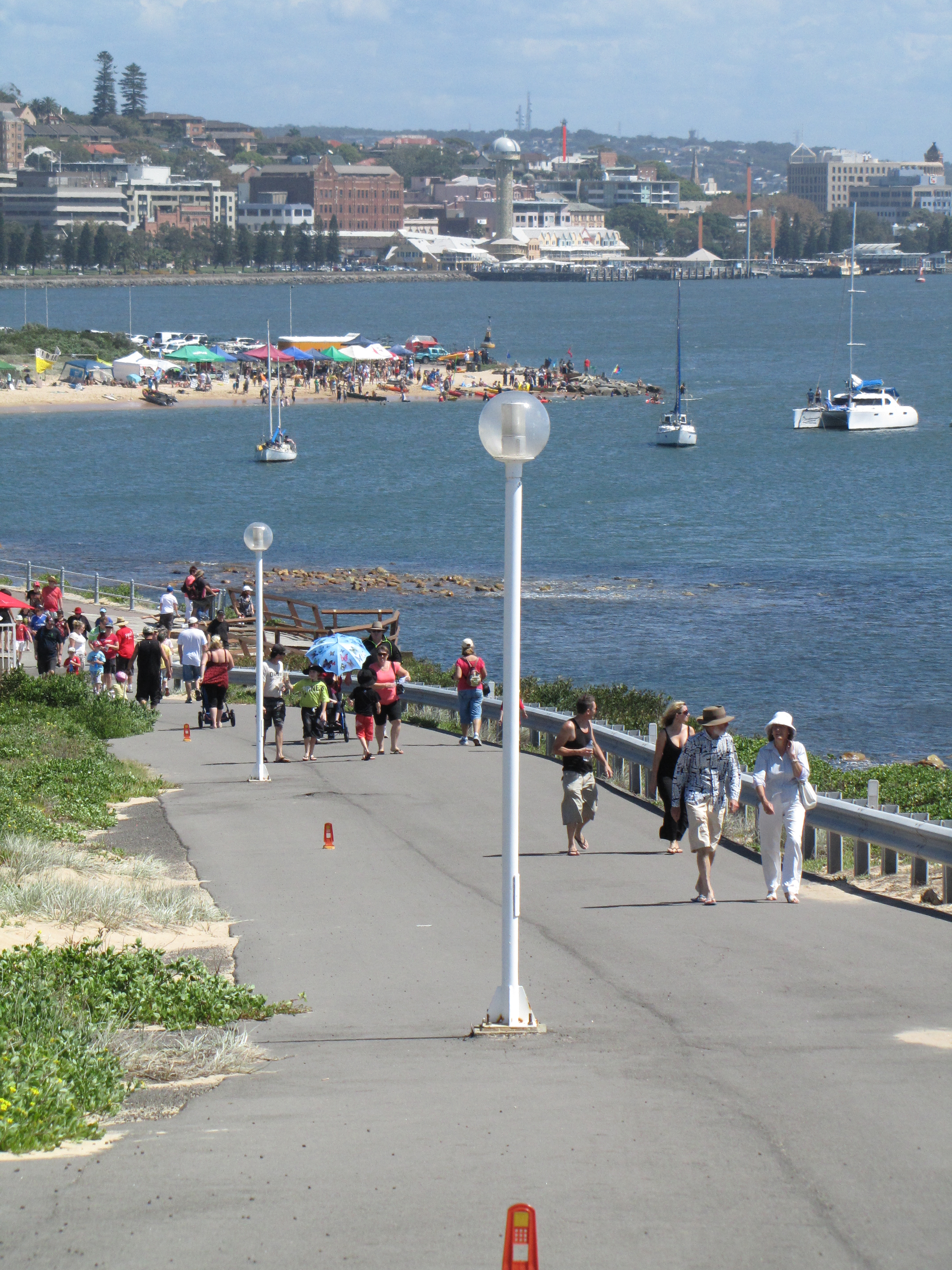
The precinct continues to sustain industry and export and in 2017 is the largest coal port in the world. These resources are largely due to the legacy of skills and labour of transported convicts, committed for secondary punishment. The area is a “functional precinct, a living zone, a scene of business and recreation and dwelling, providing a remarkable fusion of heritage and the everyday….illustrates the vibrant interactions between natural and cultural forces communicating a sense of origin while tracing a long and complex history of economic and industrial transformation.” (Roberts & Eklund 2012) These ‘living’ qualities make the heritage values at this precinct unique because of the longevity and continuous use of the place, it is not a redundant relic, nor is it fully intact, but is an active and dynamic landscape because of its coastal environment. These qualities make the precinct distinctively unique.
The precinct has outstanding heritage value to the nation because of the special association with environmental activism. Australia’s first environmental action took place in 1853-1854 on behalf of a community to protect a natural landform (Nobbys Headland). Environmentalists, climate protestors and anti-coal campaigners continue to use the site and have a special association as it symbolises ‘coal’ and history of procurement of this resource.
It also has significance as a place where technical achievement occurred, with the transfer of knowledge of the first coal mining in the Southern Hemisphere and marks the use of the transfer of the ‘bord and pillar’ coal mining techniques from across the world to Australia. Coal operations at this place were solely Government owned and managed, representing the commitment of the colonial government.
Indigenous Values
The Coal River Precinct demonstrates outstanding cultural significance because the early Aboriginal and European association with Whibayganba or Nobbys Headland, a cultural and spiritual Aboriginal place that tells the Dreaming story of the giant kangaroo.
Cultural Values
It is also a place of significant cultural achievements in early Australia, many artistic objects and works were created by colonial artists in Newcastle of Nobbys Headland and surrounds, by notable artists such as Joseph Lycett, James Wallis and Thomas Skottowe.
CRITERIA A – Coal River Precinct has outstanding heritage value to the nation because of the place’s importance in the course, or pattern, of Australia’s natural or cultural history
Coal River Precinct is of outstanding heritage value to the Nation because of the characteristic of Australia natural and cultural environment that is not known to exist elsewhere. The elements of this single environment represents modes of construction, engineering and surveying techniques that were used in conjunction with a sound understanding and respect of the natural earth formations, ocean and river systems.
Coal has shaped the nation and provided the energy required at the start of the Industrial revolution in Australia. The European settlement at Newcastle and the industrial revolution happened roughly at the same, technical and scientific knowledge were put into practice at Newcastle in 1801 and 1804, convicts and officials applied practices bought with them across the globe to establish industry.
- The Coal River is of central importance to Australia in building a national economy and contributed to how economic, political or social processes were formed.
- The Coal River represents patterns of economic and social development of the early colonial period through the movement from government-controlled and convict-worked industry to the arrival of free labour and the beginnings of private enterprise.
- The Coal River Precinct best represents a convict penal settlement that is directly related to beginning of Australian industry (coal mining) through the first discovery, first export and first profit of a natural resource.
- The Coal River Precinct is an exceptional example of the forced migration of convicts and developments associated with punishment and reform of the criminal elements, an important stage of human history in the modern era.
- The Coal River Precinct best shows how a landscape has changed over time due to the large-scale transformation of local geography to meet industrial, commercial and residential demands and is expressed in a tangible way.
- The Coal River Precinct has a high degree of significance in regard to Australian convict heritage, particularly convict labour and the associated convict built heritage of the site, and is reflected in port related works, especially Macquarie Pier.
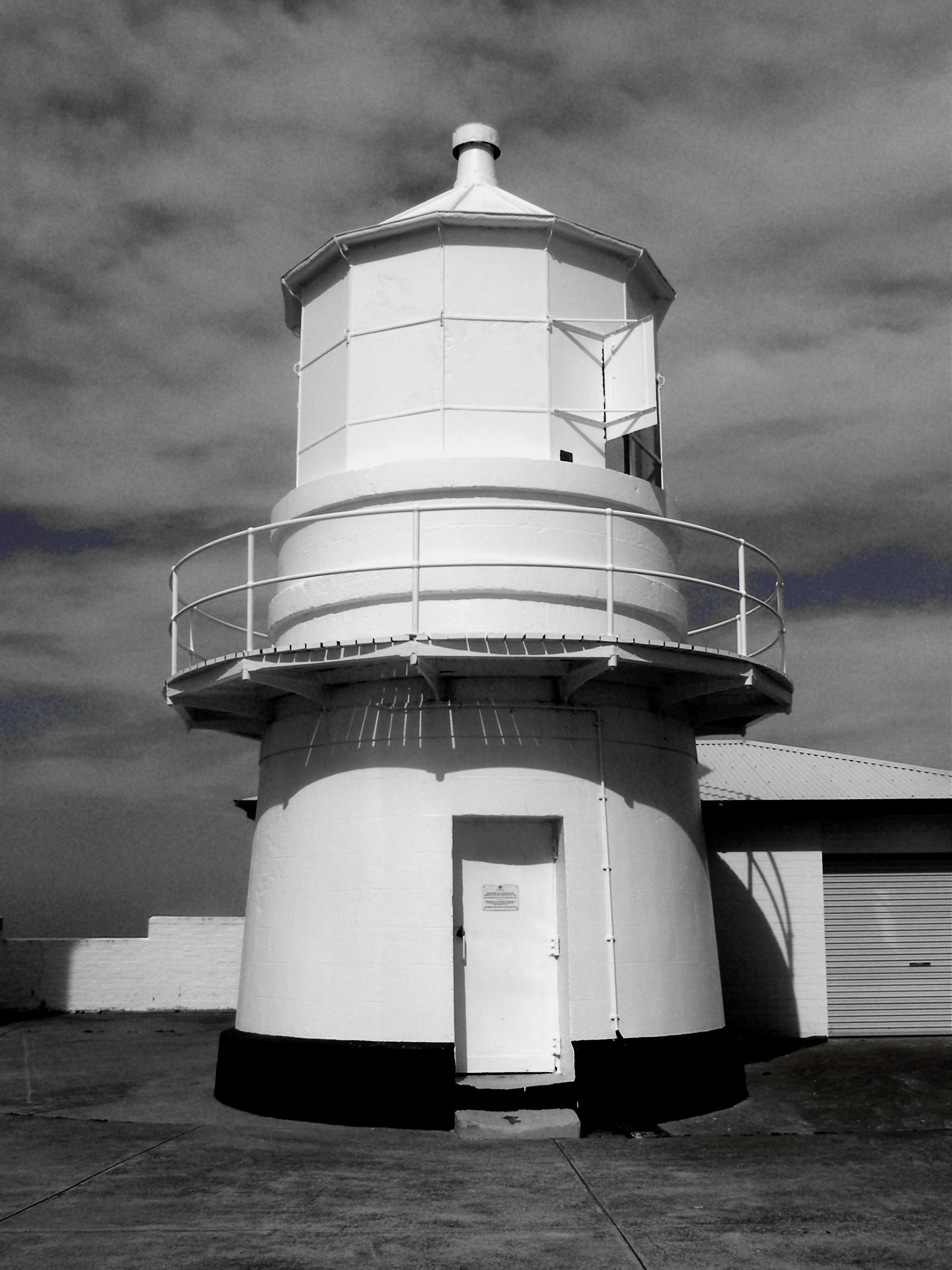
- Nobby’s Lighthouse is significant as an important element in the establishment of navigational aids along the New South Wales coast, which reflects the economic development of the surrounding region. The lighthouse is significant as the first example of the series of maritime lights installed in conformity with the Trinity House Codes, after the Commission of 1856 reported upon Australian lighthouse building and maintenance (Lucas, Stapleton & Partners 2007 p 8).
- The Soldiers Baths are historically significant as one of the first ocean baths to be built for public use in NSW and are amongst the earliest beach developments in Australia. They represent the evolution of public bathing and the emergence of the beach as a focus of leisure activities in Newcastle, NSW and Australia, from the late nineteenth century. They also evoke Newcastle’s military past through their association with the soldiers stationed at Fort Scratchley, an important phase in Newcastle’s and NSW’s history as a major defence post for the port of Newcastle and the eastern coastline. (Soldiers Baths Location: 35 Nobbys Road, Newcastle East- Newcastle Heritage Inventory- SHI no. 2170253)
- The Coal River Precinct that is an extraordinary example of the National understanding of Aboriginal languages, Biraban and Threlkeld’s work is the earliest and the most accomplished in Australia. Their work documents the Awabakal Dreaming story of the ‘giant kangaroo’ at Nobbys Headland that represents the association of the Aboriginal culture with the natural landscape formations. (The known Awabakal language was the first to be translated in Australia)
- The Coal River Precinct is highly significant because of the cultural association with the Macquarie era that led to the creation of artistic objects of exceptional artistic significance, such as the Macquarie Chest, Wallis Album, Skottowe manuscript and other notable engravings and paintings depicting the precinct. Nobbys Island/headland has become a recognisable symbol.


CRITERIA B – The place has outstanding heritage value to the nation because of the place’s possession of uncommon, rare or endangered aspects of Australia’s natural or cultural history.
The Coal River Precinct is unique because it represents an early major public works project in Australia, (Macquarie Pier -Nobbys Breakwater) that not only provided a safe entrance into the Hunter River, but contributed to the Colony’s growing coal export trade. The convict breakwater is testament to the skill and technology used in the Colonial period, that has become the foundation of Nobbys Beach, now a popular surfing beach.
The Coal River Precinct is a remarkable example of the transition of Australia’s first industry, the coal mining industry (its inception at the foot of Nobbys Island and the Flagstaff Hill) to a modern city that continues to contribute to the Australian economy.
The Coal River Precinct is nationally rare because it possesses an early Australia public work (Macquarie Pier) constructed primarily using convict labour that remains in use for the purpose in which it was established.
- The Coal River Precinct is nationally rare because it possesses Australia’s oldest surviving physical evidence of coal mining (Fort Scratchley) and convict tunnels (Nobbys Headland).
- Nobbys Lighthouse is rare because it is the oldest surviving lighthouse on the east coast of Australia that replaced the earlier coal fired beacon located on Signal Hill, first lit in 1804.
- The Coal River Precinct is nationally rare because it possesses an intact coastal fortification (Fort Scratchley) showing patterns of evolution in construction and military technology from the 1880s to the 1940s.
- The Soldiers Baths along with the Bogey Hole in King Edward Park are rare survivors of such a public amenity built during the Victorian era, predating those at Bondi and Bronte.
- The Coal River Precinct is nationally rare because Nobbys beach has been formed along the line of the Macquarie Pier (breakwater) and is indicative of the shift from work and industrial usages to leisure-orientated pursuits and contemporary beach culture; in essence the beach has formed due to human intervention.
CRITERIA C – The Coal River Precinct has outstanding heritage value to the nation because of the place’s potential to yield information that will contribute to an understanding of Australia’s natural or cultural history.
The early convict coal mines have immense cultural value and potential to significantly enrich knowledge of colonial and convict life in Australia through archaeological research. The place has significant potential to reveal, through archaeological field work knowledge of Australia’s early industrial and mining heritage, including the convict workings (coal adits) and tunnelling of Nobbys Headland (pre 1850s).
- Macquarie Pier has outstanding heritage value to the nation because it advances knowledge of industrial convict sites, and our understanding of convicts as a cultural group and the contribution made by their enforced labour. The pier contributes to an understanding of Australia’s largest and earliest colonial public work projects begun with convict labour. There is the potential to develop further knowledge about the nature of construction and techniques used in the convict-era.
- The Coal River Precinct in general has proven research significance as having provided engineering, surveying and geological knowledge.
- The Coal River Precinct has outstanding heritage value to the nation because the recording of the ancient Awabakal language. This was the first systematic study of an Aboriginal language anywhere in Australia by Biraban, Chief of the Newcastle Tribe (now known as the Awabakal) and the Reverend Lancelot Threlkeld and published in a series of works from 1826 to 1892. This is one example of the unique cultural relationship that is mirrored in Newcastle between Aboriginal and Colonial peoples. There is the potential for scholars to yield further information from unpublished works that will contribute to knowledge of Aboriginal language and culture. (Roberts, 2008).
- The Coal River Precinct can help us understand aspects of the Australian language. Newcastle was where the first Australian dictionary of ‘flash language’ was compiled in 1819 (Vaux, James Hardy), author also wrote the first autobiography in Australia. Australia’s first full length autobiography and dictionary compiled by James Hardy Vaux in 1811-1814.



CRITERIA D – The Coal River Precinct has outstanding heritage value to the nation because of the place’s importance in demonstrating the principal characteristics of: a – a class of Australia’s natural or cultural places, or
– a class of Australia’s natural or cultural environments
- While other places with similar characteristics exist (Coal Mines Historic Site, Tasmania), this place shares all those characteristics and emerges from that group as the earliest example of a working convict coal mine in Australia, and the southern hemisphere.
- While other places with similar characteristics exist in terms of public infrastructure (example, the Old Great North Road in NSW) the construction of Macquarie Pier is major public works project developed by convict labour and emerges as unique because the structure continues to be used for the purpose in which it was built.
- While other places with similar characteristics exist, this place differs to Port Arthur and Norfolk Island as a place of secondary punishment, in that it progressed to economic and cultural transitions and is a convict ‘living’ site.
CRITERIA E – The Coal River Precinct has outstanding heritage value to the nation because of the place’s importance in exhibiting particular aesthetic characteristics valued by a community or cultural group.
Aesthetically the Coal River Precinct is a rare example of the transformation of the natural landscape that has been shaped by convict labour and early European occupation and intervention. The precinct, especially Nobbys Headland is an outstanding landmark.
- Nobbys Island/Headland has a high degree of aesthetic value, many individuals have found creative inspiration from the landscape, Europeans have depicted ‘Nobbys’ in visual sources since 1804 to current day and whose works have documented the transformation of the place shaped by human intervention.
- The aesthetic qualities of Nobbys Headland were ‘saved’ by the community in the 1850s when Government authorities had plans to significantly level this landmark it using explosives. A successful plea from the community stopped the destruction of the headland and Nobbys has since remained a recognisable landmark nationally.
- The Soldiers Baths provides some evidence of the construction of early ocean baths in Australia.


CRITERIA F – The place has outstanding heritage value to the nation because of the place’s importance in demonstrating a high degree of creative or technical achievement at a particular period.
- The Coal River Precinct is an outstanding example of Australia’s early position at the forefront of applied coal mining technological achievement in the early 1800s this contribution to the nation’s economic development. Introduction of the ‘bord and pillar’ coal mining techniques from across the world to Australia occurred at the precinct.
- There is no other comparable evidence surviving as that of the physical evidence at the coal adits at Colliers Points, and is a potential source of knowledge which can contribute to a wider understanding of Australia’s industrial beginnings and technology.
- Shows innovative and technical achievement related to masonry, quarrying and construction techniques to build Macquarie Pier, to provide a safe entrance into the port and contributing to the growth of Australia’s coal industry.
- Stone Boat Harbour is a rare surviving example of one of several boat harbours in Newcastle during the 19th century, which served a variety of purposes. It has the capacity to demonstrate the development of the Port of Newcastle during the latter half of the 19th Century, as Newcastle emerged as a major coal port. Previously home to a pilot station, it provides evidence of the significant activity of guiding ships to safe harbour.
- The Coal River Precinct represents the establishment of the coal industry that continues to be a major strength of the Australian economy.
CRITERIA G – The place has outstanding heritage value to the nation because of the place’s strong or special association with a particular community or cultural group for social, cultural or spiritual reasons.
- Nobbys Headland holds special meaning to the Awabakal and non-Aboriginal people who share the spiritual Dreaming stories of Whibayganba (Nobbys Headland), a cultural and spiritual Aboriginal place that tells the Dreaming story of the giant kangaroo.
CRITERIA H – The place has outstanding heritage value to the nation because of the place’s special association with the life or works of a person, or group of persons, or importance in Australia’s natural or cultural history.
- Nobbys Headland has a strong association with Captain Cook who sighted the Island on his voyage in 1770.
- The Coal River Precinct is closely associated with the re-offending convicts following the 1804 Irish rebellion at Castle Hill (also referred to as the Vinegar Hill Rebellion) who were the first convicts sent to the permanent settlement of Coal River.
- The Coal River Precinct is closely associated with Governor Macquarie who implemented many Government projects (such as Macquarie Pier) supporting the development of the coal industry and economic growth of the Colony.
- Nobbys Lighthouse is associated with its designer Alexander Dawson, Colonial Architect of NSW.
- The Soldiers Baths are highly significant for their association with the soldiers based at nearby Fort Scratchley, who were frequent users and for whom the baths were named.
- The Nobbys Headland is closely associated with Indigenous and migrant relations that lead to new knowledge of Aboriginal culture to be further understood. The relationship between Biraban the Aboriginal Awabakal leader and Reverend Threlkeld is significant documenting for the first time Aboriginal language.
CRITERIA I – The place has outstanding heritage value to the nation because of the place’s importance as part of Indigenous tradition.
- Coal River Precinct contains sites of outstanding significance for local Indigenous people. Whibayganba (Nobbys Headland ), and the Coquun (The Hunter River) are the locations of a dreaming story that details Newcastle and the Hunter’s earthquake history. Dreaming stories represented at the site including Tahlbihn (Fort Scratchley). Whibayganba and Tahlbihn were approved for dual naming by the NSW Geographical Names Board in July 2016.


REFERENCES
Coal River’s Heritage seeks Canberra’s tick Newcastle Herald by Michael McGowan 20Feb 2017
Previous nominations
2007 National Nomination for Newcastle (Mark I)
2009 National Nomination for Newcastle (Mark II) & further post
2012 National Nomination for Newcastle (Mark III)
2013 Newcastle’s 7000 Years of Achievements Before The Commonwealth (Mark IV)
Futher sources – References submitted with National Nomination
Call for Nominations for the National Heritage List – Department of Environment and Energy (2017)