

About Gallipoli and ANZAC Day
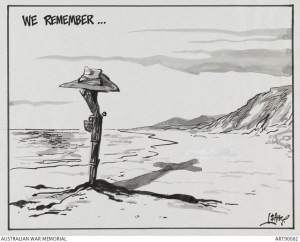
*The featured image is the work of Australian cartoonist Sean Leahy’, on paper, dated 1990, held by the Australian War Memorial.

Amir Moghadam, University of Newcastle
April 25th is a day we commemorate all ANZACs who served and died in wars, conflicts, and peacekeeping missions. Originally intended to honour the Australian and New Zealand Army Corps (ANZAC) who fought in the Gallipoli campaign of World War I, it has since become a broader moment of national reflection.
The Gallipoli campaign was mainly a political decision with far-reaching consequences. Launched in 1915, its objective was to seize the Gallipoli Peninsula, capture Constantinople, and provide the Allied forces with a triumphant peace. This idea ruled in the European political circles until the end of the war and the conclusion of the Lausanne treaty. But from the start, it was marred by flawed assumptions, political ego, and a lack of strategic coherence.
Where is Gallipoli
The Gallipoli Peninsula, located in the southern part of East Thrace, the European edge of Anatolia, sits between the Dardanelles Strait and the Aegean Sea. Winston Churchill’s initial idea was to take control over Dardanelles. Yet, as early as 1906, Britain’s Committee of Imperial Defence had rejected the idea of forcing the Dardanelles due to the high risk and low probability of success. Ironically, Churchill emphasised the same idea in 1911, while he championed the campaign only a few years later, modelling the German bombardment of Belgian defences on the western front. Initiated on February 19th, 1915, the Dardanelles plan proved to be a failure from the beginning.
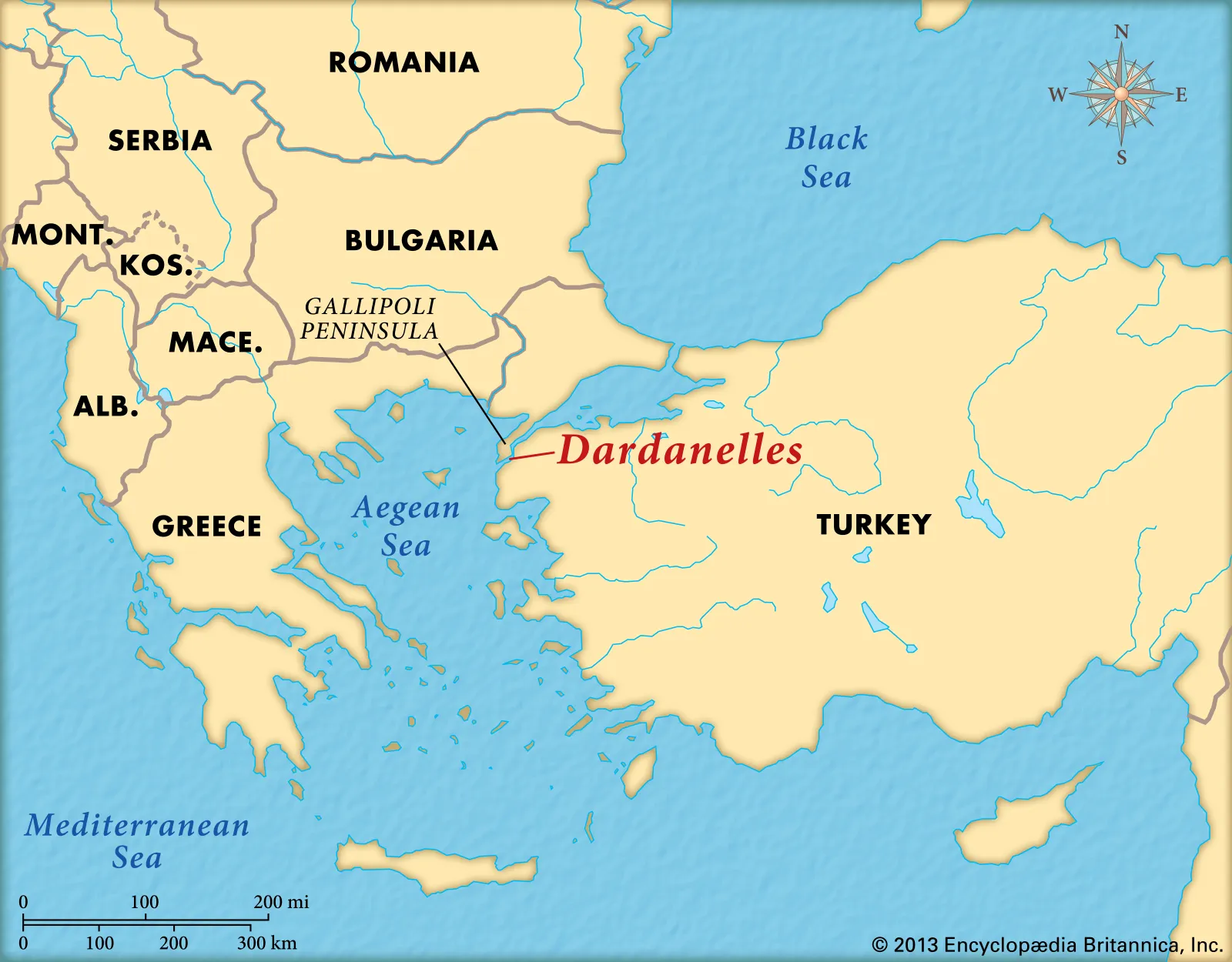
Sourced from Encyclopaedia Britannica
German-Ottoman defence
The Ottoman-German forces, alerted by naval movements since late 1914, had fortified their defences at the strait’s narrowest point. The German-Ottoman command, under General Liman von Sanders, prepared minefields and mobile artillery units that seized the Allied advance early on. The German deep defence tactic transformed the Gallipoli campaign into a costly stalemate for Allied forces.
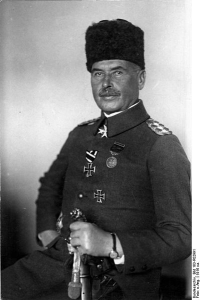
Portrait of General von Sanders, Sourced from International Encyclopaedia of the First World War.
Landing on Gallipoli
To support the failing naval exercise, on the morning of April 25th, 1915, ANZAC troops landed at what would become known as ANZAC Cove. The unforgiving geography, combined with a series of mistakes, turned the campaign quickly into the horrors of trench warfare. Despite significant sacrifices and the bravery of ANZAC troops, no desired outcome was achieved, and by November, it became clear that the campaign had failed and over a quarter of a million Allied soldiers had been killed or wounded, with no strategic gains to justify the losses. The final Allied troops were evacuated by January 1916.
Gallipoli was supposed to be a “cheap victory.” Instead, it became a sobering lesson in hubris and the dangers of disregarding expert advice. While Churchill did not bear sole responsibility, his overconfidence, reluctance to listen to critical voices, and disregard for history played a significant role in the tragedy.
The costs of that leadership failure are still felt. And while ANZAC Day rightly honours the bravery and sacrifice of those who served, it also invites us to reflect on how history is shaped not just by those on the battlefield but also by decisions made far from it, often with limited understanding and grave consequences.
Our Collections
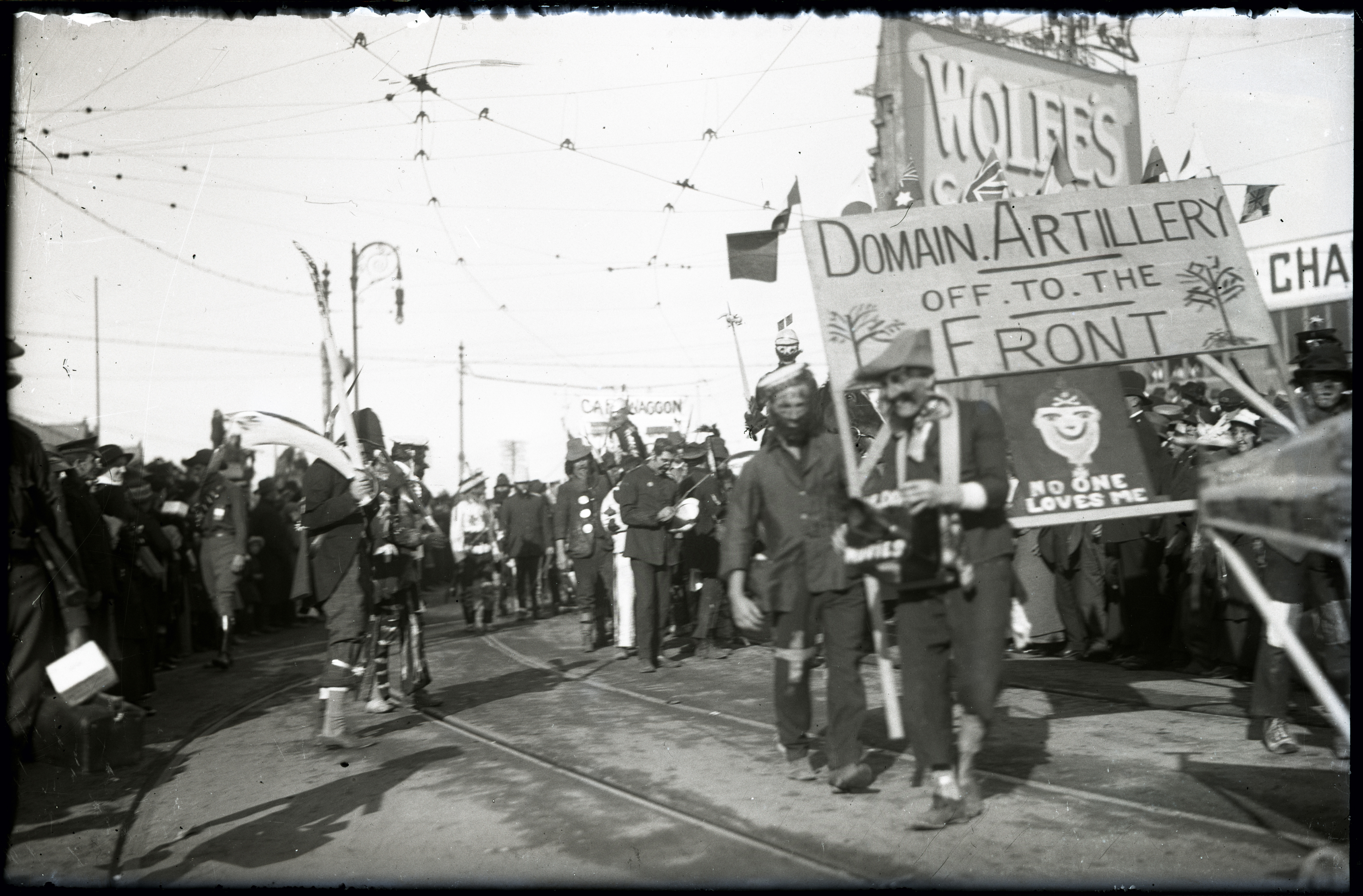
At our Special Collections, we preserve and share fragments of this history—photographs, letters, postcards and books that narrate the experience of ANZACs from different perspectives. Among them is Australia in Arms by Lieutenant Phillip Schuler, a war correspondent for the Age Newspaper, who witnessed the campaign in the first two weeks of landing and from late June 1915. Though not always a direct eyewitness, Schuler wrote with the vivid detail of one who lived it. As the official war historian Charles Bean noted, Schuler wrote only what he saw—and what he saw continues to resonate.
Concluding Remarks
As we mark ANZAC Day this year, we remember the courage of those who fought and the importance of history. Gallipoli is a potent reminder that the cost of political pride and disregard for historical experiences can result in casualties and long-lasting consequences.