

This work is conducted in memory and respectfully honours the First Australian People, the Aboriginal People of this land.
Warning to Aboriginal and Torres Strait Islander People: This post contains images and references to people who are deceased.
The NBN Television News Reel
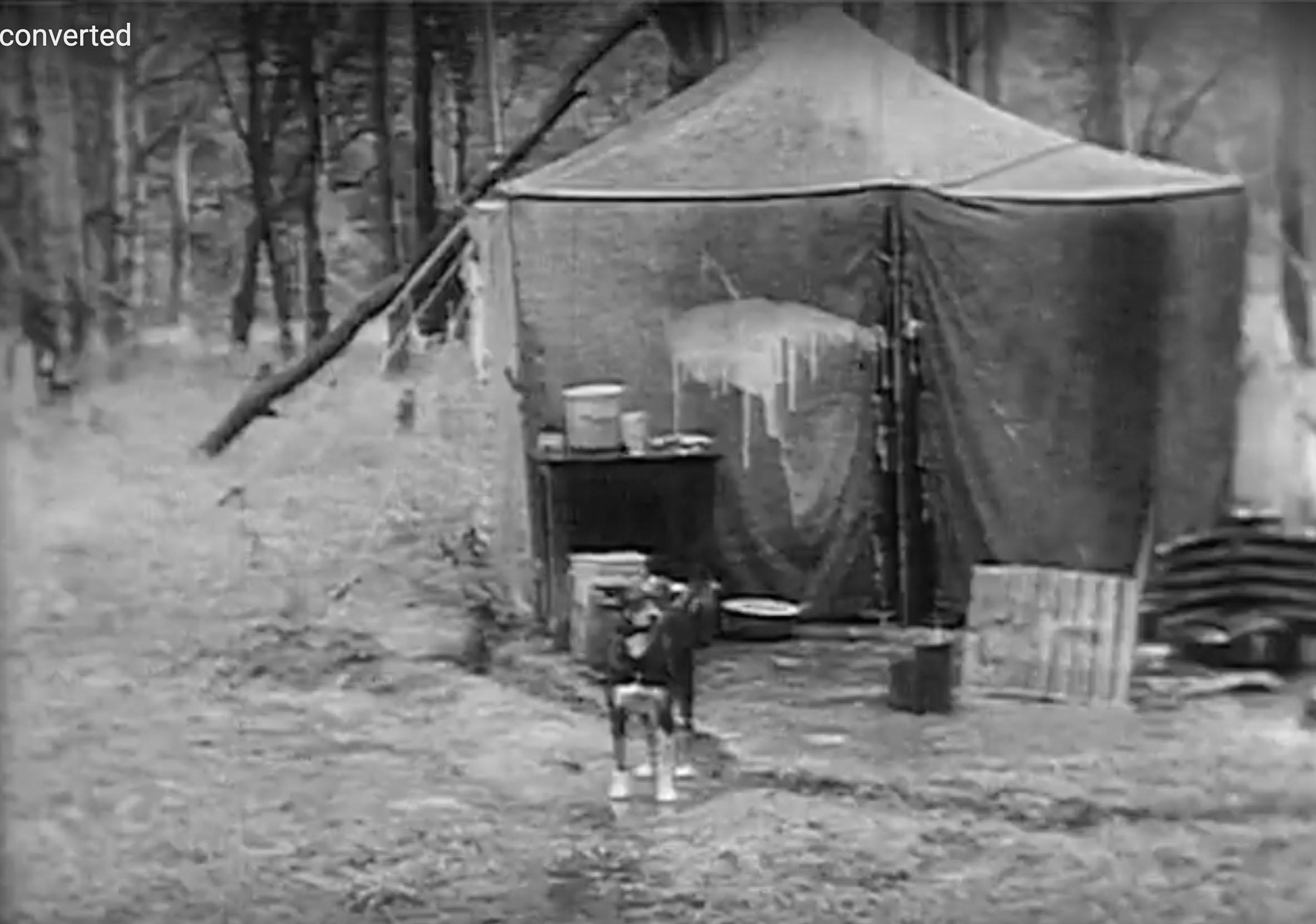
After sixty years, historic film has emerged of Aboriginal people living in iron shacks and tents on the Shortland site, now occupied by the University of Newcastle.

The minute long silent black and white film was recently digitised by the University’s GLAMx audio visual team, and appears on a reel of stories recorded by a NBN News team between 29 April 1963 and 9 May 1963. Click the above YouTube video to view the footage which begins at approximately 38 minutes and 58 seconds in. (It should begin at that spot)
What Does The Film Appear To Show?
It is understood that the film was possibly reporting on the removal of these people and their dwellings from the Shortland site, to enable the eventual move of the University of Newcastle and Newcastle Teacher’s College to the Shortland site.
Where Was The Film Shot?
Two locations have emerged as possible contenders on the Shortland site, the first is a location about a quarter of a mile from the Shortland Research Labs, the other in the vicinity of Koba Creek at the Waratah West end. Read below the accounts of people who visited the locations of the dwellings, but it appears that the people who appear in the NBN film were probably those at the Waratah West side of the Shortland site.
Scenes from the News Reel
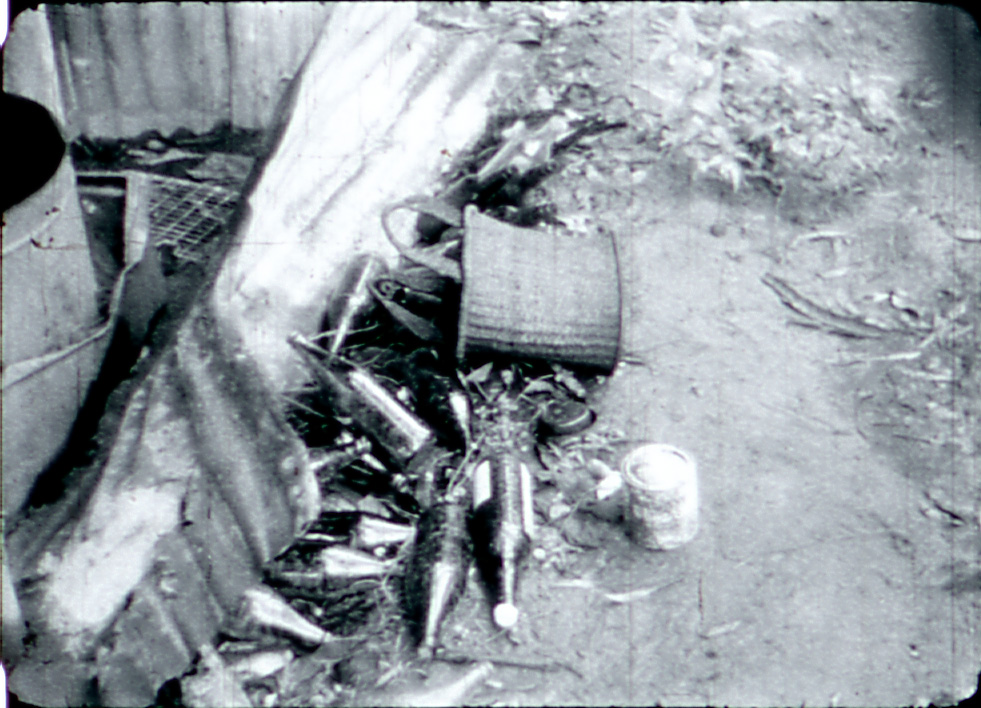
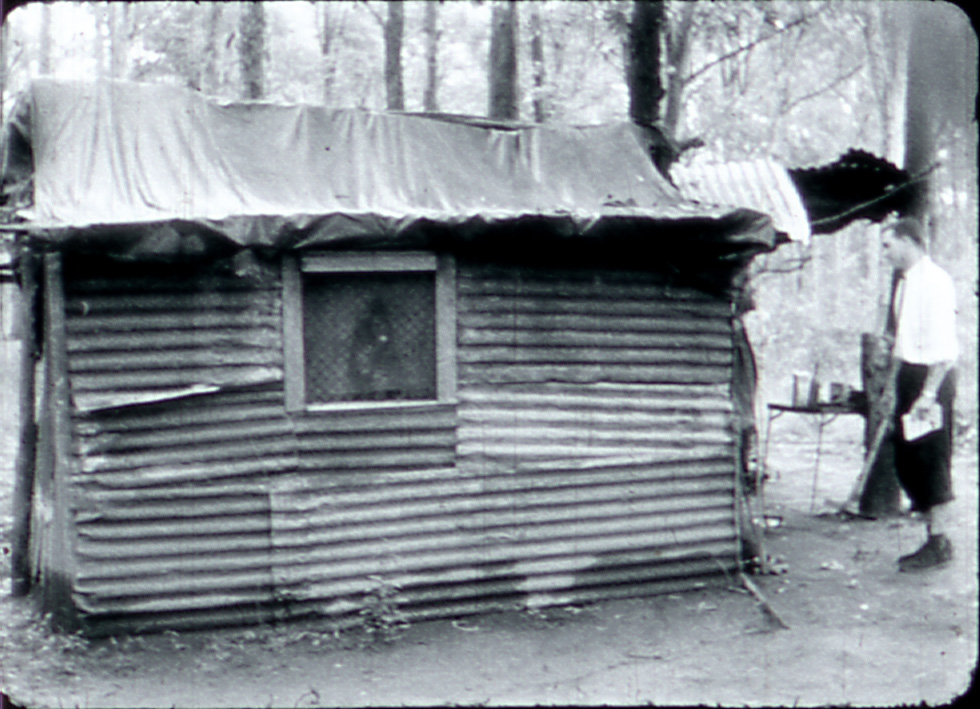
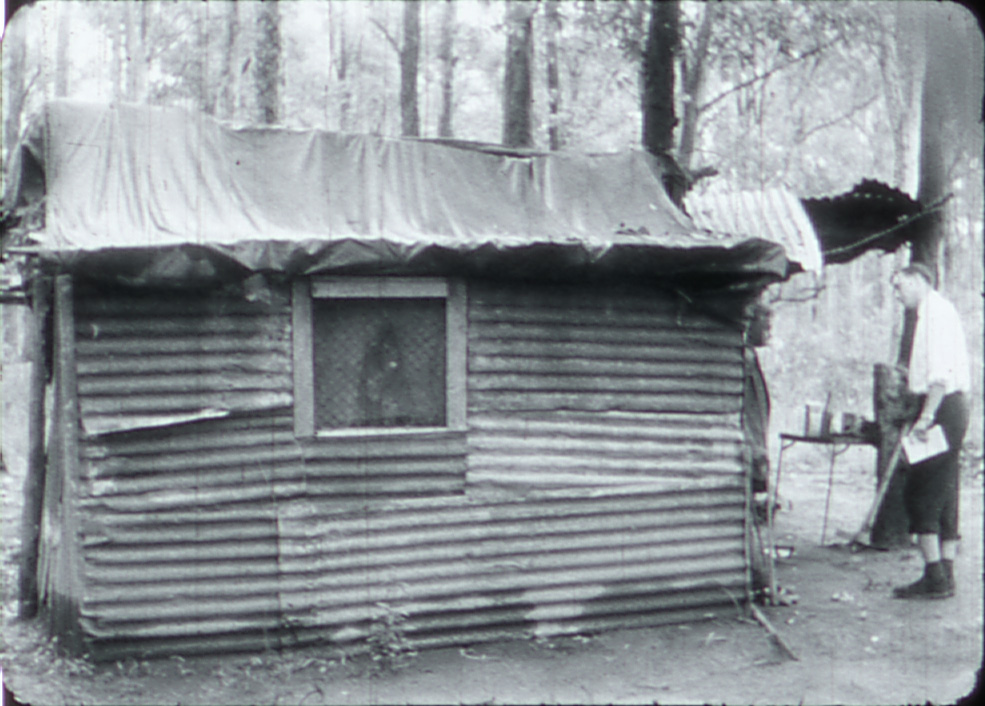
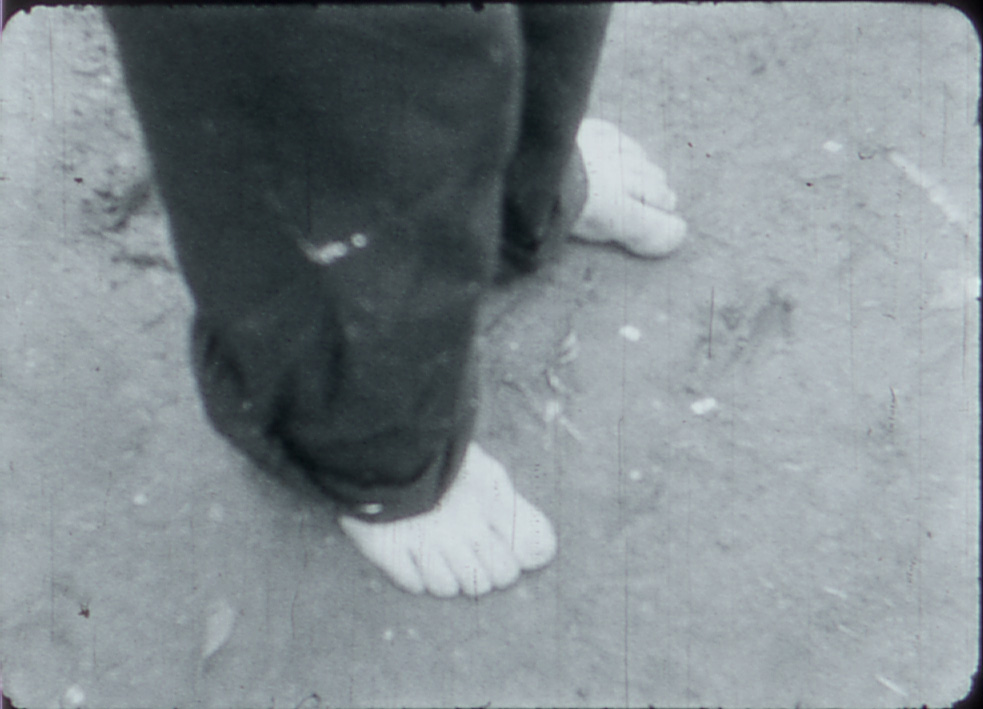
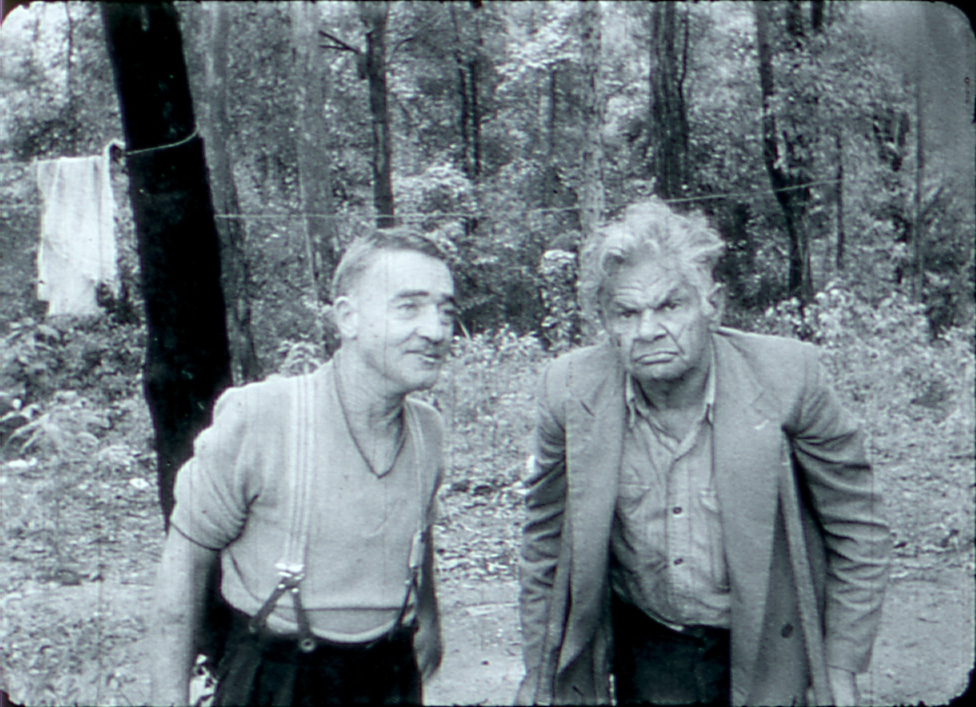
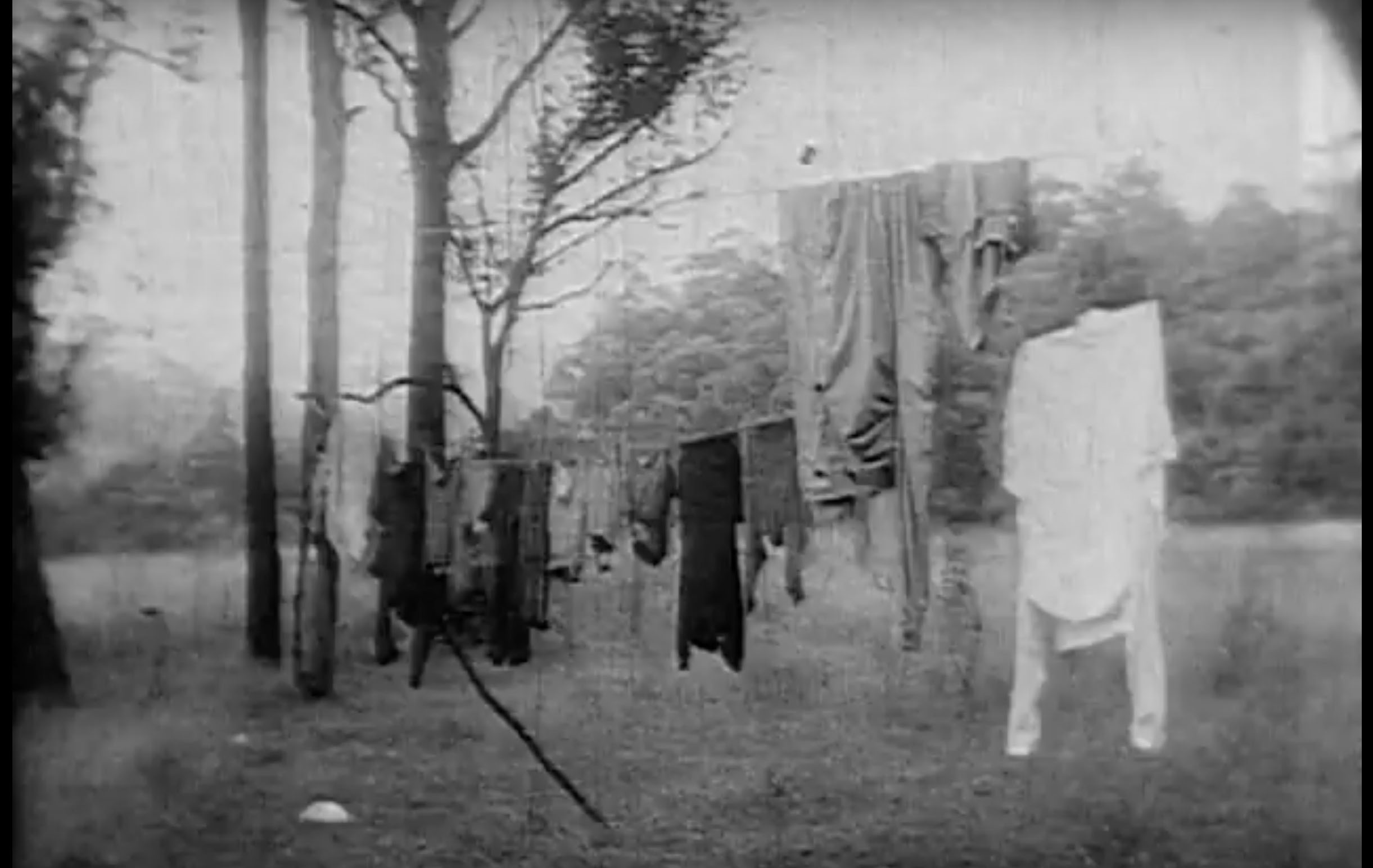
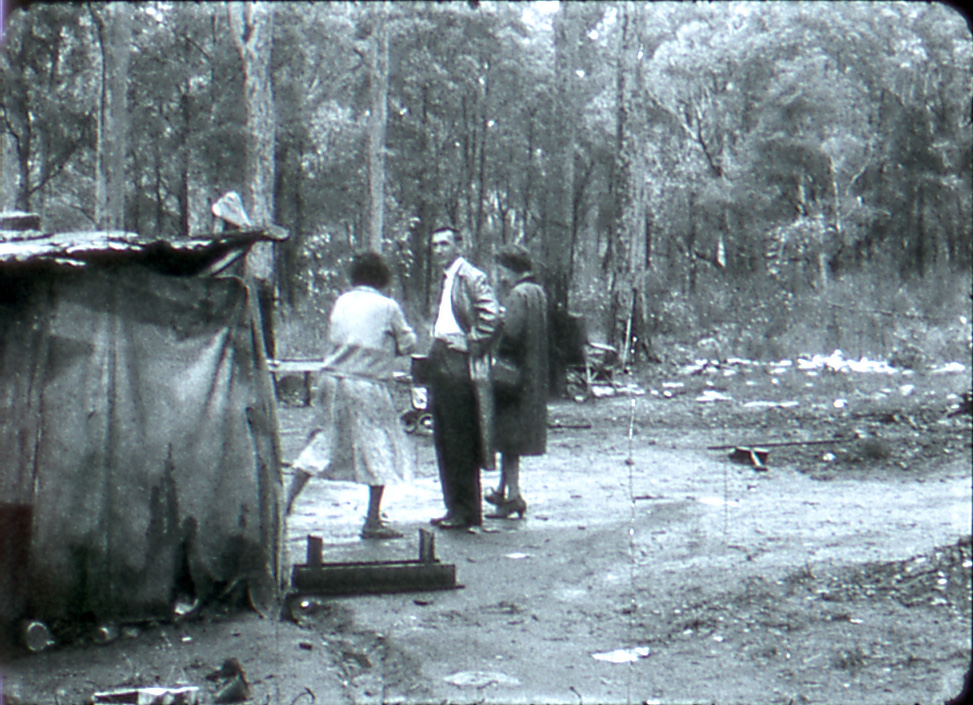
A screenshot of each scene from the digitised 16mm film reel on YouTube is below.
To accompany each screenshot is a 2400dpi scan from the original 16mm film frame by GLAMx AV Volunteer Mark Rigby. We’ve kept both to compare the difference in quality and clarity.
(Ed. – It would be wonderful to be one day able to digitise the entire reel to 2400K resolution, but until that time, it is crucially important to protect and preserve the original media for as long as possible until that day comes.)














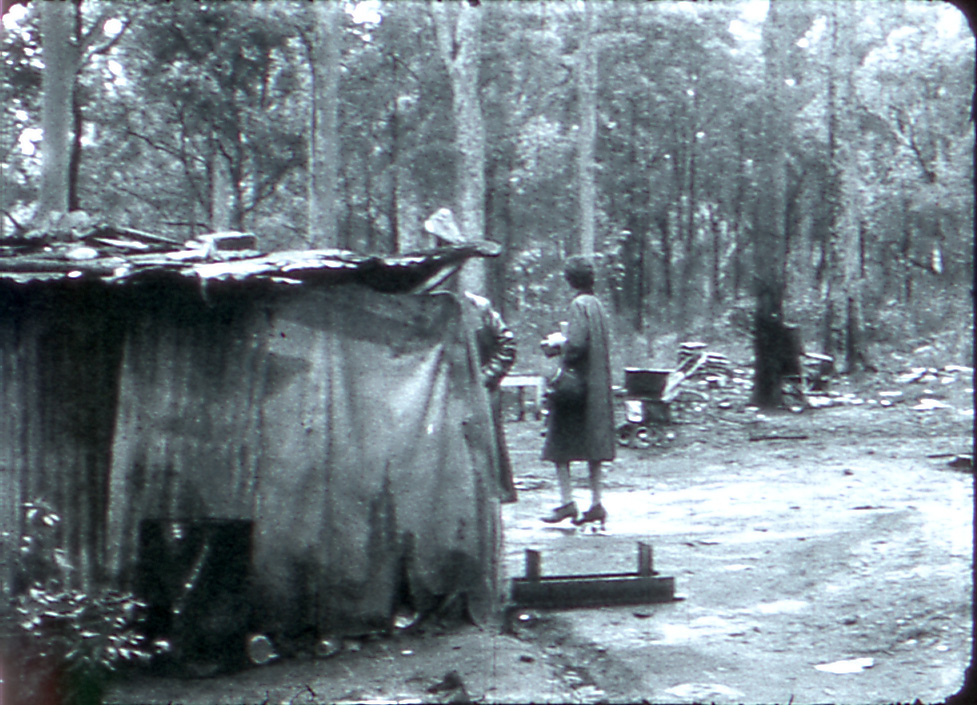


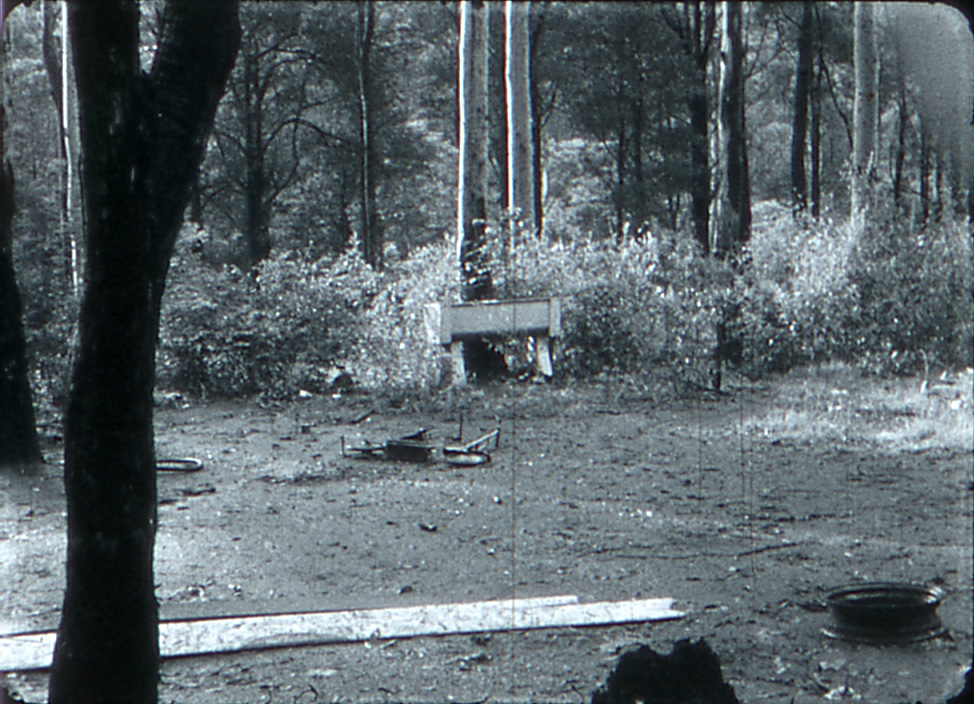

The Move to Shortland
The move of the University of Newcastle (then still a University College) and Newcastle Teacher’s College from Tighes Hill to the Shortland site had been announced, and sparked the curiosity of the Newcastle University College students to visit the site in July 1962.
They published their story in the 29th August 1962 edition of Opus Magazine.
Meeting the “first Inhabitants of the future University site”
According to OPUS writer “Ann”, (i.e., Ann Macrae) the boys deserted them, leaving the girls to fend for themselves with the goannas and snakes. But, their ‘galant action’ led the girls to “obtain the scoop interview with the first inhabitants of the future University site”:
“Constructed” upon a slight rise within a quarter of a mile of the Shortland Research Labs., their settlement arranged in circular formation, consisting of slapped up tin shanties and tents of dubious shape and nature.
A baby cried in an old pram. From somewhere voices were raised, arguing it seemed. From somewhere else came the sound of raucous laughter. We saw no-one.
The rain became more than a slight drizzle and we moved in the direction of the creek.
Then we saw them – a white man and an aboriginal woman, coming toward us with an empty tin. We smiled, they smiled. The man said he was going to collect rain water. We smiled, they smiled, and both parties proceeded on their separate ways. That is all.
The Students Return to Photograph and Authenticate the Story
When the students asked the locals who these people were; Typical responses were:
“I’ve lived in Shortland all my life and I haven’t seen an aborigine yet”….
“People on the Uni site!
“Don’t be stupid, I’ve never seen anyone, and I live next to it.”
So, they returned with cameras to authenticate their story reflecting:
“Pausing in retrospect, I wonder what will happen to the bellbirds, wildflowers, and natural beauty once the piledriver sets to work. Perhaps we should act first, and start a society for the prevention of cruelty to the Shortland Site (SPCSS).”
The OPUS Story: “Mud Mush and Mosquitoes”
The Shortland site visit in July 1962 by the Newcastle University College students adventures traipsing across the muddy mosquito infested bush land was published in the 29th August 1962 edition of Opus Magazine.


Read the full edition of OPUS Magazine here:
https://livinghistories.newcastle.edu.au/nodes/view/115829
Paul Danks’ 2005 Recollections
Mr Paul Danks is the former student who took the photographs. On the 21 September 2005 he recounted the story. See video below (will start at relevant position of film)

The Path Taken by the NUC Students
He said that one of the students’ aunties lived in Vale Street, Birmingham Gardens. They jumped the aunties’ fence, entering the site (probably at where the UON’s Architecture buildings stand today), then came down the hill, came to a stream, which they swung across on a vine, that runs along behind where the Auchmuty Library now stands.
After walking around, they then made their way back up the hill, probably to re-enter Vale street, and then encountered the circular group of dwellings somewhere on the way up there.
Comments
According to Ann McCrae’s article, the Newcastle University College girls (she and one unnamed other) were the only witnesses to meeting the people living on the Shortland site on the first visit.
They later returned with a camera to photograph the place to prove and authenticate what they saw.
So, Paul would be relating the events of the second trip to the Shortland campus, as he was the one with the camera.
Steven Ward’s Observations
Steven Ward, whose family lived near the Shortland site, believes the NBN3 footage was filmed near the Koba Creek in the gully on Rankin Drive, (now University Drive) Waratah West.
He says (Emails to GDG, 8 March 2023): People lived in the area bounded by Allowah Street/Landa Place/ Acacia Avenue (formerly Morehead Street) Waratah West which includes:
“the scrub/3 creeks/Thomas Percy Oval, in my youth there we often played in the shacks that were almost adjacent to my parents house in 9 Landa Place and some close to the creek, which has a name Boatman Creek.”

“Further to our last conversation I have taken screenshots of the areas I have identified where I believe the aboriginal camp was on the university side of Rankin drive. Stephen Parr’s property at #42.
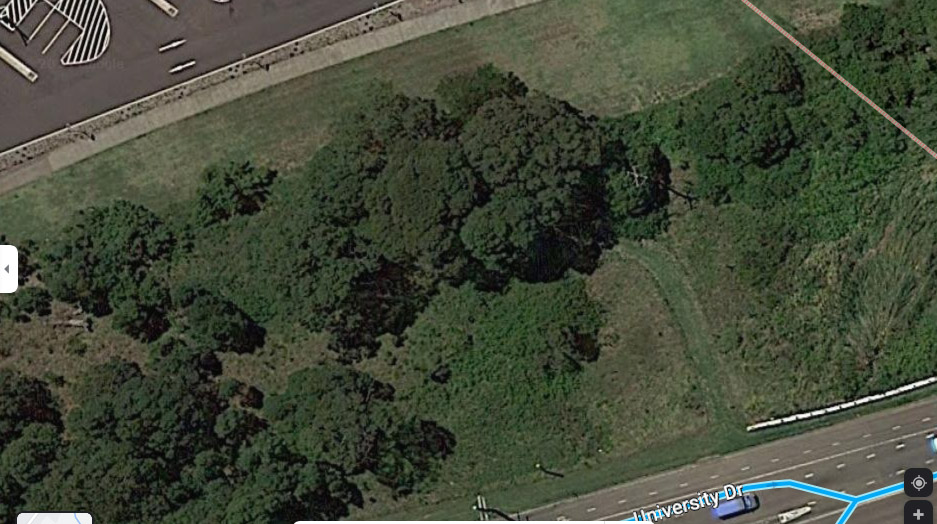
“The second screenshot is where I believe the camp known as the ‘Tram Cars” was situated as the Tramline was adjacent to Rankin Drive (now University Drive)
Logic will tell an educated individual that it is important to camp near a fresh water supply which was the case here at the confluence of Boatman Creek and Koba Creek, if you follow these water courses back towards Waratah West (Platts Estate) you will see where and why the Aboriginal camps were there (because of the fresh water) and if you follow these creeks towards Sandgate Road Shortland you are entering the Ironbark Creek salt water tidal area which is brackish.”

“Third photo is where most of the shacks were, remembering the oval was built 1966 using chitter as fill from Gretley Colliery, so you have to imagine the area being Tea Tree scrub with plenty of huge Gum trees, I do not know what the earthworks are at the top of pic, but there was at least six shacks in that area.”
“There is only one location [where] the remains of a dwelling still exists being a sandstone block floor of a shack at the bottom end of Landa Place behind Thomas Percy Oval, there was a man living in this shack when my family moved there 1961.”


Newspaper Report
August 1963
“Insanitary Shack At Shortland”
Published: 28th August 1963 page 10
Newcastle Morning Herald & Miners’ Advocate

Acknowledgments
We thank University’s GLAMx audio visual team for digitising the footage and Steven Ward and Paul Danks for their help in identifying the locations of the Aboriginal camps and dwellings.
The beauty of higher resolution digitisation of the film reel undertaken by Mark Rigby, volunteer with the GLAMx audio visual team, has also enabled us to see details we could not originally see. For example, the mother of the little boy playing with his toy pistol in the doorway is now recognisable. We couldn’t see her before. Also the mystery object in the distance is a wash tub for clothes, with two scooters in the foreground. Facial features can also now be decerned with better clarity. Thanks Mark.
What happened to these people?
We would like to know what happened to these people. The little boys would now be in their 60s, and still be around, we hope.
If anyone has further information relating to them, and what subsequently happened following their removal from the land, we would be very interested in continuing to shed light on the story.
Gionni Di Gravio OAM
University Archivist & Chair, Hunter Living Histories